
Air-travel guidance
IATA dog crate requirements explained
Understand IATA animal-container sizing, construction and ventilation guidance, and why airline acceptance must be checked for the exact route.
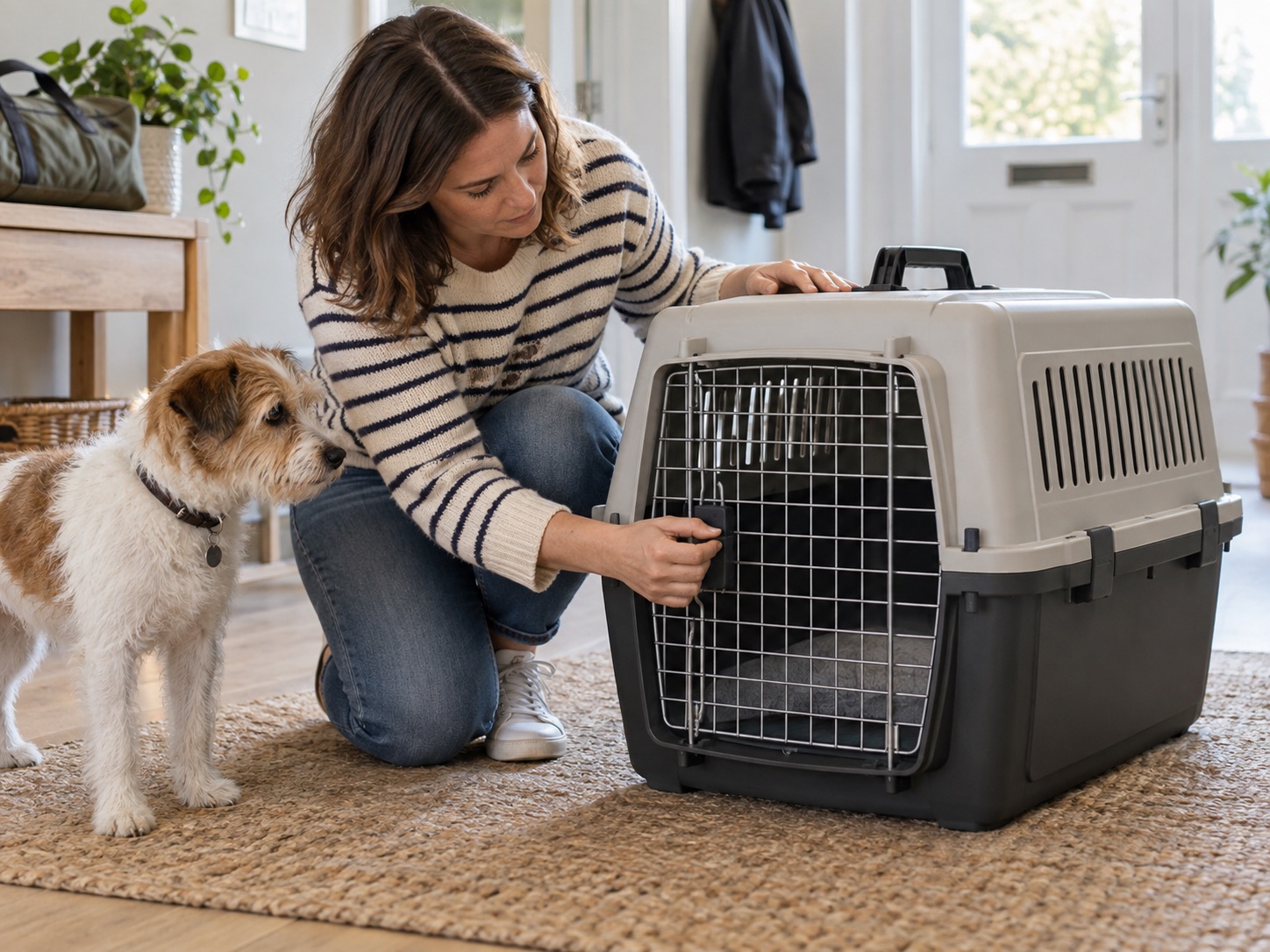
Calculate the dog's minimum *internal* room before selecting an exterior shell.
Distinguish cabin exceptions from hold-container requirements.
Get the operating airline's acceptance for model, animal and route.
Start with the four dog measurements
IATA identifies A as nose to tail base, B as floor to elbow, C as the widest shoulder or body point, and D as floor to the top of the head or ears in a natural standing position. Its minimum internal container dimensions are length A + half B, width 2 × C, and height D plus bedding. These are a starting formula, not permission to squeeze an animal into a barely calculated box. The dog must be able to stand or sit naturally, turn and lie comfortably.
Use the actual usable interior, not catalogue exterior dimensions. Curved walls, recessed doors and thick bedding reduce space. Measure the dog standing calmly and compare the result with the manufacturer-provided internal dimensions or the assembled kennel. If you cannot obtain reliable internal figures, do not assume an exterior figure is close enough. Our cabin measurement guide addresses the smaller under-seat case separately.
Container construction depends on transport mode
For a dog travelling in the aircraft hold, IATA's container requirements describe a rigid, secure shell, appropriate door, ventilation, handling features and food/water arrangements. An all-wire home crate does not meet the relevant container design. Wheels must be removed or rendered inoperable. Vent openings must not allow the animal to injure itself or escape. The exact container requirement and airline variation need reading in full, rather than relying on an “airline approved” badge.
The Ferplast Atlas 50 Pro is a larger rigid-shell example. Check its exact door, fasteners, ventilation and internal dimensions against the current IATA requirement and the airline's instructions before considering it for a hold booking. Its product name is not acceptance evidence.
The Henry Wag Air Kennel is another size and construction example. Its 90 × 60 × 68cm listed exterior cannot establish fit for an individual dog. Verify the assembled shell's usable dimensions, hardware and the operating airline's model acceptance.
Cabin is a different decision
IATA's cabin guidance allows exceptions to some hold-container construction details, including certain soft-sided formats, while retaining welfare and airline-specific conditions. An airline may set under-seat dimensions, a combined pet-and-carrier weight limit, booking quotas or route exclusions. IATA does not certify a retail model or override an airline's rule. The animal must remain enclosed as instructed during the flight.
Check the flight's operating carrier, directions, transit points and destination entry rules before buying. The UK airline-carrier guide shows why a carrier can match a published centimetre limit yet still be unusable on a route.
Common questions
Frequently asked questions
Does IATA approve a dog crate brand?
No. IATA provides standards and guidance, not consumer-product approval. The airline assesses the exact container and animal against its rules.
What is the IATA dog-crate size formula?
The basic internal minimum uses length A plus half B, width twice C, and height D plus bedding; A, B, C and D are specific measurements of the dog. Breed and posture still need a real fit check.
Are soft-sided carriers allowed under IATA rules?
Cabin arrangements can permit soft-sided carriers under airline-specific conditions; hold containers generally follow a different rigid construction framework. Do not transfer a cabin exception to hold transport.
Can a crate have wheels?
Container guidance says wheels must be removed or rendered inoperable for air transport. Confirm the operating airline's exact handling instructions for the model.
Is an all-wire home crate suitable for the hold?
IATA container guidance says an all-wire cage is not suitable under the relevant container requirement. A home crate should not be treated as an air-transport kennel merely because the dog sleeps in it.
Sources
- IATA — travelling with pets and measurement formula
- IATA — 2026 container requirements
- IATA — cabin passenger guidance
- Amazon UK product pages linked from the product cards