
Dog crate safety guide
What to do when a dog escapes its crate
Respond safely when a dog escapes a crate, inspect for injury and damage, identify the cause and plan a calmer alternative.
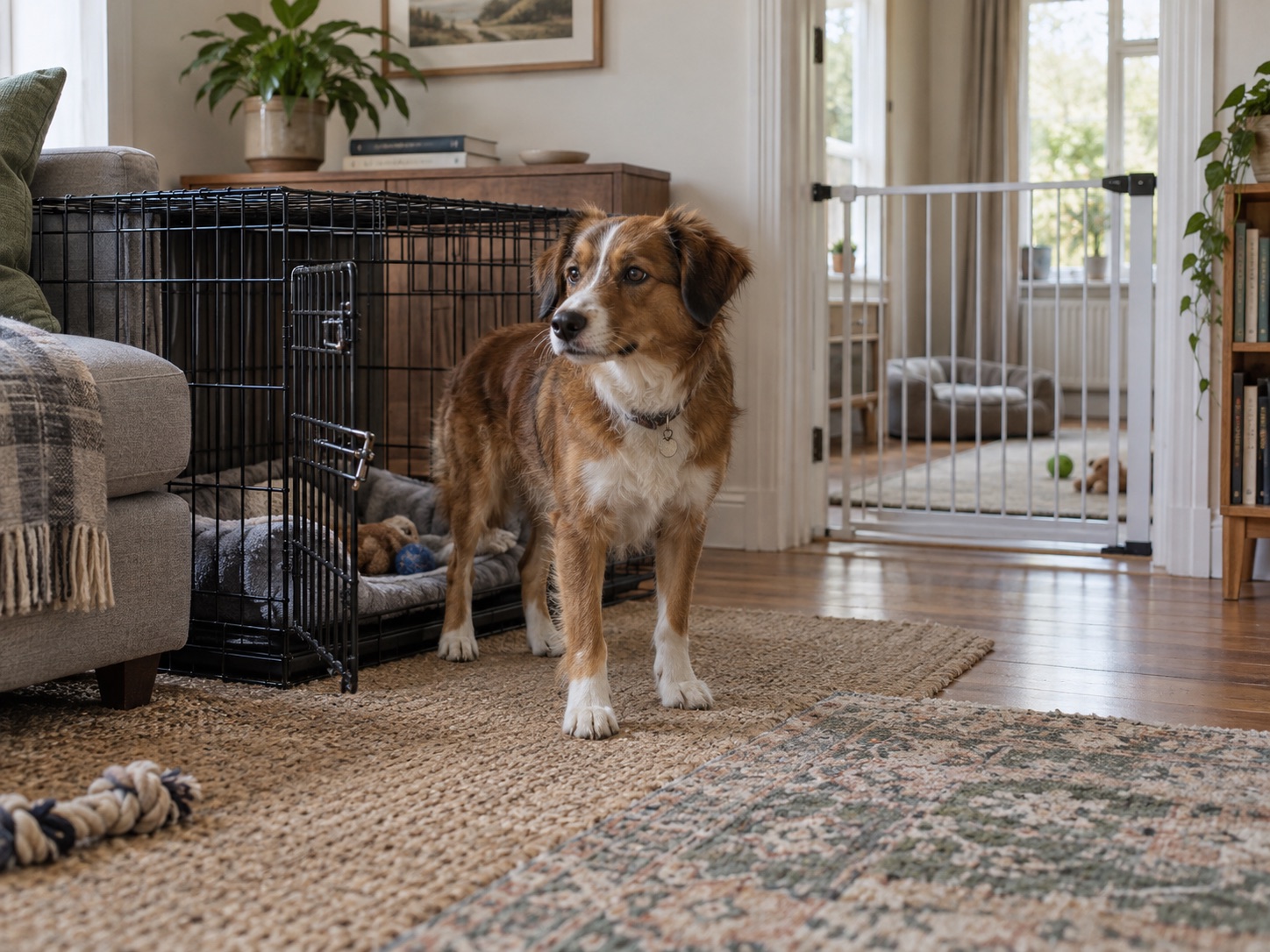
Examine paws, mouth, nails and the crate for sharp or broken parts.
Do not tie doors shut, add improvised locks or move straight to stronger confinement.
Use a dog-safe room or suitable boundary while the cause is assessed.
First, make the dog and room safe
Do not chase or punish a dog that has got out. Close external doors, remove hazards and calmly move the dog to a familiar safe area with water. Check paws, nails, mouth, teeth and body for cuts, trapped fur, limping or tenderness. Contact a vet promptly if you suspect injury or the dog seems unwell.
Keep the crate out of use until it has been inspected. Look for a door that did not fully latch, bent wire, a loose hinge, a missing stop, a cracked tray or gaps around a divider. Photograph the setup before moving parts if that helps you identify how the escape happened. Remove broken or sharp components rather than trying to make them hold for one more night.
Work out how the escape happened
A dog that nudges a partly closed latch presents a different problem from a dog that bends bars while alone. Check the door's normal closing action with the dog outside. Confirm the entire crate is assembled to the maker's instructions and that doors, dividers and panels are aligned. If a component has failed, obtain the correct replacement part or replace the crate.
Next review the circumstances. Was the dog too hot, thirsty, needing the toilet, in pain or confined longer than it could manage? Did escape happen only when people left, or after a noise? Repeated panting, frantic digging, drooling, vocalising, frozen posture or self-injury point toward distress. Our crate distress guide explains what to watch for.
Avoid improvised confinement
Do not tie a door with cable ties, carabiners or cord, or add a padlock that delays access. These can create snag and chew hazards and make emergency opening difficult. An escape after panicked struggle is particularly important: making the same enclosure harder to break out of can increase the force the dog applies and the chance of injury.
An ordinary MidWest iCrate is a useful example of a crate with designed doors, latches and a removable tray. It only belongs in this situation if the dog's fit, behaviour and crate condition are suitable. Buying another standard wire crate is not a treatment for distress.
Plan a temporary alternative
While the cause is being assessed, a dog-safe room or a properly fitted gate may be safer than repeating the same closed-door attempt. Remove cables, medicines, toxic plants and chewable hazards, and provide water and a resting place. A larger pen can be another option for a calm dog, but its height, panel stability and gaps must match that individual dog.
The Amazon Basics 107cm pen illustrates the larger-floor-area approach. It is not escape-proof and should not be used to contain a dog that is panicking against barriers. Compare a pen versus a crate and alternatives to a dog crate before choosing the next setup.
Rebuild confidence before closing a door again
If the dog is physically well and the crate is sound, return to voluntary entry with the door secured open, then very brief door movement while you remain nearby. Advance only when the dog stays relaxed. PDSA recommends training at the dog's pace and seeking veterinary or qualified behaviour help when separation anxiety is suspected. Our crate introduction guide provides the gradual sequence.
If escapes repeat, the dog is injured, or distress appears whenever the dog is alone, ask a vet to assess medical and behavioural factors. The right answer may be a different resting arrangement rather than a different latch.
Common questions
Frequently asked questions
Why does my dog keep escaping its crate?
Possible causes include a latch not fully engaged, incorrect assembly, a crate the dog can squeeze through, discomfort, toileting needs or distress. The pattern and the dog's behaviour before escape matter.
Should I buy a stronger crate for an escape artist?
Not as the first step. A stronger enclosure may increase injury risk if a frightened dog continues trying to get out. Check health, fit, timing and distress, and seek professional help for repeated attempts.
Is it safe to zip-tie a crate door shut?
No. Improvised ties can snag, be chewed or delay access in an emergency. Repair or replace damaged parts using the maker's instructions and address the cause of escape.
What should I do if my dog injured itself escaping?
Contact a vet promptly, especially for bleeding, a broken nail, mouth injury, limping, swelling or signs of pain. Keep the dog away from the damaged crate.
Can a playpen replace a crate after an escape?
It may provide a larger managed area for some dogs, but it also needs adequate height, stable panels, safe spacing and a gradual introduction. A panicking dog may escape or injure itself in a pen too.
Sources
- PDSA — crate training — distress signals, pacing training and separation concerns
- RSPCA — dog crates and puppy playpens — crates should not be used to suppress unwanted behaviour
- PDSA — separation anxiety in dogs — escape attempts as a possible sign of distress