
Practical puppy crate guide
When to move or resize a puppy's crate
Know when a growing puppy needs more crate space, a moved divider or a different location, and how to change the setup without unsettling them.
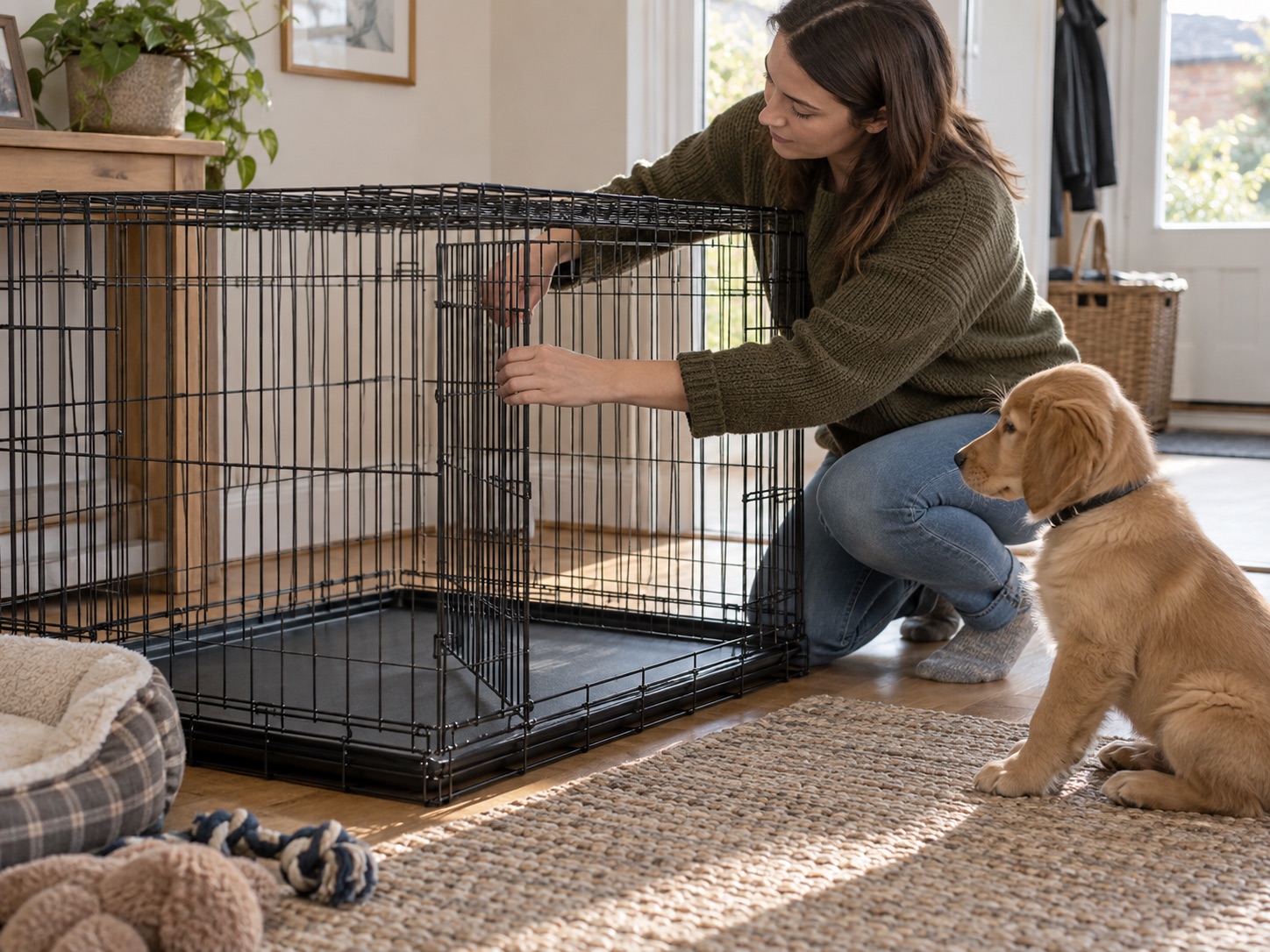
Check current sitting height and longest relaxed lie with the bed installed.
Remove the puppy before adjusting a divider, tray or crate position.
Keep familiar bedding and practise in the new spot while you are present.
There are two different reasons to move a crate
“Move the crate” can mean enlarging the puppy's usable interior or relocating the whole unit in the home. Solve the right problem. A puppy pressing against a divider needs more space. A puppy startled by kitchen noise may need a quieter position. A crate that blocks the household route may need a different room layout. None of those problems is fixed by simply closing the door for longer.
Watch the puppy's posture before adjusting size
Measure natural sitting height, shoulder width and longest relaxed sleep position with the current bedding installed. Can the puppy stand and turn without touching the roof or divider? If not, move the divider back or choose a larger suitable crate now. Do not wait for a nominal age, breed-chart milestone or weight limit.
The MidWest 18-inch iCrate is genuinely compact and can be outgrown quickly. Its supplied divider does not make the full 47cm exterior length a long-term fit for a puppy that grows much larger.
A larger model such as the MidWest 36-inch iCrate has a divider to adapt its usable section, but the adult estimate still needs checking. Compare its clear interior and door opening, not just its 36-inch name. Our puppy crate sizing guide covers the choice.
Adjust the empty crate safely
Take the puppy out and move them to a supervised safe area. Follow the manufacturer's instructions to release, reposition and reattach the divider. Inspect each fastening point and gap; nothing should protrude into the puppy's route. Refit the tray, bedding and water, then check usable standing and lying room again.
If the bed changes, the fit changes too. A low-profile EMPSIGN 74 × 45cm mat may preserve more headroom than a deep bolster, but its footprint must match the particular crate and its flat area. Do not use the mat's nominal size as a proxy for crate fit.
Move the whole crate gradually
Choose a new location away from direct sun, heaters, draughts and constant passage, with ventilation and a clear door swing. Keep the puppy's familiar bedding and invite voluntary exploration in the new spot while you are nearby. Practise a short rest there before expecting a normal nap or night.
If the puppy is moving from beside your bed towards a permanent sleeping place, make the change in stages at a pace they can cope with. Blue Cross suggests gradual movement after the first nights rather than a sudden separation. If the puppy becomes distressed, return to the previous easier location or step and try again later.
Recheck the plan after every change
After resizing, confirm the puppy can rest and drink naturally. After relocation, observe temperature, noise and whether household members can reach the puppy promptly. Keep crate use positive and short enough for the puppy's age and training stage. If avoidance or distress persists, read what to do when a dog refuses a crate and seek veterinary or qualified behaviour help as appropriate.
Common questions
Frequently asked questions
How do I know when a puppy has outgrown its crate?
If the puppy touches the roof when sitting or standing, cannot turn easily or cannot lie naturally with bedding in place, the usable space needs changing now.
How often should I move a crate divider?
Check the puppy's posture regularly during rapid growth and move the panel before crowding appears. There is no reliable fixed interval because puppies grow at different rates.
Can I move a puppy's crate to another room?
Yes, if the new position is safe and the puppy is introduced gradually. Keep familiar bedding, start with short calm visits and avoid pairing the move with a sudden increase in time alone.
Should I buy a larger crate or use a divider?
A suitable adult-size crate with a compatible divider can adapt to growth. If the full crate is already too small or the divider cannot be fitted safely, choose a better-sized model.
Why does my puppy cry after the crate moves?
The new location, noise, temperature or distance from people may be unsettling, or the puppy may need the toilet. Check needs and return to easier positive steps rather than leaving them distressed.
Sources
- PDSA — crate training
- RSPCA — crates and puppy playpens
- Blue Cross — helping a puppy sleep through the night
- Amazon UK example products linked in the guide