
Dog welfare and behaviour guide
Signs of distress in a dog crate
Recognise panting, freezing, escape attempts and other crate-distress signs, then respond safely and change the training or environment.
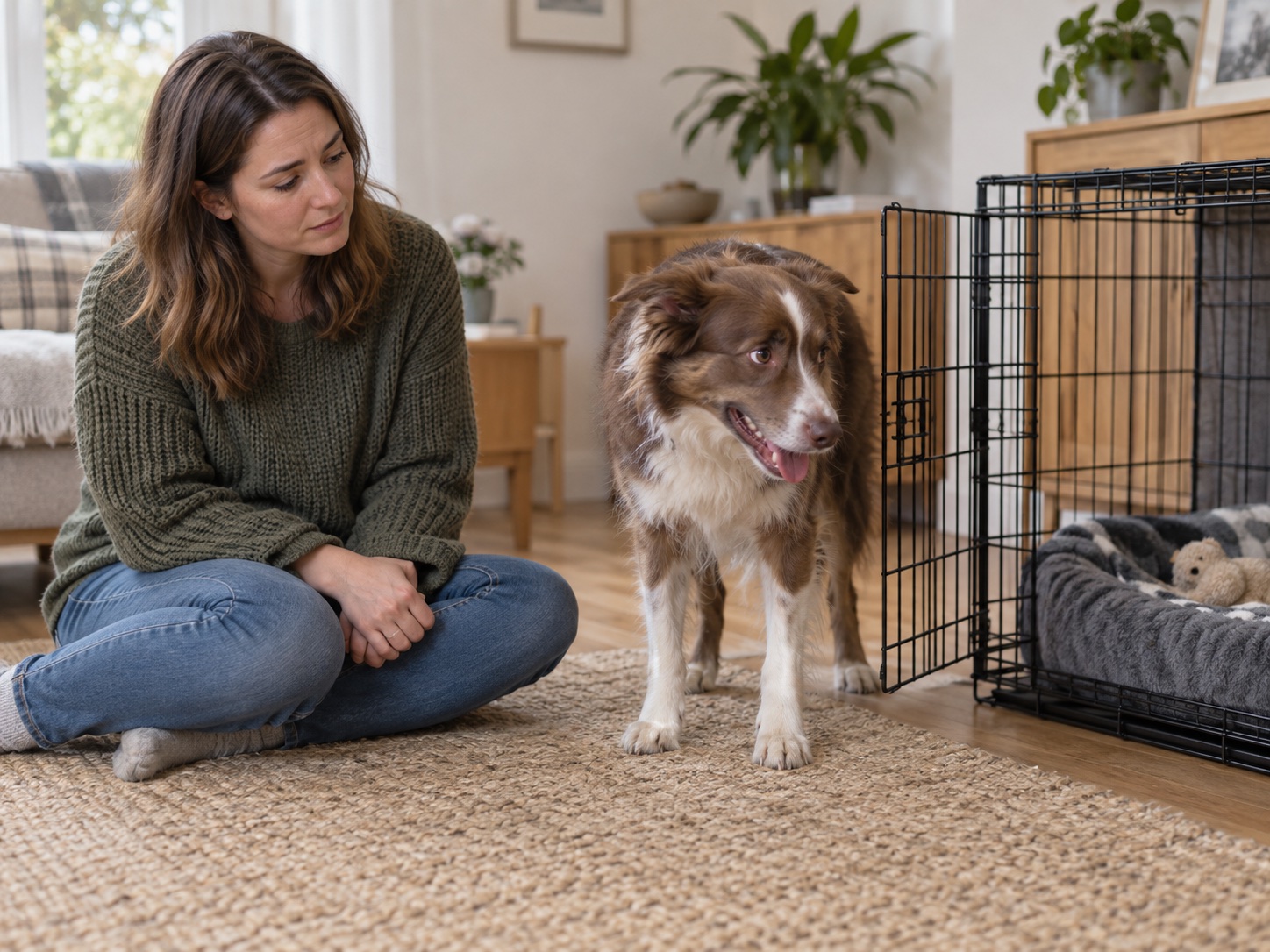
Panting in a cool room, drooling, cowering, aggression and frantic escape behaviour need attention.
A camera can reveal distress that begins only after you leave.
Do not respond by buying a stronger crate or extending time until the dog becomes silent.
Distress can be noisy or silent
RSPCA lists panting, excessive barking, cowering and aggression among signs a dog is distressed. PDSA also points to whining and scratching during crate training. Dogs Trust recommends video observation because separation-related signs may only appear when the owner is absent.
Do not wait for dramatic escape behaviour. A dog who becomes motionless, keeps muscles tense, scans the exit, repeatedly licks their lips or will not take food they normally enjoy may also be struggling.
Immediate response
If the dog is escalating, release them calmly when it is safe. Move children and other animals away, avoid reaching through bars near a frightened dog's face and do not punish vocalising or damage. Check paws, mouth, teeth and nails for injury if escape attempts occurred, and contact a vet when you are concerned.
Meet obvious toilet, water and temperature needs. Then stop using the same duration or absence. A distressed repetition is not useful training practice.
Check the physical setup
Measure the usable interior with bedding, divider and water in place. The dog needs an easy stand, sit, turn, natural lie and stretch. Check for a moving tray, rattling door, sharp damage, trapped fabric, blocked ventilation, radiator heat, direct sun and draughts.
A conventional double-door crate such as the Amazon Basics 36-inch model offers layout flexibility, but only if the chosen door opens safely and the dog's internal fit is correct.
Hardware features cannot resolve fear. Use product checks to remove discomfort, then address the emotional trigger separately.
Identify when distress begins
Record a short timeline: entry, door movement, your first step away, leaving the room, household sounds and return. Use a securely placed camera for brief, planned observations. Look for the first change, not just the most dramatic moment.
If worry starts when the door moves, rebuild positive door practice. If it starts when you pick up keys or disappear, separation may be the trigger. If it begins after a predictable period, toilet need, discomfort or duration may contribute.
Return to an easier stage
Secure the door open and reward voluntary approaches. Practise for seconds with you nearby, changing only one factor at a time. The dog should remain able to eat, move normally and choose to settle before difficulty increases.
The MidWest 36-inch crate includes a divider that can help adjust space for growth. It should never be used to reduce an adult dog's area or prevent movement in response to agitation.
Use our introduction method for the underlying steps, regardless of the dog's age, and keep sessions below the point where worry begins.
When separation is the trigger
Dogs Trust warns that a crate can intensify distress and create injury risk for some dogs with separation anxiety. Do not assume stronger containment is safer. A larger dog-safe area, gate, family support, sitter or daycare may reduce immediate risk while a professional plan is developed.
Read crates and separation anxiety and compare crate alternatives.
Get qualified help
Start with a vet to rule out pain, illness, age-related changes and other medical causes. A qualified behaviour professional can then assess the pattern and build a gradual plan. Seek help early when distress is repeated, worsening or linked to injury.
The goal is not a dog who has stopped protesting. It is a dog who is physically comfortable and emotionally able to rest.
Common questions
Frequently asked questions
What are common signs of crate distress?
Signs can include panting, drooling, cowering, repeated barking or whining, scratching, biting bars, frantic escape attempts, toileting, freezing, aggression and refusing food that the dog normally takes.
Is a quiet dog always calm in a crate?
No. A frightened dog may freeze, stay tense, scan the exit or stop eating. Look for loose posture, normal breathing and genuinely restful behaviour rather than using silence alone.
What should I do if my dog panics in a crate?
Prioritise safety, release the dog calmly when you can do so without creating further danger, check for injury or illness and stop repeating the setup. Contact your vet and a qualified behaviour professional for a tailored plan.
Should I get a stronger crate if my dog tries to escape?
Not as the first response. Dogs Trust warns that confining a panicking dog can lead to serious injury. Investigate the cause and use a safer, less restrictive environment where possible.
Can incorrect crate size cause distress?
Yes. Restricted posture, trapped bedding, poor ventilation, unstable flooring, heat, noise and inaccessible water can all cause discomfort or worsen worry. Correct the environment as well as the training plan.
Sources
- RSPCA — dog crate guidance — distress examples and slower training response
- PDSA — crate training your dog — whining, scratching and returning to easier stages
- Dogs Trust — separation anxiety — video observation, confinement risk and professional support
- Amazon UK product pages linked above