
Puppy pen practical guide
How to set up an indoor puppy pen
Assemble and position an indoor puppy pen with a stable footprint, safe floor, clear bed and water zones, and a calm introduction.
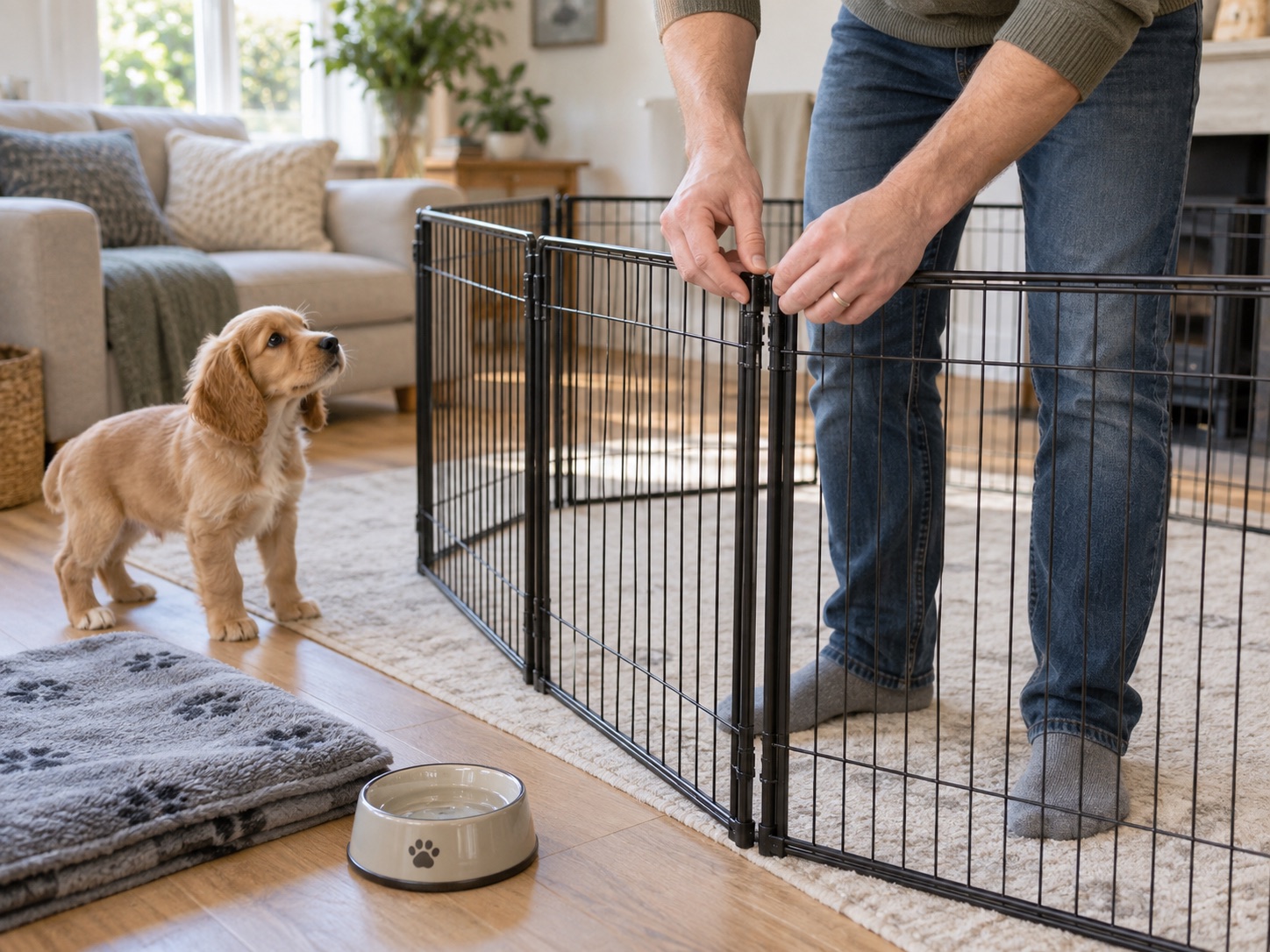
Mark the complete footprint and human walking route before assembly.
Confirm panel joins, feet, door latch and floor protection after installation.
Remove outside footholds, reachable cords, plants and other hazards.
Step 1: choose the footprint before unpacking panels
Decide what the pen must hold: the puppy, rest surface, water and a little unobstructed activity floor. Tape the proposed outline on the room floor. Place the real bed and bowl inside the tape, then make sure the puppy would still be able to move and turn easily. Our puppy pen size guide helps judge what remains after equipment is added. If the crate forms the resting end of the zone, follow the crate-and-playpen setup so neither opening becomes blocked.
Check the space outside too. People need a clear route to doors and seating, and the puppy must not reach cables, plants, tablecloths or shelves through the bars. Avoid direct sunlight, radiators, fireplaces and draughty exterior doors.
Step 2: assemble the complete boundary
Follow the exact product instructions, including which way the door should face and how joints lock. Build on a level surface and check that every foot rests evenly. The Yaheetech six-panel example can make a compact enclosure, but the final shape must be stable and the 60cm height suitable for the individual puppy.
An eight-panel alternative such as the Amazon Basics 107cm format gives different floor shapes and much more height, but it needs more room and storage. Do not choose it just for the height if its footprint crowds the room or its panels cannot stand securely where you need them.
Gently test the assembled frame for wobble, inspect sharp ends and check every latch. Keep the puppy outside until tools, spare connectors and packaging are cleared. Never bridge a missing panel with a sofa or cabinet unless the maker explicitly supports that arrangement.
Step 3: protect the floor without creating chewable edges
Put one flat, grippy and cleanable protective layer beneath the entire footprint when the room floor needs it. Every panel foot should rest on the same level surface. Avoid loose foam joins or a curled corner at the door. Lift the protector after accidents to dry the floor underneath; see puppy pen flooring for surface-specific advice.
Add a separate measured sleeping mat. The EMPSIGN 74 × 45cm example is a washable, low-profile rest surface, not a whole-pen waterproof barrier. Confirm its actual space and whether the puppy chews fabric.
Step 4: put water and rest in separate positions
Set a stable water bowl where the puppy can approach without stepping on the bed. Keep bedding away from the door so it cannot catch in the latch. Leave clear floor between items rather than covering every panel edge with toys. If a temporary toilet surface is necessary, put it away from bed and water while still leaving a movement area.
Step 5: introduce the puppy while you are present
Leave the pen door open and let the puppy investigate voluntarily. Reward calm entry and offer a suitable toy or chew. Close the door for brief, comfortable moments only after the puppy is settled, then reopen it before distress builds. RSPCA guidance emphasises a positive introduction in small steps.
Check the entire setup daily: joined panels, latch, floor, water, bedding, nearby furniture and the puppy's growing reach. If the puppy repeatedly jumps or climbs, follow what to do when a puppy climbs its pen rather than simply adding time behind the boundary.
Common questions
Frequently asked questions
Where should an indoor puppy pen go?
In a visible, calm part of the home away from direct sun, heat, draughts, cables and busy walkways, with enough space for the puppy and safe human access around it.
What should go inside a puppy pen?
A suitable bed or mat, stable water and a limited number of safe toys, while preserving clear movement space. A temporary toilet area, if needed, should be separate from rest and water.
Should a pen touch a sofa or wall?
Do not use furniture as a substitute for a panel unless the manufacturer supports that layout. Keep climbable furniture far enough away and check for reach-through hazards near any wall.
What goes under a puppy pen on carpet?
A flat floor-compatible protective layer that stays put, contains spills and does not leave chewable edges. Lift it to clean and dry the carpet beneath.
Can I leave a puppy alone as soon as the pen is assembled?
No. First check the pen physically and introduce it gradually while present. Alone-time is a separate training process, and puppies need frequent care and toilet opportunities.
Sources
- RSPCA — crates and puppy playpens
- PDSA — new puppy checklist
- Amazon UK example products linked in the guide