
Puppy pen flooring guide
Choosing flooring for a puppy pen
Protect floors under a puppy pen without creating slippery, chewable or absorbent edges, with guidance for timber, laminate, tiles and carpet.
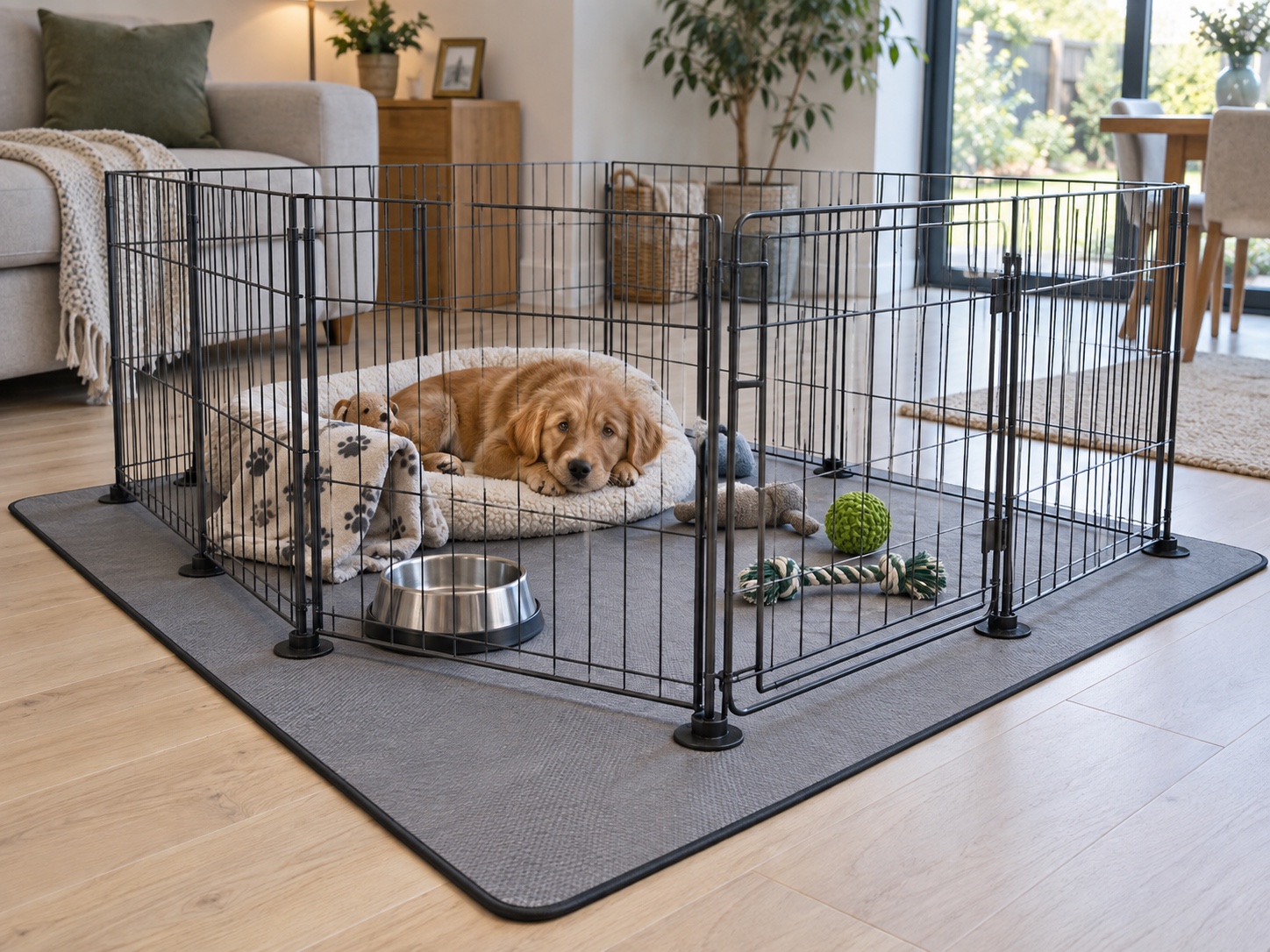
Extend the mat beyond every panel foot so the frame cannot rock between surfaces.
Check compatibility with the finished floor; some rubber backings can discolour timber or vinyl.
Clean accidents promptly and dry beneath the mat so trapped moisture does not damage the room floor.
The floor has four jobs
It must give the puppy traction, protect the household surface, support the pen without sliding and make cleaning manageable. A soft-looking rug can fail all four if it bunches, absorbs urine and lets metal feet move.
Start with the room floor manufacturer's care instructions. Timber finishes, laminate joints, vinyl and stone sealants react differently to moisture and rubber backing. Test a small hidden area when the material supplier recommends it.
Size the protective layer
Assemble or mark the complete pen shape first. The mat should extend beneath every foot or bottom rail, ideally with a small margin outside. A frame half on and half off a mat can rock, twist and create a gap under one side.
At the door, the edge must lie flat and out of the walking line. Do not fold excess material beneath the frame; the ridge changes stability and creates a damp pocket.
The compact Yaheetech pen illustrates why the complete layout matters. Its six panels can form different shapes, so the correct mat is based on your final footprint rather than the box dimensions.
Timber and laminate
Prioritise a waterproof top, sealed edges and a backing compatible with the finish. Clean grit from beneath the mat because trapped particles can scratch as the pen shifts. Lift the layer regularly to check for condensation or seepage around laminate joints.
Do not assume natural rubber is harmless to every finish. Some coatings can discolour after prolonged contact. Follow both the flooring and mat manufacturers' guidance.
Tile and stone
Hard floors are easy to wipe but can be cold and slippery. Choose a high-grip layer that will not creep when the puppy turns or when a person opens the gate. Add a bed for warmth, but preserve clear grippy movement space rather than covering everything in loose blankets.
Grout lines can hold liquid. Lift and clean the complete area after an accident rather than wiping only the visible surface.
Carpet
Use a waterproof barrier large enough to contain spills before they reach the pile. A thin office-chair protector may be hard and slick; a loose tarpaulin can crinkle and bunch. Look for a surface with paw grip and a backing designed for carpet.
Dry both sides after cleaning. Moisture held under an apparently dry mat can cause odour and damage.
Foam, vinyl and washable rugs
Interlocking foam tiles provide cushioning and replaceable sections, but the puzzle edges invite chewing and liquid travels through joins. A single-piece vinyl remnant contains moisture but can be slippery and may curl. A washable rug offers comfort but usually needs a waterproof layer beneath it.
The practical answer is often layered: one compatible waterproof, non-slip base under the whole pen, with a separate washable bed. Keep layers minimal and edges inaccessible.
Cleaning without making the setup unsafe
Move the puppy to a safe area, remove the pen contents and clean with a pet-appropriate product according to its label. Rinse when required and let every surface dry before rebuilding. Avoid strong fragrances and never mix cleaning chemicals.
Inspect the mat for tooth marks, lifted edges and trapped liquid. Check the pen feet at the same time; missing caps can expose sharp metal or create scratches.
Toilet training and the pen floor
The pen should not become one large toilet surface. Offer frequent outdoor opportunities and reward the desired location. If a temporary pad or tray is necessary, place it away from bed and water while maintaining enough room to move.
Accidents are information about timing, access and puppy development—not a reason to reduce the area until the puppy has no choice but to soil near the bed. Review the schedule and seek veterinary advice for sudden or persistent changes.
Combine this flooring plan with the puppy pen size guide and our comparison of the best indoor dog pens.
Common questions
Frequently asked questions
What is the best flooring under a puppy pen?
A single non-slip, waterproof or washable mat that lies flat, gives secure paw traction and is safe for the underlying floor. The puppy must not be able to lift or chew its edges.
Are foam tiles suitable under a puppy pen?
They can provide cushioning but exposed joins and edges are tempting to chew, and liquid can run between them. Use only when the puppy cannot access the joins and inspect frequently.
Can I put a puppy pen on carpet?
Yes, but use a compatible waterproof protective layer and dry any trapped moisture promptly. Check that the pen stays stable and the protector does not slide or create a raised trip edge.
How do I protect wooden floors from a puppy pen?
Use a floor-compatible waterproof layer beneath the entire pen, keep panel feet clean and remove moisture quickly. Confirm that the backing will not stain or react with the finish.
Should puppy pads cover the whole pen floor?
No. A floor covered in pads can blur the sleeping and toilet areas and gives loose edges to shred. If pads form part of a temporary toilet plan, keep them in one controlled area away from the bed and water.
Sources
- RSPCA — dog crates and puppy playpens — comfortable bedding, water and positive setup
- PDSA — new puppy checklist — preparing and puppy-proofing the home
- Amazon UK example product linked in the guide