
Puppy pen problem-solving guide
What to do when a puppy climbs its pen
Respond to puppy pen climbing by preventing falls, checking footholds and distress, and choosing a safer boundary or supervised space.
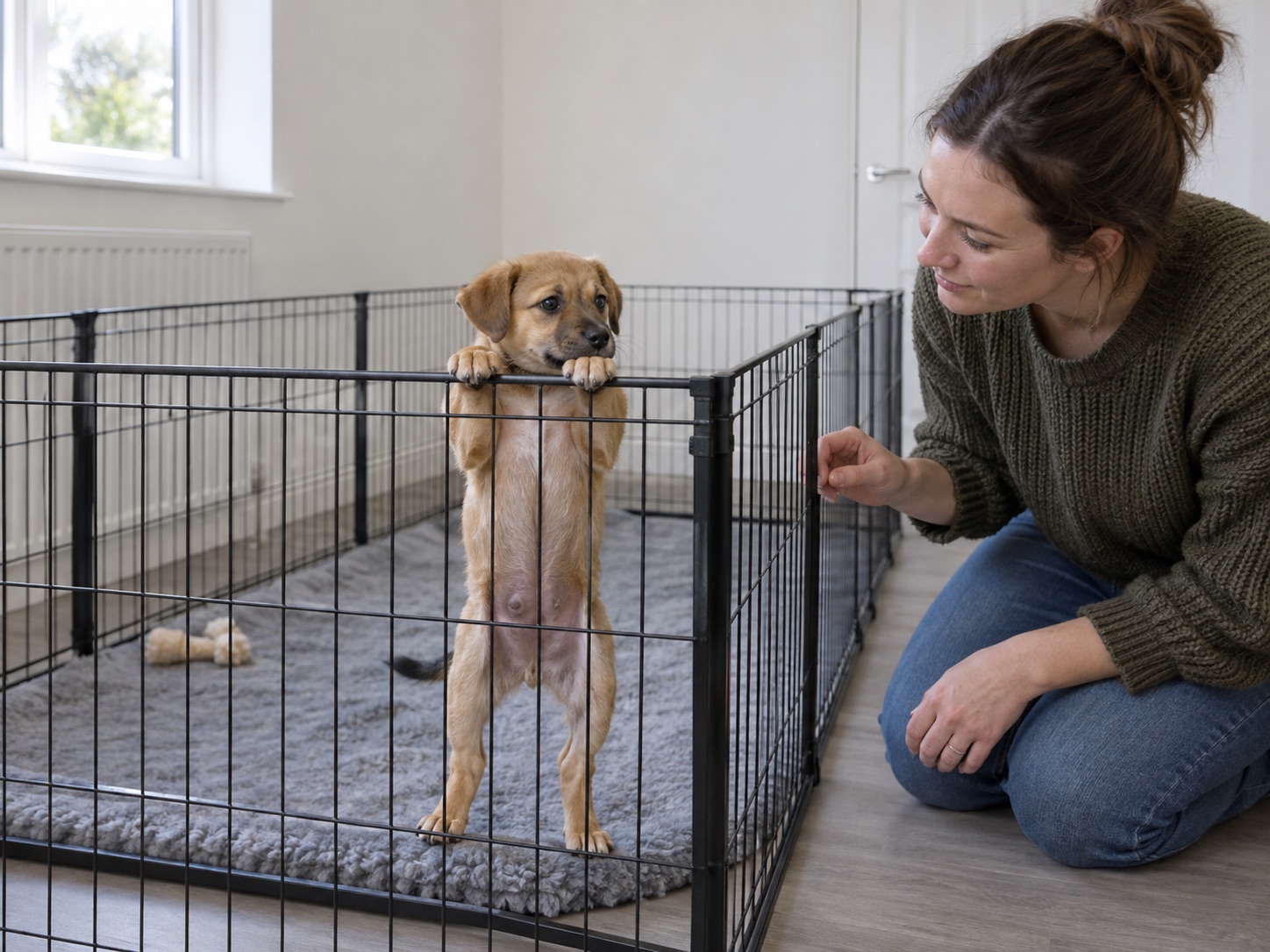
Check the puppy for injury after a fall and contact a vet if hurt or uncertain.
Remove external footholds and inspect bar spacing, panel height and stability.
Investigate distress, boredom, toilet needs and duration; a taller pen is not a behavioural treatment.
First, prevent the next fall
A puppy hanging from a pen edge can slip, twist a leg or knock an unstable panel over. If you see climbing, stay close, calmly guide the puppy back to a safe floor and do not leave them behind that setup unsupervised. If there has been a fall, check for limping, pain, breathing difficulty or a change in behaviour and contact a vet if injury is possible.
Do not reward the problem by treating climbing as a clever trick, but safety takes priority over a training theory. The immediate objective is a secure place for the puppy while you work out why the attempt happened.
Inspect the pen and everything around it
Look for horizontal bars that act like rungs, a low top edge, bent panels, loose connectors, a sliding floor protector or a bed pushed against the side. Move chairs, sofas, storage boxes and tables away from the perimeter. A puppy may climb from inside or use nearby furniture after reaching through bars.
The Yaheetech six-panel set is 60cm high in the selected version. It can be suitable for some small puppies, but its height is not a promise against climbing. If a dog can reach the top with paws, the layout needs rethinking now.
Ask what the puppy is trying to achieve
Some puppies climb to reach people or exciting activity; others need the toilet, have too little movement, are overtired or distressed by separation. Note when climbing starts, what happened just before, and whether the puppy can settle when someone remains nearby. Frantic escape attempts, panting or persistent vocalisation call for a slower plan and veterinary or qualified behaviour support.
A pen is a short-term management tool, not a way to make a puppy cope with more alone-time than they have learned. Blue Cross describes building short, relaxed periods behind a gate while a person remains in sight before increasing separation.
Compare a safer physical boundary
The Amazon Basics 107cm eight-panel pen is substantially taller than the 60cm example, and its larger panel set can make different floor shapes. It still needs stable joints, adequate floor area and no footholds. Do not move a frightened puppy into a taller enclosure without addressing the reason for the escape attempt.
Where a genuine doorway exists, a wall-mounted gate can define a puppy-proofed room rather than a freestanding pen. BabyDan FlexiFit is one example for measured 67–105.5cm openings; it must be fitted to suitable walls exactly as directed. Check the puppy cannot squeeze through, climb over or reach hazards on either side.
Do not improvise a lid, netting, cable ties or weighted blanket over a pen. Those can create entanglement, collapse, trapped heat or a new climbing point.
Reintroduce managed space gradually
Once the physical risk is controlled, practise brief, positive pen or gated-room sessions with water, suitable rest and a person nearby. End before the puppy escalates. Expand duration only when the puppy stays relaxed. Revisit the indoor pen setup to remove footholds and leave enough usable area. If the puppy cannot remain safe even in a changed setup, choose supervised access and seek tailored behaviour help rather than escalating hardware. Our pen-to-room transition guide covers supervised expansion.
Common questions
Frequently asked questions
Is it normal for puppies to climb playpens?
Some puppies try as coordination and reach develop, but climbing creates a fall or escape risk. Treat the first attempt as a reason to reassess the enclosure and supervision.
Will a taller puppy pen stop climbing?
It may remove an easy top edge for some puppies, but bar layout, nearby furniture, panel stability and the motivation to escape still matter. Do not assume height alone makes the pen safe.
Can I add a cover or net over the pen?
Do not improvise a roof, net or weighted cover. It can create entanglement, collapse or poor airflow. Use only a manufacturer-approved configuration suitable for the dog.
Should I ignore a puppy who climbs for attention?
No. Prevent a fall and assess needs and distress. Make the environment and training easier rather than allowing repeated risky climbing to continue.
What can replace a climbable pen?
A properly puppy-proofed room behind a correctly installed gate may work where there is a suitable doorway. Some puppies need closer supervision or a different management plan; seek professional help for persistent distress.
Sources
- RSPCA — crates and puppy playpens
- PDSA — making your home dog friendly
- Blue Cross — home alone and separation anxiety
- Amazon UK example products linked in the guide