
UK dog car travel guidance
Highway Code Rule 57 and travelling with dogs
Read what Highway Code Rule 57 says about dogs in vehicles, what suitable restraint means in practice and how to choose between a harness, carrier, cage or guard.
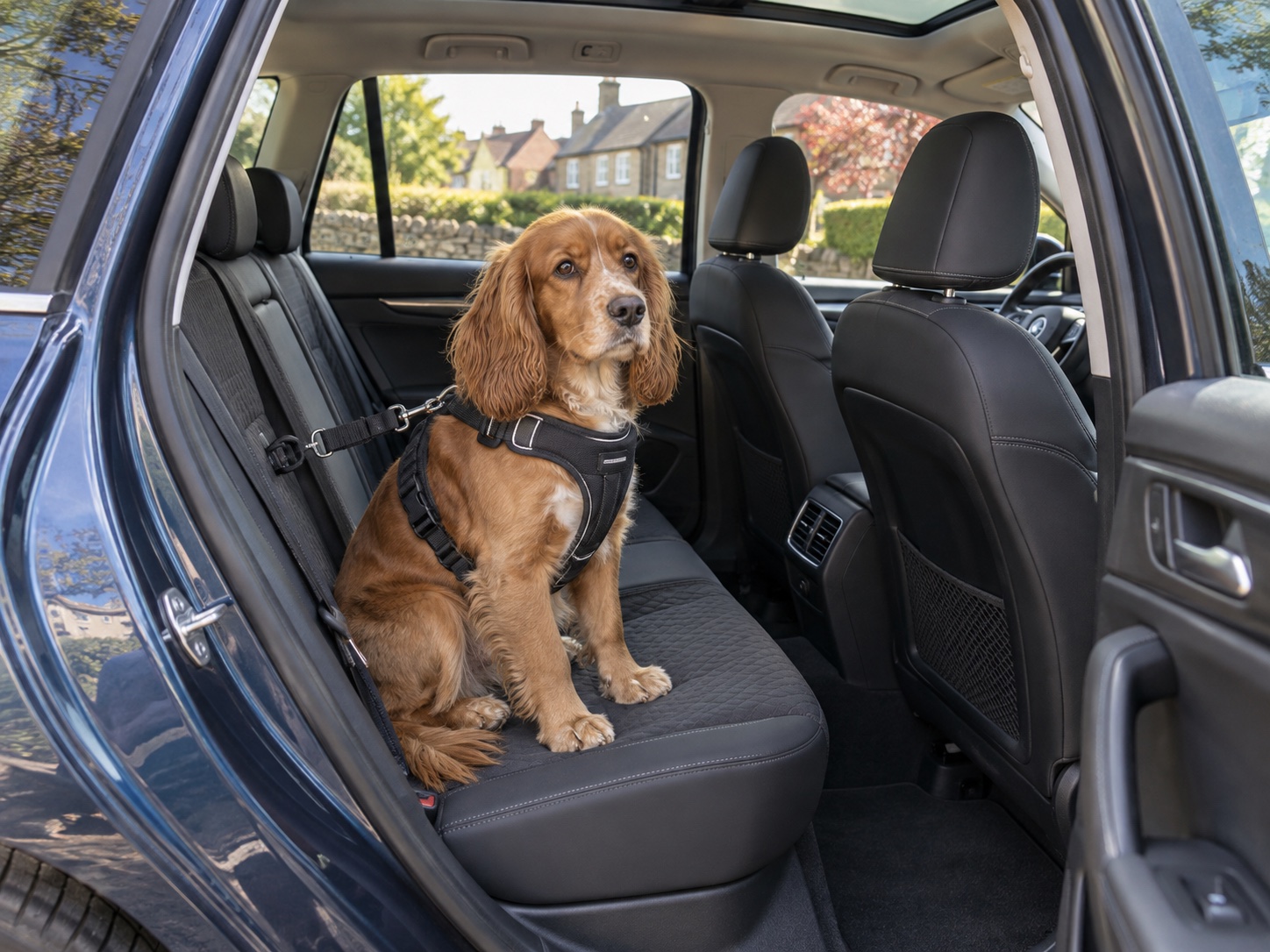
Rule 57 uses advisory wording, but the Highway Code can be used in court proceedings to establish liability.
A restraint label does not establish crash protection; verify exact-model evidence separately.
Recheck fit, anchoring and ventilation before every journey.
What Rule 57 actually says
The current Highway Code says that, when in a vehicle, dogs and other animals should be suitably restrained so they cannot distract the driver or injure the driver, themselves or other people if the vehicle stops quickly. It then names a seatbelt harness, pet carrier, dog cage and dog guard as possible ways to restrain an animal.
That wording is deliberately broader than “buy a dog seatbelt”. It sets an outcome: control distraction and injury risk. The correct solution depends on the dog, vehicle, product instructions and installation.
Is Rule 57 the law?
Rule 57 does not use the capitalised words MUST or MUST NOT and does not cite a specific offence beneath it. The Highway Code introduction explains that failure to follow advisory rules does not, by itself, cause a person to be prosecuted.
However, the same introduction says the Highway Code may be used in evidence in court proceedings under the Traffic Acts to establish liability. It is therefore wrong to call Rule 57 a standalone automatic fine, but equally wrong to dismiss it as optional advice with no legal relevance.
What suitable restraint looks like
Seatbelt harness
A vehicle harness spreads load across the chest and attaches using the route specified by the manufacturer. It should keep the dog away from the driver while allowing a stable sit or lie. A lead clipped to a collar is not a substitute and can concentrate force on the neck.
The Kurgo Enhanced Strength Tru-Fit is a useful evidence-led example because the manufacturer publishes its static and dynamic test methodology and size-specific reports. The Amazon medium variant has a stated chest range of 45.5–71cm; fitting and using the included tether correctly are essential.
Carrier
A measured carrier can be suitable for a small dog if it has a stable base, adequate ventilation and a manufacturer-approved restraint route. A luggage sleeve or carry strap is not automatically a safety installation. Read the exact instructions and keep openings away from buckles and moving seat parts.
Dog cage or car crate
A crate should fit the dog and the vehicle, pass through the narrowest boot opening and be secured as the maker specifies. An ordinary folding home crate may contain a calm dog, but that does not establish collision performance. Read our dog car crate guide for the distinction.
Dog guard
A correctly fitted guard can prevent a dog entering the passenger area and distracting the driver. It does not enclose the dog or necessarily limit movement within the boot. Consider a compatible boot divider where space needs to be controlled, and never rely on a loose pressure fit if the product requires fixed mounting.
Crash tested is a separate question
Rule 57 does not state that every restraint must carry one named crash certification. Even so, buyers should distinguish basic containment from documented performance in a collision.
Ask four questions: Which exact model and version was tested? At what size or dog mass? What procedure and speed were used? What attachment method was required? If a listing answers none of them, treat “crash tested” as unverified until the manufacturer supplies the report.
The EzyDog Drive provides a different installation approach from Kurgo: the car's seatbelt routes through the harness handles rather than through a separate tether. EzyDog publishes a current UK size chart and states conformity with FMVSS 213 requirements.
Compare both approaches in dog car harness versus crate.
Positioning the dog in the car
Keep the dog away from driver controls, the gear selector and the driver's line of sight. Check the vehicle manual for airbags and child-seat anchor restrictions. Never attach a tether to an unsupported headrest, trim loop or boot hook unless the restraint and vehicle instructions explicitly approve it.
The dog should be able to sit or lie without the tether wrapping around a leg, yet not have enough travel to reach the driver or strike a hard surface. Test movement while parked, then repeat after the dog changes position.
Before every journey
Inspect the harness, crate or carrier for wear. Confirm every buckle, door and anchor. Remove incompatible collars or dangling tags where they can catch. Keep ventilation clear and carry water for longer trips.
Never leave a dog in a parked vehicle when heat, cold or distress is a risk. Plan breaks around the dog's age, health and journey tolerance. If the dog pants heavily, drools, vomits, claws, vocalises persistently or becomes unusually unresponsive, stop safely and reassess.
Insurance and travel abroad
Insurers can set their own policy conditions, so read the current wording rather than assuming Rule 57 alone answers a claim question. For travel outside Great Britain, check the laws of every country on the route as well as ferry, tunnel and accommodation rules.
Keep product instructions and evidence with your travel documents. The safest setup is one you can install correctly every time, not the one with the most impressive product title.
Common questions
Frequently asked questions
Is it illegal to drive with an unrestrained dog in the UK?
Rule 57 uses advisory wording rather than MUST or MUST NOT, so failure to follow it is not by itself a standalone offence. The Highway Code says advisory rules may nevertheless be used in evidence in court proceedings under the Traffic Acts to establish liability.
Does a dog have to wear a seatbelt harness?
Not specifically. Rule 57 lists a seatbelt harness, pet carrier, dog cage or dog guard as ways of restraining animals. The chosen setup must be suitable, correctly fitted and capable of preventing distraction and injury during sudden stopping.
Can a dog travel in the front seat?
The key Rule 57 requirement is suitable restraint, but the rear of the vehicle is normally easier to separate from driver controls and airbags. Check the vehicle manual and restraint instructions and never place a dog where it can interfere with driving.
Is a dog guard enough for Rule 57?
Rule 57 names a dog guard as one possible restraint method. Whether a particular guard is suitable depends on vehicle fit, installation and whether it prevents distraction and uncontrolled movement; a guard does not automatically protect the dog in a collision.
Does Rule 57 apply on short journeys?
The rule does not create an exception for a quick local trip. Restrain the dog before the vehicle moves, even for a short journey.
Sources
- GOV.UK — Highway Code rules about animals, including Rule 57
- GOV.UK — Highway Code introduction — legal status of MUST and advisory wording
- Kurgo — crash-testing methodology and reports — exact-model evidence example
- EzyDog UK — Drive car harness — current size guide and manufacturer testing claim
- Amazon UK product pages linked above