
Pen and crate comparison
Puppy pen vs crate
Compare puppy pens and crates by space, training purpose, overnight use, toilet planning and home layout, with guidance on using both safely.
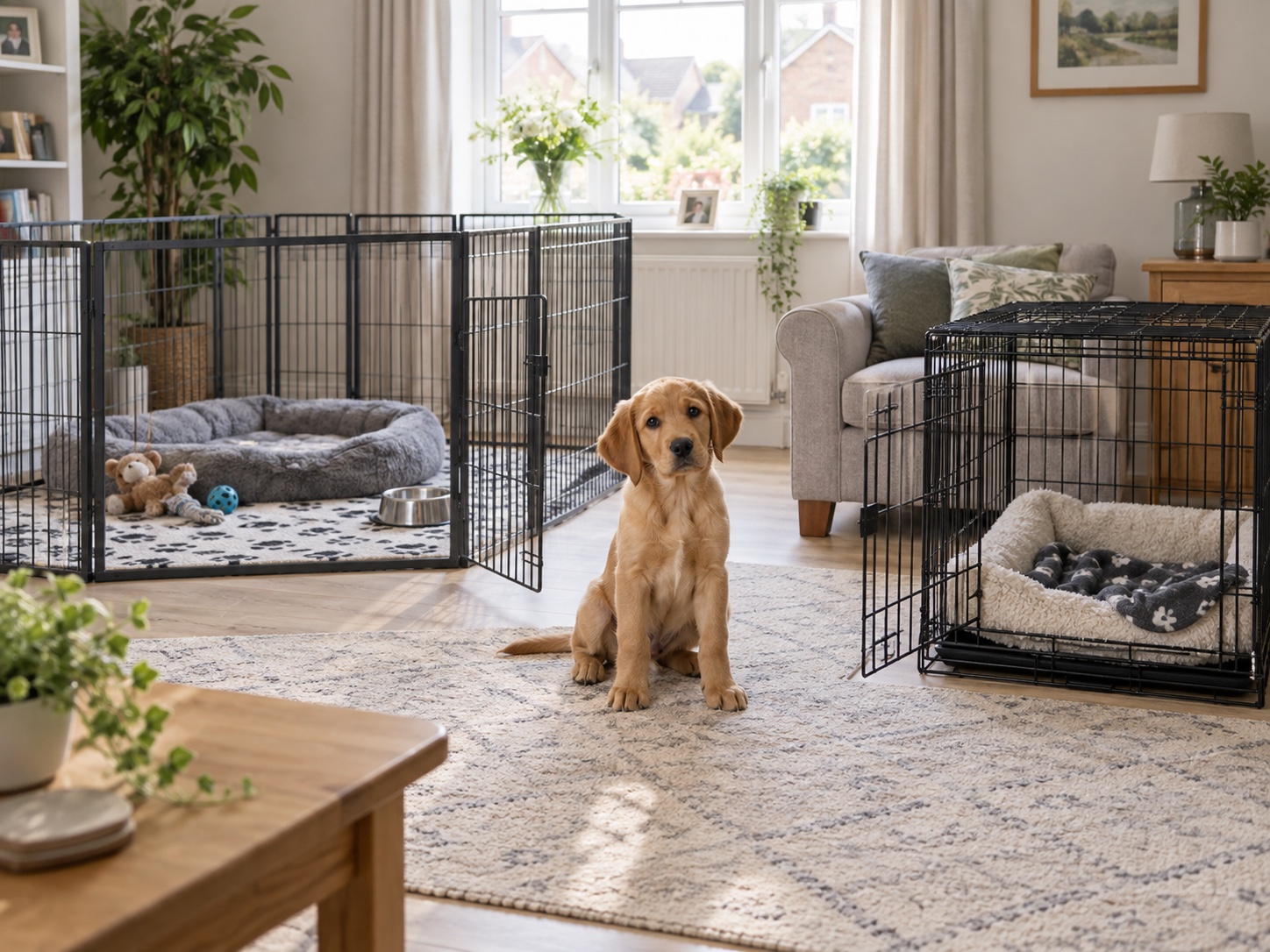
Choose a pen for more movement and zoning; choose a crate for a calm den-like rest area.
Size both from the puppy's current posture and growth, not weight or breed labels alone.
Distress, persistent escape attempts and prolonged confinement mean the plan needs to change.
The simplest difference
A pen is a boundary around part of the room. A crate is a piece of enclosed resting equipment. The pen normally provides more floor and several zones; the crate provides less stimulation and a smaller den-like interior.
Neither is inherently kinder or safer. A cramped pen, an oversized unstable panel layout or a puppy climbing out can be poor management. A crate that restricts posture, is used for punishment or holds a distressed puppy is equally unsuitable.
Scroll horizontally to see all columns →
| Question | Puppy pen | Dog crate |
|---|---|---|
| Primary job | Larger managed activity area | Smaller den-like rest area |
| Usable space | Separate zones plus clear floor | Stand, turn, lie and stretch naturally |
| Main escape risk | Jumping, climbing or panel movement | Mouthing bars or forcing doors |
| Room impact | Large configurable footprint | Smaller fixed footprint plus door swing |
| Storage | Panels fold or separate | Many wire crates fold flat |
When a puppy pen is useful
Choose a pen when you need a visible boundary around a larger puppy-proofed area during cooking, visitors or a short work period. The floor should retain clear movement space after bed, water and toys are added.
The Yaheetech six-panel pen is a compact example. Its 60cm height suits only a small puppy that does not climb or jump, but its reconfigurable floor can provide more movement than a crate.
A pen also makes it easier to provide a temporary indoor toilet surface at a distance from the bed when unavoidable. That is a management fallback, not a replacement for frequent outdoor training.
When a crate is useful
A correctly sized crate can become a quiet place for voluntary sleep, travel preparation or brief management. The puppy must stand, sit, turn, lie naturally and stretch, with bedding and water considered in the usable interior.
The MidWest iCrate demonstrates a common puppy format: a fold-flat wire frame with a divider that can reduce the available area while preserving appropriate movement. The divider needs regular adjustment as the puppy grows.
Follow our guide to introducing a puppy to a crate rather than closing the door on the first day.
Using both together
An open crate can sit within a pen as the sleeping zone. Secure the crate door fully open so it cannot swing into the puppy, leave space around its entrance and make sure the combined structures cannot create a trapping gap.
The crate consumes a large part of the pen footprint, so redraw the plan with it in place. If there is only a narrow strip left outside, use a larger pen or place the crate beside a connected boundary according to the equipment instructions.
Overnight use
A pen offers more choice of position and can hold a separate toilet surface. A crate can help a settled puppy rest near the owner and makes waking movement easier to hear. Neither means a young puppy can manage an adult sleep schedule.
Plan toilet trips around age and the individual's pattern, keep the setup near enough to notice waking and respond before distress escalates. See our guide to a puppy's first night with a crate for a gentle routine.
Time alone
Extra square metres do not turn a pen into day care. Puppies need social contact, feeding, training, sleep, exercise appropriate to development and frequent toileting. Build calm alone time in small increments while the puppy remains comfortable.
If the puppy pants, drools, howls continuously, throws its body at the boundary or tries to climb, end the session safely and reassess. Persistent distress deserves veterinary and qualified behaviour support.
Choose from the room backwards
Measure the puppy and finished equipment, then measure the room. Include doors, radiators, direct sun, draughts, cables and people routes. A pen normally needs the most floor; a crate needs a door-swing zone; the combined setup needs both.
For product formats, compare the best puppy playpens and best puppy crates. The aim is not to select a winner—it is to give each task the right amount and type of space.
Common questions
Frequently asked questions
Is a puppy pen better than a crate?
It offers more movement and can separate bed, water and activity areas, but it takes more floor space and can be climbed. A crate is more enclosed and compact. The better choice depends on the task and the puppy.
Can I put a crate inside a puppy pen?
Yes, if the crate door is fixed open, the combined layout remains stable and there is still generous usable pen space. The puppy must not be trapped between the two structures.
Should a puppy sleep in a crate or pen?
Either can be part of a carefully introduced setup. The puppy still needs overnight toilet opportunities and support, and the space should not be used to ignore persistent crying or distress.
Is a pen better for toilet training?
A pen can separate a temporary toilet surface from the bed when necessary, but too much reliance on indoor toileting can slow the desired outdoor routine. Frequent planned trips outside remain central.
How long can a puppy stay in a pen?
There is no single safe duration. Age, toilet needs, training history, activity and the individual response matter. Use short successful periods and arrange human care rather than treating extra floor area as permission for a long absence.
Sources
- RSPCA — dog crates and puppy playpens — purposes, positive introduction, movement and distress signs
- PDSA — crate training your dog — safe-haven setup and gradual training
- Amazon UK example products linked in the guide