
Practical crate sizing guide
How to measure a dog for a crate
Measure your dog's length, sitting height and sleeping posture correctly, then translate those numbers into a crate size that allows comfortable movement.
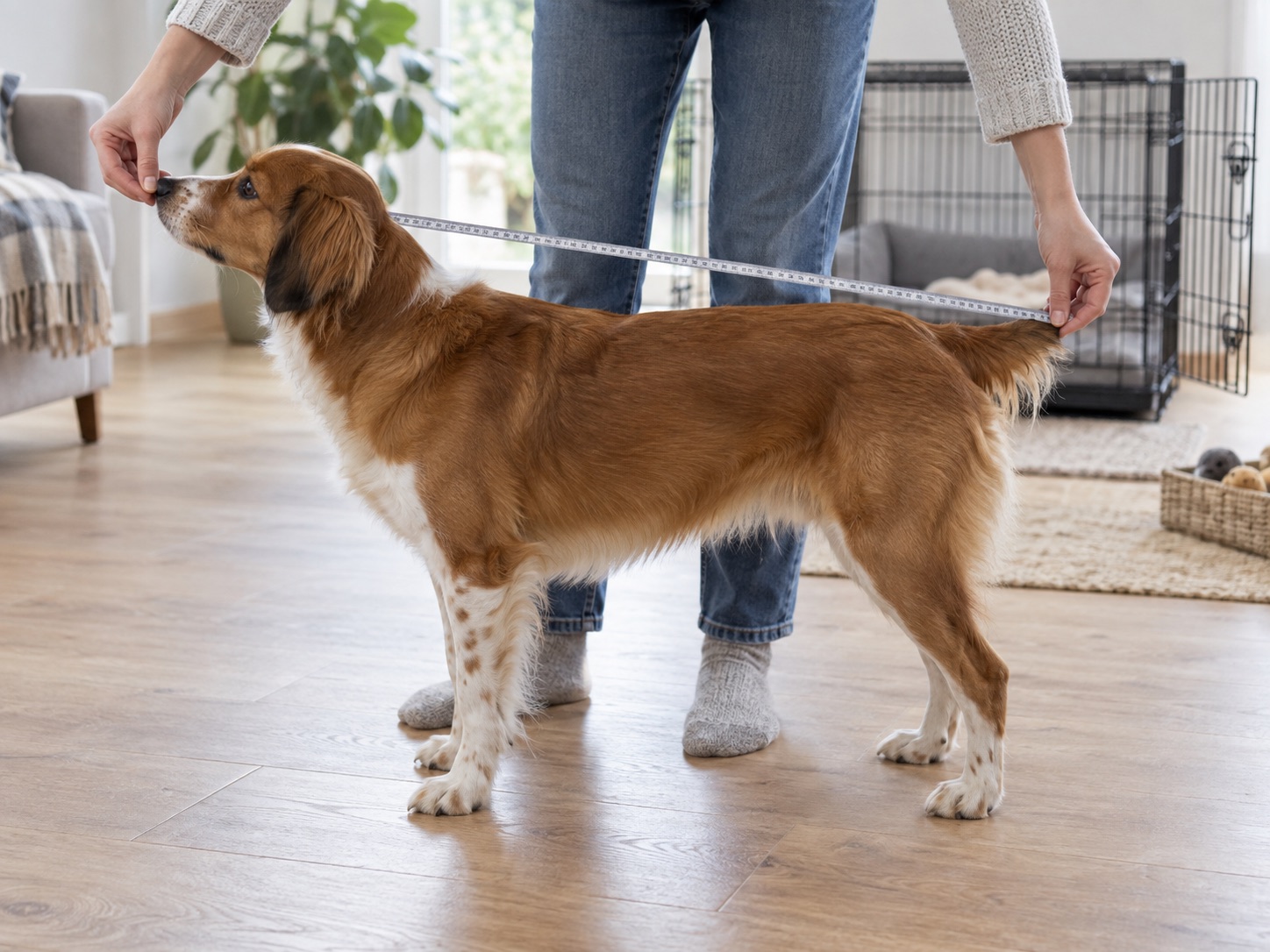
Use a soft tape and keep the dog in a relaxed, natural posture.
Measure to the base of the tail, not the tip, and include upright ears in sitting height.
Confirm the dog can stand, sit, turn, lie naturally, wag and stretch once bedding is inside.
What you need
Use a soft dressmaker's tape, a note on your phone and a few treats. A second person can help reward the dog while you read the tape. Measure on a level, non-slip floor when the dog is calm. Do not pull the dog into a square show stance or lift their head unnaturally—the crate must fit the posture they actually use.
If the dog dislikes handling or the tape, pause. Practise brief, rewarded contact before trying again. A rough photograph with a tape in view can help you record the position, but avoid forcing precision from a worried dog.
1. Measure natural body length
Ask the dog to stand normally. Place the end of the tape at the tip of the nose and follow a straight horizontal line to the base of the tail, where the tail joins the body. Do not include the full tail length.
Repeat the measurement twice. If the dog has a long neck or changes stance, record the larger natural reading. This is the starting point for interior floor length—not a number to match exactly with the crate's outside label.
2. Measure sitting height
Ask for a relaxed sit on the same level surface. Measure from the floor to the highest point of the head or naturally held ears. Floppy ears normally do not need to be held upright; permanently upright ears do count because they need clearance.
Why sitting? Many dogs are taller seated than standing. A crate that clears the back can still force the dog to duck their head or ears. Add the chosen bed or mat mentally, because it raises the dog closer to the roof.
3. Check comfortable body width
Measure across the widest part of the shoulders or body while the dog stands naturally. This number is not a complete crate-width formula. Use it to reject interiors that obviously prevent an easy turn or force the dog to brush both sides.
Watch the dog turn on a rug or bed. Older dogs, long-backed dogs and dogs with reduced mobility may use a wider, slower turn than a simple shoulder measurement suggests.
4. Observe the longest sleeping posture
Do not stop at standing measurements. Watch the dog during a normal relaxed sleep and note the longest position: curled, on the chest, on one side or fully stretched. Measure the occupied area when practical.
A dog that regularly sleeps with forelegs extended or flat on one side needs uninterrupted floor length and width. The crate should accommodate natural rest rather than train the dog to curl more tightly.
Turn measurements into a usable interior
PDSA and RSPCA guidance says the dog should be able to stand and sit without touching the top, turn around, lie naturally and stretch out. PDSA also includes wagging the tail and says too big is better than too small. These movements are the final test.
Do not simply add an arbitrary number to the body length and buy the closest inch label. Compare your figures with published internal dimensions. Where only external measurements appear, subtracting a guessed amount is unreliable because frame, tray lip and door construction differ.
The MidWest 36-inch model is a useful real-world example: its listing gives a 92.7 × 59.7 × 62.9cm product size and includes a divider, but your dog still needs the complete movement check inside the assembled setup.
Use our published-dimension comparison and dog-and-room worksheet before comparing products. It separates outside measurements from the interior the dog can use. Our standard crate sizes table can help translate inch labels, but the dog's measurements remain decisive.
Allow for everything inside the crate
Bedding reduces height and can bunch against the sides. A fixed water bowl occupies width. A divider has its own frame and attachment points. Set up the intended interior on the floor and check that the dog still has a clear resting area.
Use a thin, supportive mat when headroom is close rather than a deep bed that makes an otherwise adequate crate too low. Water should remain available in a stable container positioned so it does not prevent turning or soaking the sleeping surface.
Measuring a puppy
Record current measurements, then discuss likely adult size with your vet, breeder or rescue. Breed averages are not a promise. If buying for adult growth, use a purpose-made divider to manage the space temporarily and inspect its fit frequently.
Re-measure at least weekly during fast growth and immediately after a visible growth spurt. Move the divider before posture becomes restricted. See our puppy crate guide for suitable features and easy-clean options.
Measure the room too
Once an internal size works, map the crate's external footprint with tape. Add every door swing, the tray-removal direction and space for people to pass. Check direct sun at different times of day, radiators, draughts, sockets and furniture doors.
A technically correct crate can still be wrong for the room if it blocks circulation or must be placed somewhere hot or isolated. Choose another layout, not a smaller interior that compromises the dog.
An XXL frame such as the Amazon Basics 122cm model shows why this second measurement stage matters: it may suit a large dog's posture yet require more than 76cm of room width before door, tray and walking clearance are added.
Recheck after delivery
Published measurements and your interpretation can differ. Assemble the crate fully, add bedding and water, secure the door open and let the dog investigate. Observe whether all essential movements are easy. If the dog ducks, curls because the sides stop a stretch, struggles to turn or cannot avoid the water bowl, the usable interior is too small.
Common questions
Frequently asked questions
Do I measure a dog from nose to tail tip for a crate?
No. Measure from the tip of the nose to the base of the tail where it joins the body. The tail must still have room to wag naturally inside the crate.
How much extra room should a dog have in a crate?
There is no single centimetre allowance that suits every dog. The finished interior must allow comfortable standing, sitting, turning, lying and full stretching with bedding and water in place. PDSA says too big is better than too small.
Should I measure my dog standing or sitting?
Both. Standing gives body length, while a natural sit usually reveals the greatest head or ear height. Also observe the dog's longest relaxed sleeping posture.
How do I size a crate for a puppy?
Measure the puppy now, investigate likely adult size with your vet or breeder and select a crate that can provide suitable adult space. Use a secure divider only while it still leaves all essential movement possible, and adjust it as the puppy grows.
What if the product page only lists external dimensions?
Treat them as the maximum outside footprint, not the dog's space. Ask the seller for internal measurements or choose a model that publishes them, allowing for frame, tray, door and bedding.
Sources
- PDSA — crate training your dog — movement test, puppy growth and too-big guidance
- RSPCA — dog crate guidance — standing, turning, lying, stretching and growing-puppy space
- Amazon UK example product pages linked above