
Puppy problem-solving guide
What to do when a puppy cries in a crate
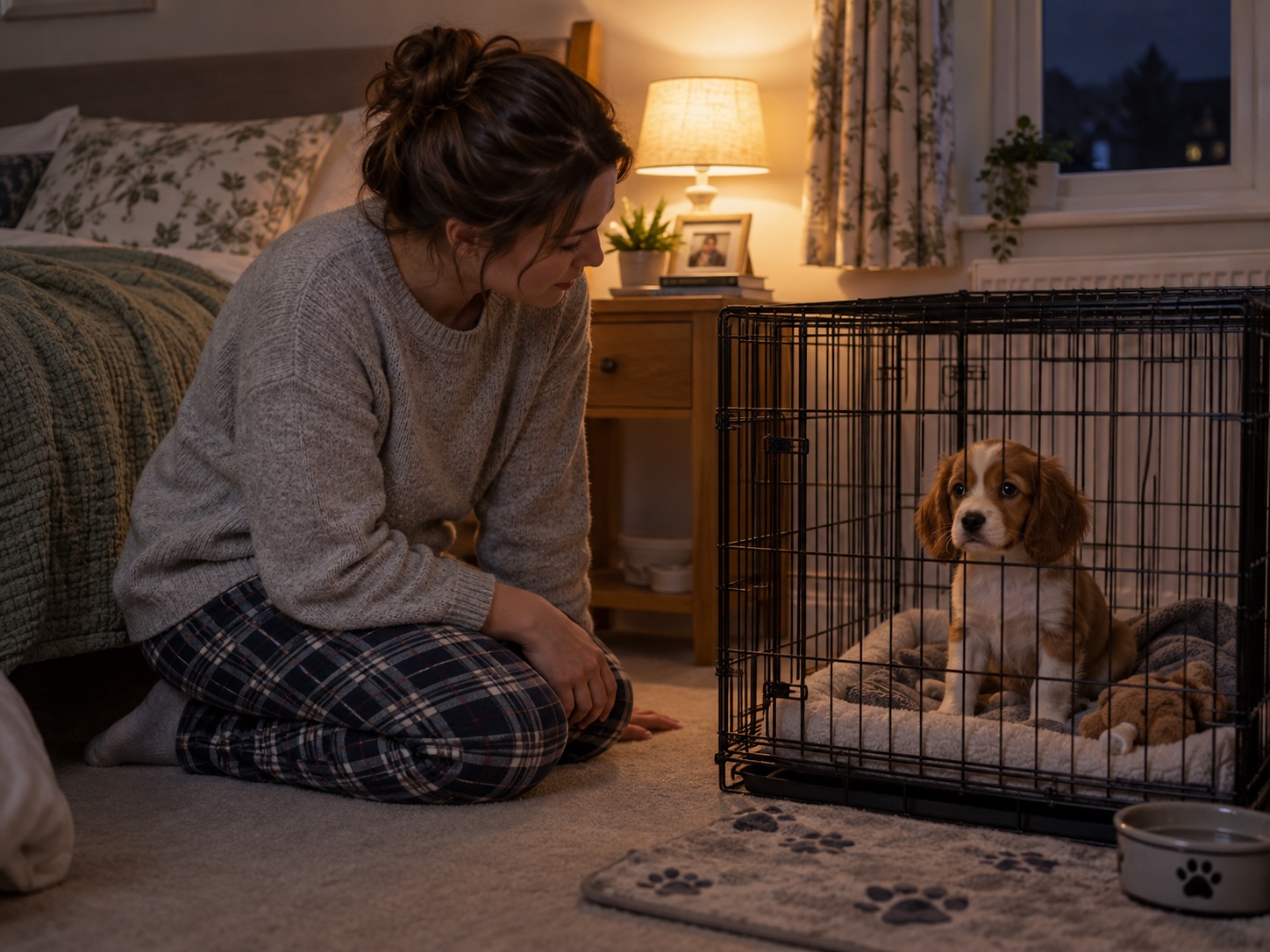
Respond to puppy crate crying by checking toilet, comfort and fear, then adjust training instead of leaving the puppy to become distressed.
Sudden, unusual or physically concerning crying needs veterinary advice.
Night-time crying and crying during alone-time practice can have different triggers.
Repeated distress means the current crate plan is too difficult or unsuitable.
Crying is not a diagnosis
A puppy may vocalise because they need the toilet, feel lonely, are frightened, are too hot or cold, dislike the bedding, hear something unfamiliar or feel unwell. The sound alone cannot tell you which. Look at when it begins, what happened just before and the puppy's complete body language.
Do not frame every cry as attention-seeking. PDSA advises against leaving puppies to cry it out, especially during the first nights when they have just been separated from their dog family.
Run a calm needs check
Check these in order:
- Toilet: take the puppy quietly to the usual area if they may need to go.
- Physical comfort: check temperature, wet bedding, trapped material and whether they can change position.
- Water and routine: confirm stable water access and whether normal feeding or sleep patterns changed.
- Health: look for pain, vomiting, diarrhoea, breathing changes, lethargy or difficulty toileting.
- Fear: notice panting, cowering, freezing, drooling, frantic scratching or refusal of food.
Keep the response low-key. A toilet trip does not need play; reassurance does not need an hour of excitement.
If crying begins when the door closes
The puppy may not yet be comfortable with the sound and movement of the door. During the next daytime session, secure it open, reward voluntary entry, then practise tiny movements without latching. Progress to a momentary close only while the puppy remains relaxed.
A divider-equipped crate can adapt during growth, but it does not make training automatic. The MidWest 36-inch model should still be set to a usable area that allows all normal postures.
Follow the full puppy crate introduction rather than repeatedly testing whether the puppy can tolerate more.
If crying begins when you move away
Reduce both distance and duration. Stand up and sit down, take half a step, or move around the same room before disappearing. Return while the puppy is still comfortable whenever possible, and mix easy repetitions with slightly harder ones.
Use a camera when practising a few seconds out of sight. It can reveal pacing, scanning, freezing or food refusal that stops before you return. If the puppy is distressed specifically by separation, closing them in a crate can intensify the problem.
If crying happens at night
Keep the sleeping space beside your bed initially so you can respond early. Check the toilet, resettle calmly and avoid punishment. Once the puppy sleeps comfortably, move the crate gradually if a different room is planned.
Read our first-night guide for a complete evening routine.
Recheck size and setup
A growing puppy can become uncomfortable surprisingly quickly. Re-measure sitting height, length and sleeping posture, then check the real interior after adding bedding and water. Make sure the floor is stable and the door does not rattle or swing.
The Amazon Basics 36-inch double-door crate publishes a 91.4 × 58.4 × 63.5cm overall size. Like every external measurement, it is only a room-planning starting point; usable space and the puppy's movement decide fit.
Know when to stop using the crate
Frantic escape attempts, injury, heavy drooling, continuous panting, elimination linked to fear or a puppy who cannot eat in your absence need a change of plan. Use a safe alternative environment where possible and seek help from your vet or a qualified behaviour professional.
Compare alternatives to a dog crate and review crate distress signs. The goal is not silence at any cost; it is genuine safety and the ability to rest.
Common questions
Frequently asked questions
Should I let my puppy cry it out in the crate?
No. PDSA advises against leaving a puppy to cry it out. Check practical and emotional needs, respond calmly and make the next training step easier.
How do I know whether crate crying means the puppy needs the toilet?
Timing, recent drinking, activity and the puppy's normal pattern offer clues, but there is no perfect signal. Take them quietly to the toilet area when in doubt, allow a brief opportunity and return without starting play.
Should I open the crate while my puppy is crying?
Safety and welfare come first. If the puppy may need the toilet or is becoming distressed, release them calmly when it is safe. Do not wait for prolonged panic simply to avoid “rewarding” noise.
Why does my puppy cry as soon as I leave the room?
The increase in distance may be too difficult, or the puppy may be worried about separation. Return to very short steps within their comfort and seek qualified help if distress persists.
When should crate crying lead to a vet call?
Contact your vet for sudden or unusual vocalising, signs of pain or illness, breathing changes, repeated vomiting or diarrhoea, difficulty urinating, injury, or any concern that the puppy is physically unwell.
Sources
- PDSA — why puppies cry at night — needs checks, reassurance and avoiding cry-it-out
- PDSA — crate training your dog — distress signals and returning to an easier step
- RSPCA — dog crate guidance — gradual duration and response to whining
- Amazon UK product pages linked above