
Topic guide
Dog beds and better home spaces
Choose comfortable, washable dog beds and place resting equipment so it works for the dog and the household.
Browse all guides ↓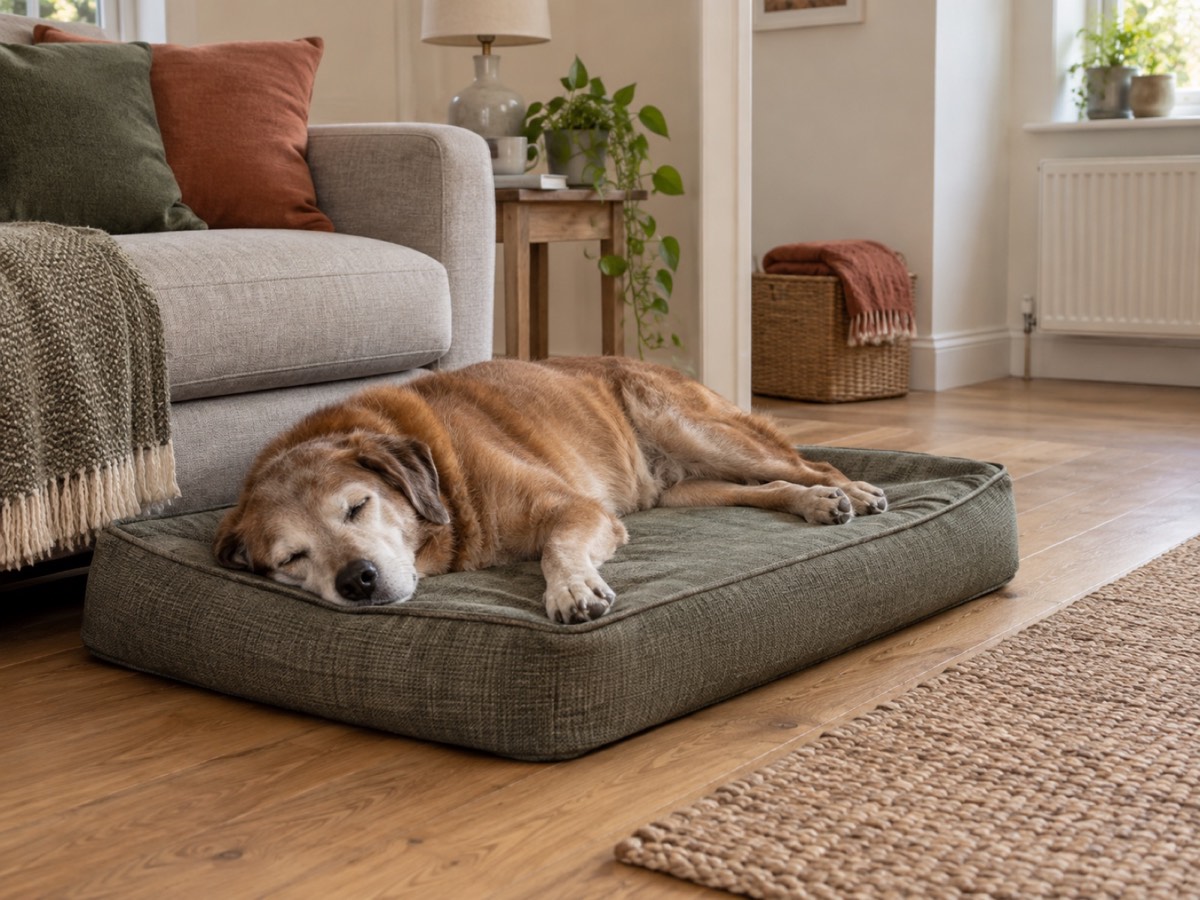
The practical bed is the one the dog can use comfortably and the household can keep clean. Measure the dog in a relaxed sleeping position, notice whether they curl or stretch, then compare that footprint with the bed's actual sleeping area. Raised bolsters reduce the flat area, so external dimensions alone can mislead. Start with crate beds when the sleeping surface must fit a defined interior, or thin mats when headroom is limited.
Choose comfort for the space you actually have
An open bed can be moved between a quiet corner and the family room; a bed inside a crate is constrained by the tray, door and roof. A waterproof mat may help with accidents, while a washable bed may make everyday care simpler. Compare the actual cover and inner-pad instructions, not just a “washable” label. If the dog chews filling or struggles to rise, a simpler low-profile surface or veterinary advice may be more appropriate than a thicker bed.
Put calm within reach
PDSA's crate-location advice recommends a quiet, draught-free place out of direct sunlight where the dog can still feel part of family life. The same principle is useful for open beds. Avoid the main path between a sofa and door, heat from a radiator, direct glare and a spot where children must step over the dog. See where to put a crate or how to plan a living-room setup when the rest space must work around furniture and daily traffic.
Many homes work better with more than one resting place: a quieter bed for uninterrupted rest and a washable mat near the family. The dog should be able to leave freely unless a separately planned management setup is in use. In a small flat, measure the human walking route as well as the dog's resting area.
Cleaning changes the real value
Check whether the whole bed is washable or only the cover, how the inner pads are removed and whether replacement covers are available. A zip hidden under a flap is easier to live with than one the dog can mouth. Waterproof liners help with accidents, but noise and stiffness may make some dogs avoid the bed.
Crate mats need a careful fit
A crate mat should lie flat without bunching against the door or covering ventilation. Leave stable access to water and check that the dog can still stand and sit without touching the top once thick bedding is added. Chewed foam, loose stuffing and damaged fabric should be removed rather than left in the space. If confinement is not required, compare an open bed with a managed pen or room before choosing more crate accessories.
Explore this topic
Useful guides and comparisons
Crate beds and mats
Match cushioning and cleaning to the space the dog can actually use.
Best dog crate beds
Compare padded beds by usable fit, thickness and daily cleaning.
Read the guide →Buying guideBest dog crate mats
Find a slim, washable or wipe-clean mat without sacrificing headroom.
Read the guide →Buying guideWaterproof dog crate mats
Tell a sealed bed from a resistant cover and protect the tray beneath.
Read the guide →Buying guideWashable dog crate beds
Compare whole-bed laundering with removable covers and separate foam care.
Read the guide →Room placement and alternatives
Plan a calm position and decide whether a crate is needed at all.
Where to put a dog crate
Choose a calm position away from heat, draughts and the household's main walking routes.
Read the guide →Room guidePlanning a crate in a living room
Map doors, cleaning access and the dog's usable interior before arranging the furniture.
Read the guide →Room guideChoosing a crate in a small flat
Protect circulation and correct fit when every centimetre of the room matters.
Read the guide →Comparison guideAlternatives to a dog crate
Compare pens, gates, dog-safe rooms and open resting areas for different needs.
Read the guide →Related equipment categories
Continue from bedding to the rest of the dog's managed space.
Dog crates
Plan the enclosed structure around the bed, bowl, access and individual dog.
Read the guide →Practical guidePens and gates
Create a larger managed area around a bed without relying on closed-door confinement.
Read the guide →Practical guideCarriers and travel
Take familiar comfort on the move without confusing a bed or soft crate with a restraint.
Read the guide →Common questions
Frequently asked questions
Can I use an ordinary dog bed inside a crate?
Only if it lies flat, leaves the door and ventilation clear and preserves enough room for the dog to stand, turn and lie naturally. Thick padding and bolsters can reduce usable space even when the bed's outside dimensions fit the tray.
Does washable mean the whole dog bed can go in a machine?
Not necessarily. Some beds have a machine-washable cover but an inner pad that must be treated separately. Read the instructions for both parts and check the bed fits your washing machine before buying.
Where should I put a dog's resting space at home?
Choose a calm, draught-free spot away from direct sunlight, radiators and the main walking route, while allowing the dog to feel part of household life. Keep access clear and review the position if the dog avoids it or cannot rest undisturbed.