
First-week room guide
A puppy's first-week home layout
Plan a manageable first-week puppy space with rest, water, a clear toilet route and gradually expanding access in a UK home.
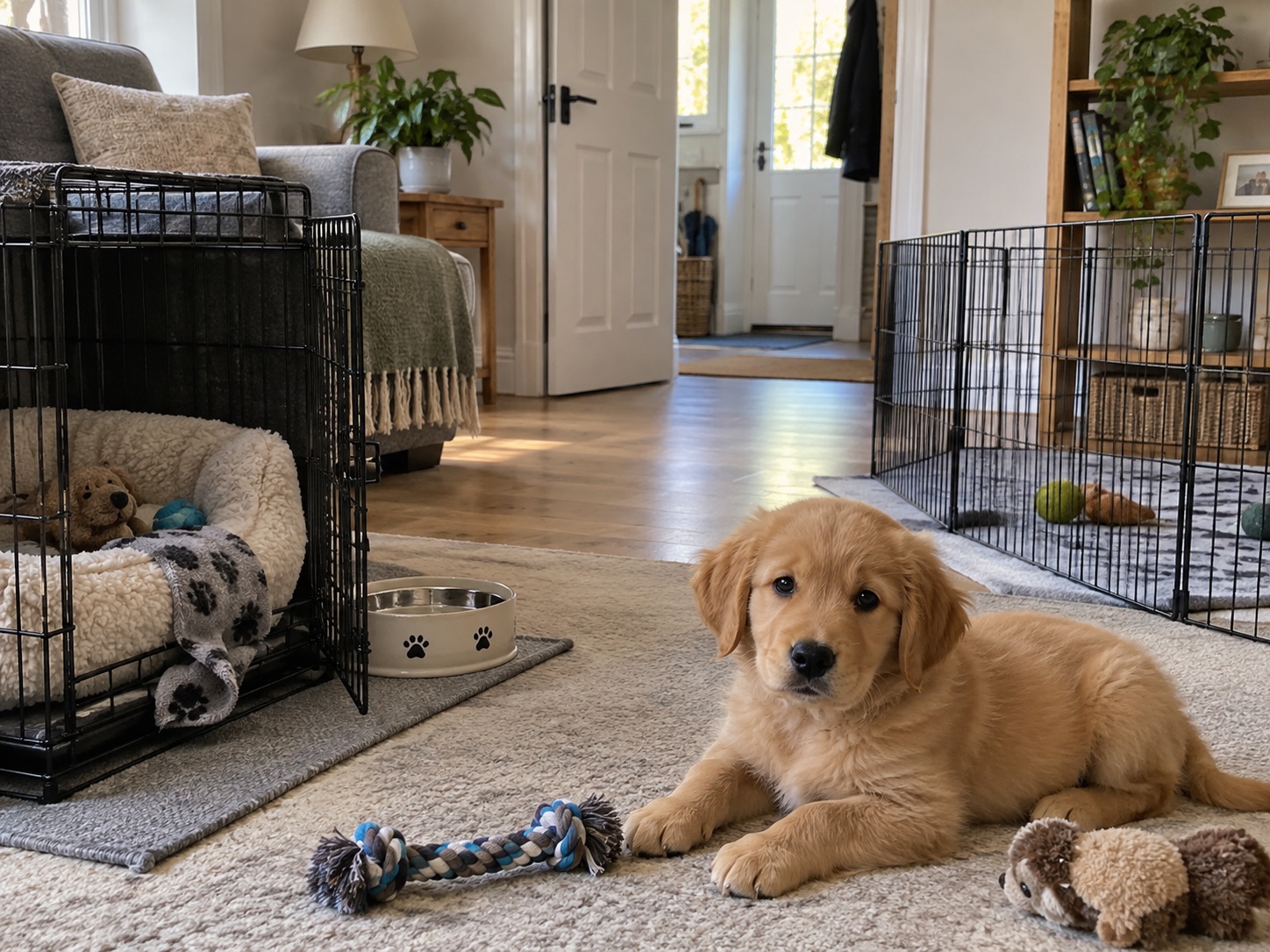
Remove cables, cleaning products, plants and small chewable items before arrival.
Keep a quiet rest zone away from busy doors, heaters and direct sun.
Plan where a person will sleep or sit nearby during the first nights.
Start with the route through the home
Before choosing a pen or crate position, walk the route from the puppy's resting place to the agreed toilet destination. Can you reach the door quickly at night without stepping over a barrier? Is the floor grippy? Can a tired person open a gate without leaving a trip hazard? A sensible first-week layout works for the humans as well as the puppy.
Prepare one main room and keep other doors closed or gated. PDSA advises puppy-proofing hazards, including cables and cleaning products, before a puppy arrives; its first-day guidance recommends introducing rooms slowly. The aim is not to isolate the puppy but to make supervision and rest manageable.
Scroll horizontally to see all columns →
| Zone | What belongs there | What to check |
|---|---|---|
| Rest | Crate or bed, optional familiar blanket | Quiet access and suitable fit |
| Activity | Pen or puppy-proofed floor | Water and clear movement area |
| Toilet route | Direct supervised path outdoors or to the agreed place | No blocked doors or slippery threshold |
| Human position | Seat or nearby sleeping place | Puppy can be heard and helped promptly |
Put rest in a protected but connected corner
Choose a position away from direct sun, radiators, fireplaces and constant foot traffic. The puppy should be able to rest without children or visitors repeatedly reaching in. A crate, if used, must fit the puppy's natural stand, turn and lie and be introduced with the door open and rewards. It is not a compulsory purchase or a first-night shortcut.
The MidWest 36-inch crate is a divider-equipped example that may suit a growing puppy after measurement. Mark its 92.7 × 59.7cm outside footprint before buying; a larger crate that blocks the only route to the garden is the wrong room plan even if the dog fits.
Keep a familiar blanket from the puppy's previous home if available and safe, but inspect loose fabric or stuffing. A flat mat such as the 74 × 45cm EMPSIGN can be simpler to fit and wash than a high-sided bed; confirm its dimensions against the actual crate or floor zone.
Make a supervised activity zone
A pen can contain a bed, water and a small play area while keeping the puppy in sight during ordinary household tasks. The Yaheetech six-panel set makes a compact footprint, but 60cm panel height and the resulting floor area need checking against the puppy's size and behaviour. Do not place it against a sofa, low shelf or chair that creates a climbing route.
Leave enough clear floor for walking and turning after equipment is in place. Put fresh water within easy reach. If a temporary indoor toilet surface is necessary, keep it distinct from rest and water and continue to offer frequent access to the intended toilet place.
Plan night-time help, not isolation
For the first nights, keep the puppy close enough that you can hear waking and respond calmly to toilet needs. A new puppy may not yet have the confidence or bladder control to settle alone in a distant room. Our first-night crate guide covers the routine without turning crying into a test of endurance.
During the day, keep visits to new rooms short and supervised. Close access to any space not yet puppy-proofed. In a compact home, use the flat-friendly puppy layout to preserve a clear walking route; in a combined kitchen and living area, plan open-plan puppy zones before opening the boundary. When the puppy consistently settles in the base area, expand into the next prepared room; moving from a pen to room access gives a stepwise approach.
Recheck the layout as the week unfolds
Watch where the puppy actually sleeps, which route is easiest for toilet trips and whether the pen or crate blocks household movement. Adjust the equipment rather than expecting the puppy to adapt to an awkward plan. Unexpected chewing, climbing or distress is a reason to check needs, environment and supervision—not a reason to make the space smaller.
Common questions
Frequently asked questions
Which room should a new puppy start in?
Choose a room you can supervise, puppy-proof and reach easily for toilet trips. A calm living room or kitchen-adjacent space often works, but avoid heat, draughts, cables and busy traffic.
Should a puppy have access to the whole house in the first week?
Usually a smaller prepared area is easier to supervise and less overwhelming. Introduce other rooms one at a time with a person present and adjust to the puppy's confidence.
Where should the puppy sleep on the first night?
A safe bed or suitable crate close enough for you to respond to waking and toilet needs is useful. Move the sleeping position gradually only when the puppy is settling well.
Do I need both a crate and a playpen?
No. A safe bed and a puppy-proofed room can also work. A crate or pen is useful only when it serves a clear rest or management purpose and the puppy is introduced positively.
When should I expand the puppy's area?
When the current area is safe, the puppy can rest there and you can supervise a short visit to the next prepared zone. Increase access gradually rather than by a fixed day number.
Sources
- PDSA — new puppy checklist
- PDSA — first day and night with a puppy
- RSPCA — puppy care
- Amazon UK example products linked in the guide