
First-night practical guide
A puppy’s first night with a crate
Plan a puppy’s first night with the crate beside you, realistic toilet breaks and calm responses to crying without leaving them to panic.
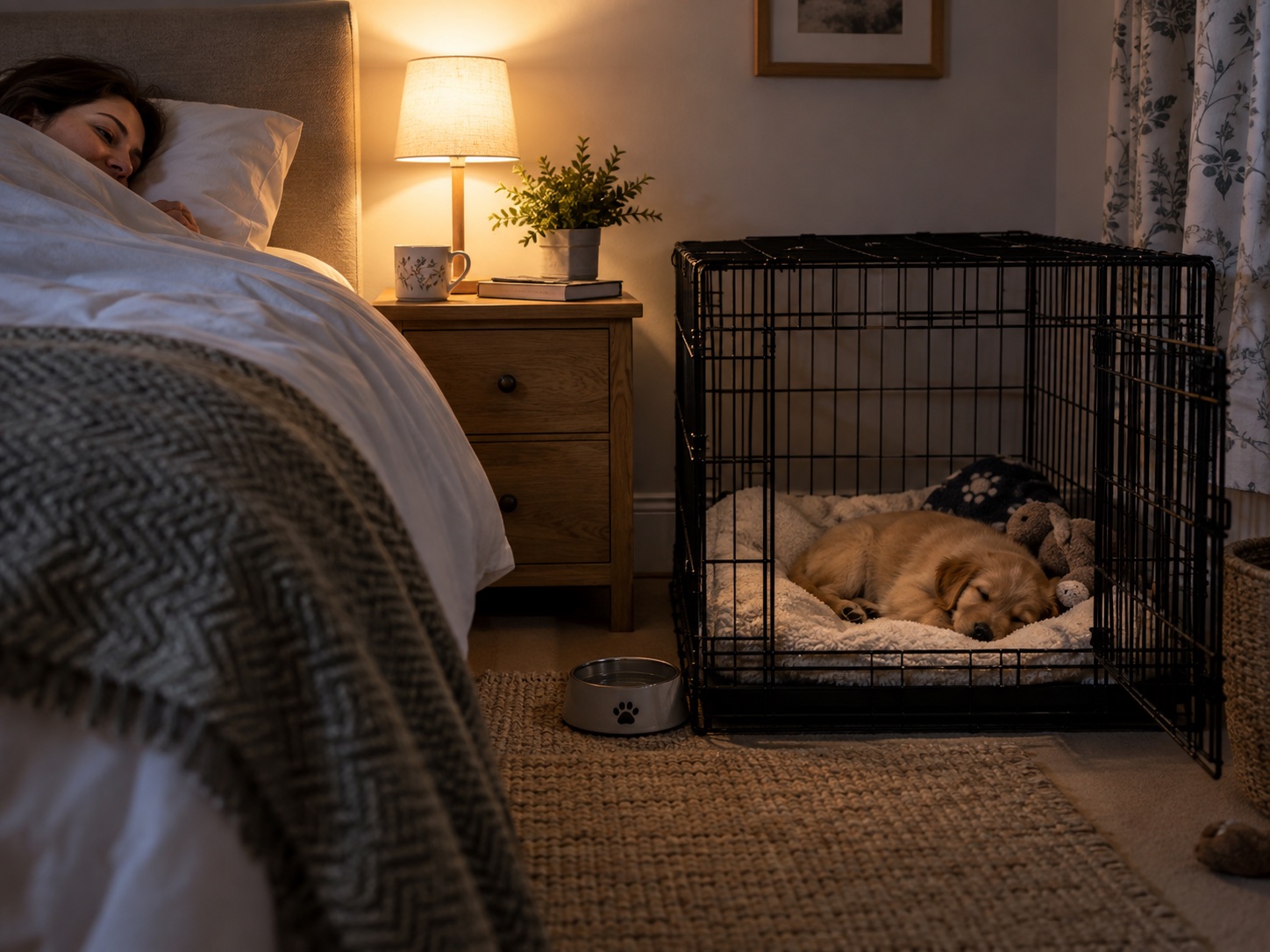
Do not leave a newly separated puppy to cry for long periods.
Keep night-time toilet trips quiet, brief and safe.
The first night is about security and observation, not testing independence.
Before bedtime
Keep the puppy's first day gentle. They are processing a new home, people, smells and routines after leaving their mother and littermates. Avoid exhausting introductions in the hope that the puppy will “sleep through”. Overtired puppies can find settling harder.
Set the crate or chosen bed beside your bed before evening. Check that the room is a comfortable temperature, cables and medicines are inaccessible, and the route to the toilet area is clear. Prepare shoes, a lead if needed and a dim light so night trips stay uneventful.
Choose a crate that fits now
The puppy must be able to stand, sit, turn, lie naturally and stretch with bedding and water in place. A divider can manage part of a larger crate, but it must preserve these movements and be adjusted during growth.
The MidWest 18-inch iCrate is a compact option for a puppy whose current measurements fit. Its short useful life for many breeds makes weekly re-measuring essential.
For the full process, use our puppy crate measuring guide and crate introduction steps.
Make the last hour predictable
Lower activity, offer a final toilet opportunity and keep voices calm. Follow the feeding and water routine recommended by your vet; do not restrict water simply to avoid waking unless a veterinary professional has given individual advice.
Guide the puppy to the sleeping area using the positive routine practised during the day. A small food reward or safe familiar-smelling item may help if it is appropriate for that puppy. Never push them in or use the crate after punishment.
When the puppy wakes and cries
Respond. First consider the toilet, then check temperature, bedding, thirst, illness, pain and fear. Take the puppy quietly to the toilet area and give them a reasonable chance to go. Keep play and conversation minimal, then return to the bedroom.
If the puppy does not need the toilet, calm proximity can help: sit beside the crate, speak softly or rest a hand nearby without turning the night into an exciting interaction. PDSA specifically advises not leaving a puppy to cry it out.
Quiet does not always prove relaxation. Look for normal breathing, loose posture and sleep rather than freezing, panting or repeated scanning.
Build independence later
Once the puppy settles reliably, decide whether the bedroom is the long-term location. If not, move the crate or bed a small distance every few nights. Pause when the puppy shows concern rather than completing the move on a calendar.
A 36-inch crate with a divider can accommodate growth when its usable area is adjusted appropriately. The MidWest model is one example, with two doors that may help a changing room layout.
Do not make the first overnight absence from you coincide with a bigger crate, different room and closed door. Change one thing at a time so you can read the puppy's response.
Plan for accidents without punishment
Use washable bedding and keep replacements ready. If an accident happens, clean calmly and review timing, supervision and the toilet route. Punishment can make the puppy frightened to toilet in front of you and does not improve bladder control.
Frequent accidents, straining, diarrhoea, excessive thirst or a sudden change need veterinary advice. Young puppies are physically immature; the solution is not longer closed-door time.
The morning after
Take the puppy out promptly, offer breakfast according to their routine and allow plenty of rest. Note when they woke and whether they toileted so the next night can be planned with better information.
If crying was intense or persistent, read what to do when a puppy cries in a crate and slow the daytime training. A first night does not define future sleep habits.
Common questions
Frequently asked questions
Should a puppy crate be in the bedroom on the first night?
Blue Cross and PDSA both support keeping a new puppy close initially. A crate or bed beside you helps you notice toilet needs and offer calm reassurance. Move it gradually later if another long-term location is planned.
Should I ignore a puppy crying in the crate at night?
No. First check whether the puppy needs the toilet, is too hot or cold, feels unwell or is frightened. PDSA advises against leaving a puppy to cry it out.
How often will a puppy need the toilet overnight?
There is no reliable schedule for every puppy. Age, size, routine, health and previous habits all matter. Expect interruptions, take the puppy out when needed and ask your vet about individual concerns.
Can I move the crate away from the bed later?
Yes. Once the puppy is settling, move it a small distance over successive nights, watching their response. If worry returns, reduce the change and progress more slowly.
What should go inside a puppy crate at night?
Use safe, flat bedding suited to the puppy, stable access to water and only items you are confident they can have safely. Remove damaged or chewable materials and preserve enough space to stand, turn and stretch.
Sources
- PDSA — first day and night with your puppy — first-night preparation and routine
- PDSA — why puppies cry at night — toilet checks, reassurance and avoiding cry-it-out
- Blue Cross — helping a puppy sleep at night — bedroom placement and gradual movement
- Amazon UK product pages linked above