
Safety guide
How to assess carrier ventilation
Check dog carrier mesh, rigid vents, placement and breathing room before a journey; learn why visible holes alone do not prove good airflow.
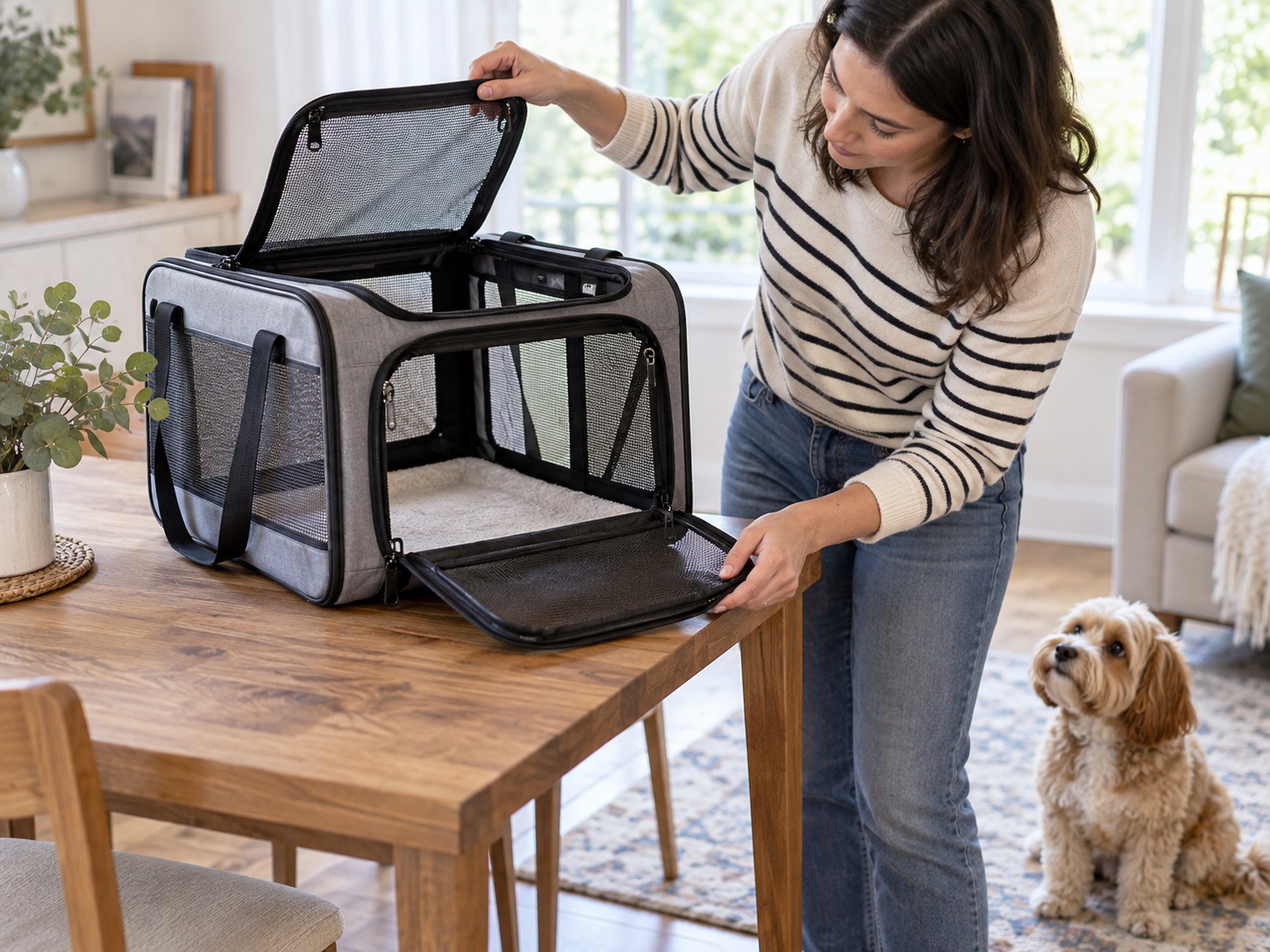
Look for multiple open air paths rather than a single exposed panel.
Recheck vents after placing the carrier under a seat, in a vehicle or beside luggage.
Never compress fabric until it presses on the dog or closes mesh.
The four-position check
First put the carrier empty on the floor and identify every vent, mesh panel and gap that is intended to remain open. Second, place the dog inside briefly with the door closed while supervising: can it stand, turn and lie without its face being pushed against a blocked wall? Third, put the carrier in the planned travel position. Fourth, check it again when adjacent luggage, a seat or a cover is in place. A panel facing a solid surface does not count as useful airflow.
Soft mesh may look generous in a photograph, yet collapse when the roof is pushed under furniture or the bag is lifted by a weak handle. Examine mesh weave, seam strength and whether bedding rises above a low vent. The Pecute carrier has multiple mesh areas, but its real ventilation depends on which sides are exposed during use.
Rigid shells hold their vent geometry more consistently, though placement can still block it. Ferplast Atlas 30 illustrates side ventilation that should be kept clear of a car seat, wall or stacked bag. Check both sides after loading, not just the door facing you.
Air travel needs a rule-specific check
IATA's container requirements address ventilation for air transport, while its cabin passenger guidance and an airline's own rules may impose additional conditions. The often-quoted percentage is not a universal shortcut for declaring a consumer carrier acceptable. Determine first whether the animal is travelling in the cabin or hold, then get the operating airline's actual specification. A soft carrier that squashes to meet a height limit can fail on welfare even if its outside dimensions appear smaller.
During any journey, keep the carrier out of direct sun and away from heaters. Check the animal without opening the carrier in an unsafe location. If the dog is panting abnormally, struggling, weak or distressed, stop and address the situation promptly. Compare the soft-sided carrier formats with the actual ventilation positions you need, and read the airline carrier guide before flight-related shopping.
Common questions
Frequently asked questions
Is one large mesh window enough?
It can be blocked by a wall, seat or bag. Prefer more than one viable airflow path and assess the carrier in its actual travel position.
Can I cover a carrier to calm a dog?
Never cover openings needed for airflow, and monitor temperature and the dog's breathing. Use gradual acclimation rather than obscuring vents to solve distress.
Does an air-conditioned car make a closed carrier safe?
No. Vent obstruction and local heat can still occur. Do not leave a dog unattended in a parked vehicle; stop and seek help if it overheats.
Does IATA specify the same ventilation for every travel type?
No. Container rules and airline cabin guidance differ. Check the current requirement for cabin or hold and any stricter operating-airline rule.
What dog behaviour signals a ventilation problem?
Heavy or escalating panting, frantic movement, weakness or unusual breathing calls for immediate action. Move to a safe cool place and contact a vet urgently if heat illness is possible.
Sources
- IATA — live-animal container requirements
- IATA — cabin passenger guidance
- Amazon UK product pages linked from the product cards