
Dog carrier sizing guide
How to measure a dog for a carrier
Measure your dog's standing length, sitting height, width and resting posture, then compare those figures with usable carrier space and the journey rules.
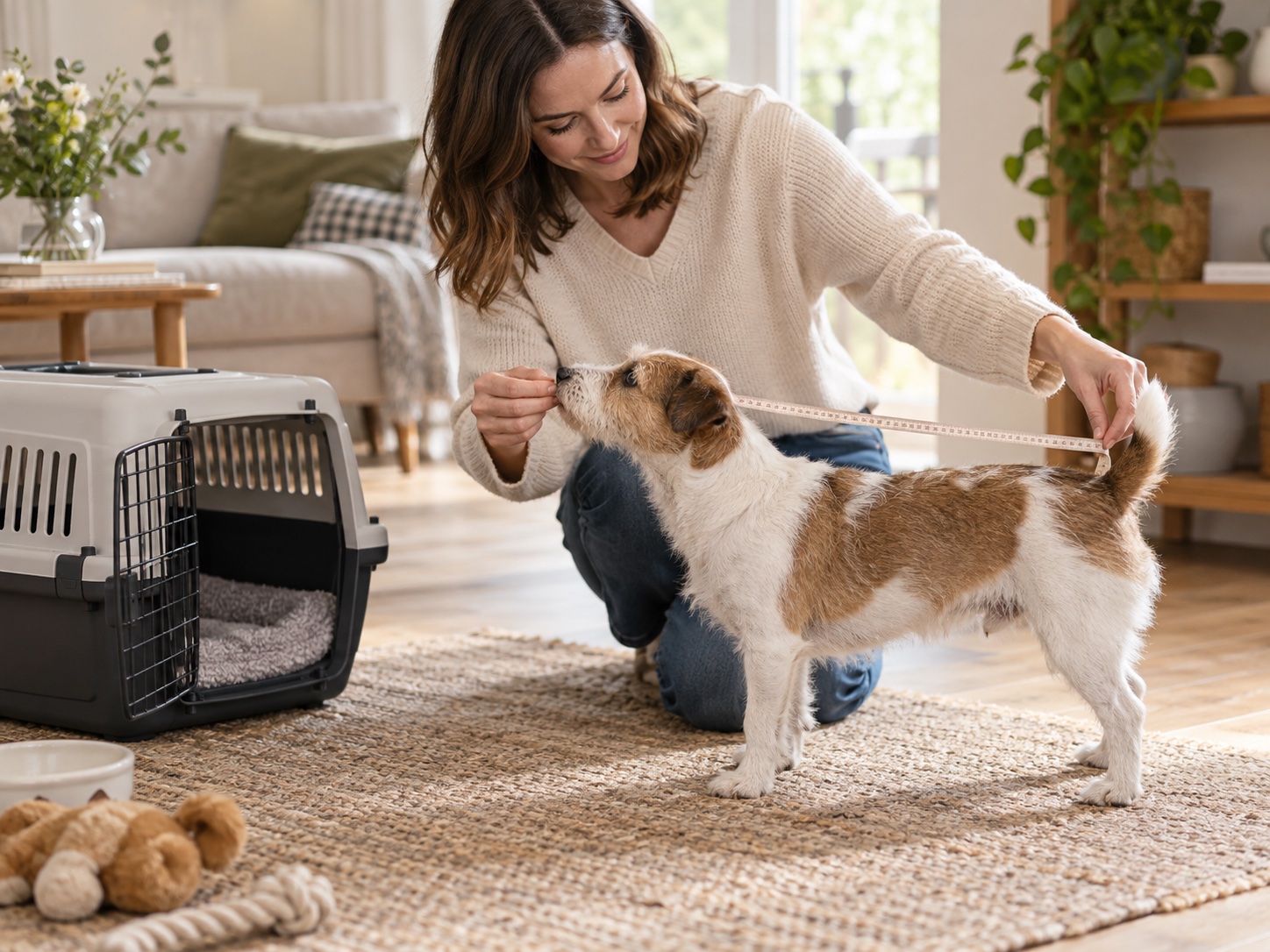
Use a soft tape while the dog stands and sits naturally on a non-slip floor.
Treat the product's kilogram limit as a load limit, never as proof of fit.
Check the exact selected variant because dimensions can change with size and colour options.
What you need
Use a flexible dressmaker's tape, a non-slip floor, a note on your phone and a few rewards. A second person can calmly feed treats while you read the tape. Do not stretch the neck, square the legs or press the dog into a pose they would not use naturally.
Measure twice at a relaxed time. If the dog worries about the tape, begin with brief, rewarded contact and stop before they struggle. A photograph from the side can help you check where the measurement began and ended.
1. Measure standing length
With the dog standing naturally, measure in a straight horizontal line from the tip of the nose to the base of the tail. Do not follow every curve of the spine and do not include the tail itself.
This figure helps establish the carrier's floor length. It is not a number to match exactly: the dog needs room to change posture and lie without the nose or hindquarters being pressed against opposite ends.
2. Measure natural sitting height
Ask for a comfortable sit. Measure vertically from the floor to the highest natural point of the head or ears. Count permanently upright ears; do not hold floppy ears up artificially.
This is often the dimension that rules out a soft carrier. The Amazon Basics large, for example, lists 30.5cm overall height despite a 10kg load limit. A tall 6kg dog can exceed that height even though it is well below the weight maximum.
3. Record body width and turning space
Measure across the widest point of the shoulders or ribcage while the dog stands normally. Then watch the dog turn on a small mat. Older dogs and dogs with back or joint problems may need a wider, slower turn than the shoulder measurement suggests.
The dog should not have to compress both sides of the ribcage against the carrier or climb the walls to reverse direction. Soft mesh bulging outward is not usable width.
4. Observe the longest relaxed lie
Watch how the dog rests when genuinely comfortable. Some curl; others lie on one side with forelegs extended. Measure the rectangle occupied by the longest normal pose if practical.
A carrier used for more than a very brief transfer should support that resting posture. Do not assume the dog can simply remain curled for the whole journey.
Convert body measurements into usable space
Ask for internal dimensions with the supplied base installed. A carrier's headline measurements are usually external. Piping, frame bars, rounded corners, sloped panels and a raised pad can remove several centimetres in different places.
Run a movement check on the floor when the carrier arrives. The dog should enter without being pushed, sit without sustained roof contact, turn without folding awkwardly and lie in a normal position. If the product cannot pass that check, it is the wrong size even if the dog meets the advertised weight.
Backpack carriers need a different orientation check
A backpack may publish height first or use a product length that becomes vertical when worn. Confirm the diagram rather than assuming the dimension order. Check that the base supports the whole dog and stays level against the wearer's back.
The Pecute L listing illustrates the variant problem: the page contains several sizes, while the selected version has its own published figures. Reconfirm the size at checkout and keep a screenshot or note of the selected dimensions.
Also fit the wearer. The combined load must remain within the product limit and the wearer's safe carrying ability. Chest and waist straps should stabilise the carrier without pressing it into the dog's breathing space.
Measure for car travel
The dog-carrier fit is only half the job. Measure the chosen car position and identify the exact restraint route described by the carrier manufacturer. A carrier can fit the seat cushion but still block a seatbelt buckle, sit at an angle or leave a strap routed over a weak point.
Read Highway Code Rule 57 and dogs before planning the setup. A household carrier or backpack is not automatically a crash-tested vehicle restraint.
Measure for air travel
Ask the operating airline for the current maximum external dimensions, combined weight, material, ventilation and closure requirements for the route. Some requirements differ between cabin and hold, aircraft types and destinations.
Then find a carrier that satisfies both the dog's welfare needs and the airline rule. If the permitted container is too small for the dog to meet the required posture test, the answer is a different travel arrangement—not forcing the dog into the allowance.
Recheck before every important journey
Dogs gain weight, grow coat and change mobility. Pads are replaced, carrier frames bend and airlines change rules. Re-measure after growth, surgery, a visible body change or a long gap in use. Check the exact product variant and every closure before departure.
Use the figures to compare our dog carrier shortlist or the more specialised small-dog carrier guide.
Common questions
Frequently asked questions
Do I measure a dog to the end of the tail for a carrier?
No. Measure body length from the nose to the base of the tail where it joins the body. Then make sure the finished carrier still allows the dog to reposition and hold the tail naturally.
Should I use standing or sitting height?
Record both, but sitting height is often the limiting figure because the head or upright ears may be higher in a natural sit. Include the effect of the carrier's base pad.
How much extra space should I add?
There is no universal centimetre allowance. Choose an interior that permits natural sitting, turning and lying without persistent contact with the roof or forced curling, while remaining compatible with the transport rules.
Can I choose a carrier from my dog's weight?
No. Weight tells you whether the carrier's structure may be overloaded, but not whether the body shape fits. Stay within the weight limit and pass the full posture test.
What if only external dimensions are published?
Ask the manufacturer or seller for usable internal dimensions. Do not subtract a guessed amount because frames, base lips, padding and sloped walls reduce space differently.
Sources
- IATA — animal measurements and natural room in a carrier
- Amazon UK example product pages linked above