
Puppy space setup guide
Setting up a crate and playpen together
Arrange a puppy crate and playpen so rest, water and movement each have space, with safe access and a gradual introduction.
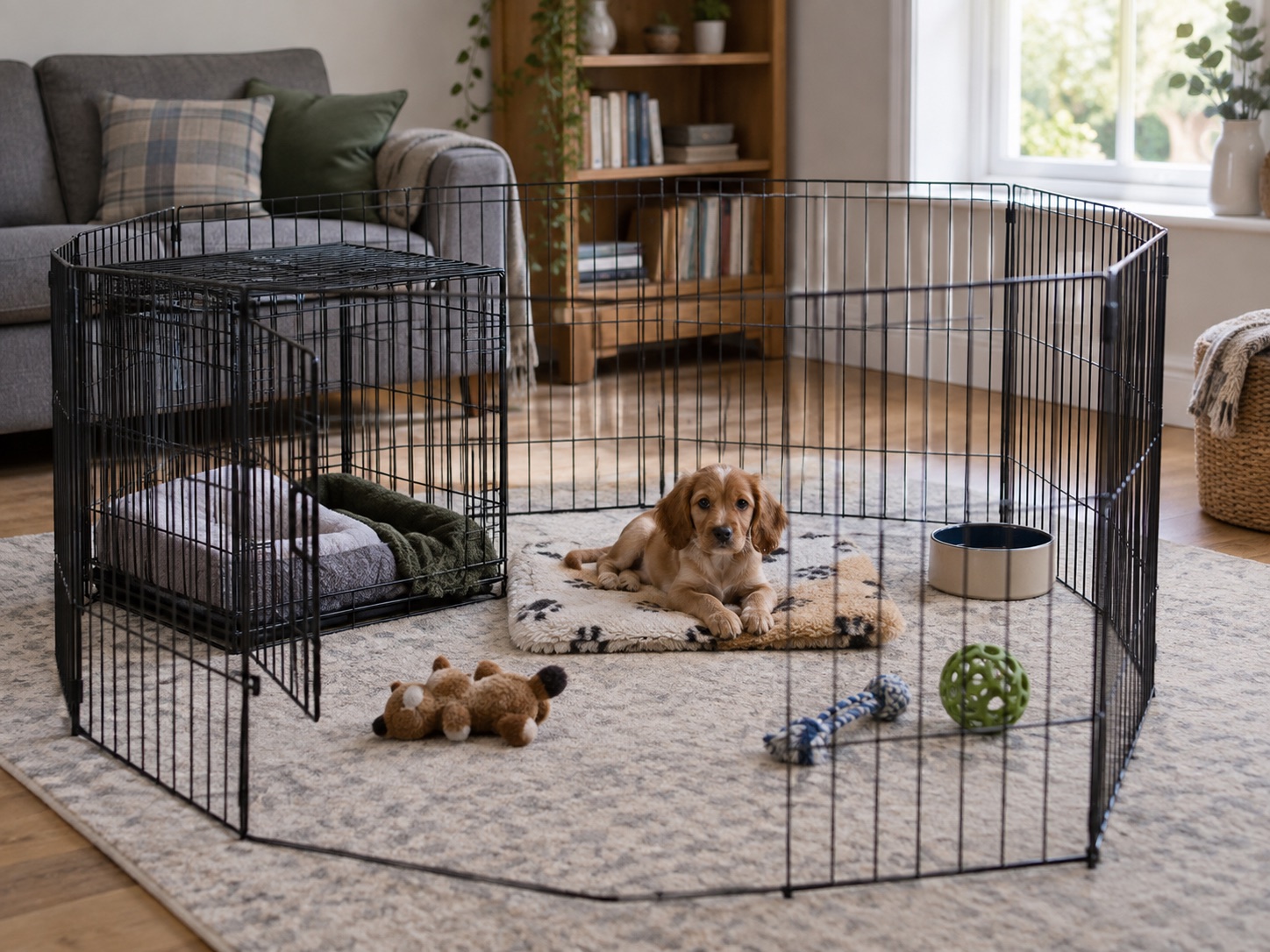
Measure the complete pen after the crate, bed and bowl occupy part of its floor.
Keep the crate entrance clear and secure its open door so it cannot swing shut.
Put cables, heat sources and climbable furniture beyond the puppy's reach.
Decide whether one footprint can do both jobs
A crate and a playpen are not two sizes of the same space. The crate is a smaller, den-like place where a dog can rest undisturbed. The pen is a broader managed area for movement, water and short periods of play. Combining them is useful only if the crate does not consume the pen's usable floor.
Measure the intended pen shape on the room floor, then mark the crate's outside footprint and full door swing inside it. Set down the actual water bowl, bed and any temporary toilet surface. What remains should be more than a narrow path. Our puppy pen size guide walks through the usable area check.
Scroll horizontally to see all columns →
| Zone | Primary job | What to leave clear |
|---|---|---|
| Crate | Quiet voluntary rest | Full doorway and natural lying length |
| Pen floor | Movement and supervised play | Turning route after equipment is added |
| Water | Easy access to a stable bowl | Space around the bowl without crowding the bed |
Position the crate for easy, voluntary entry
If the crate fits inside the pen, place its entrance towards a clear, calm part of the floor. Secure the door fully open during first introductions; a half-open door that swings against the puppy can create a negative association. Leave sufficient room for a puppy to approach, step in and turn without squeezing between the crate and pen bars.
The MidWest 36-inch iCrate illustrates an adult-size wire crate with two doors and a divider. Its external dimensions are 92.7 × 59.7 × 62.9cm, so the pen must be genuinely roomy before it can sit inside without dominating the floor. Check the puppy's current fit and likely adult size separately.
Build a stable outer boundary
Join every pen panel as instructed and test for wobble on the actual floor. Do not use a sofa, cabinet or radiator as an improvised missing side. Keep furniture far enough away that it cannot serve as a step or allow a puppy to reach through the bars. The Amazon Basics eight-panel pen is a tall format worth comparing when the room can accommodate its footprint; height alone is not proof that a climbing puppy will remain inside.
Place the combined area away from cooking, direct sun, draughts and electrical leads. Check the route for people to move around it and reach the puppy promptly. If the crate would block that route, put it alongside the pen instead and use the manufacturer's supported access arrangement—not improvised attachments.
Furnish the pen without filling it
Keep a flat, washable resting surface in the crate and a stable water point in the pen. A clip-on bowl can protect clear floor if its bracket fits the selected bars and the puppy can drink without twisting. The MidWest Snap'y Fit is one example for compatible wire-crate bars; do not assume its bracket attaches safely to every pen design.
Offer a small number of safe toys and rotate them rather than filling every corner. If toilet pads are genuinely necessary, position the toilet area away from rest and water while still leaving meaningful movement space. Replace wet bedding promptly and dry beneath the floor protector.
Introduce the arrangement in stages
Start with both doors open while you are present. Reward exploration of the pen, then of the crate, without luring a reluctant puppy across a threshold repeatedly. Practise calm, brief pen-door closures only after the puppy is comfortable there. Crate-door training is a separate gradual step; see introducing a puppy to a crate.
Watch for pacing, frantic biting at bars, climbing, persistent panting or a puppy who cannot settle. Change the challenge and investigate the cause rather than extending confinement. A larger combined footprint cannot substitute for a plan for company, sleep, play and frequent toilet trips.
Common questions
Frequently asked questions
Should the crate go inside the puppy pen?
It can if the pen remains large and stable enough for movement, water and play, and the crate's door can be secured open. If it crowds the pen, place the crate beside it or use separate zones.
Should I keep the crate door open inside the pen?
During introduction, secure it open so the puppy can explore voluntarily and it cannot swing shut. Later closed-door practice should be gradual and separate from pen management.
Can a puppy be left in a pen with a crate all day?
No. A combined setup does not replace social contact, exercise, regular toilet opportunities or supervision appropriate to the puppy's age and behaviour.
Is a divider needed if the crate sits inside a pen?
A divider is a crate-sizing choice, not a pen requirement. If used, it must allow the puppy to stand, turn and lie naturally and be adjusted as the puppy grows.
What if the puppy sleeps in the pen rather than the crate?
That may simply be the puppy's preferred resting place. Provide a comfortable safe bed, keep the crate available without forcing entry and introduce it at the dog's pace.
Sources
- RSPCA — crates and puppy playpens
- PDSA — crate training
- Amazon UK example products linked in the guide