
Living-room planning guide
Planning a dog crate in a living room
Plan a dog crate into a living room without compromising fit, ventilation, door access, rest or everyday movement through the space.
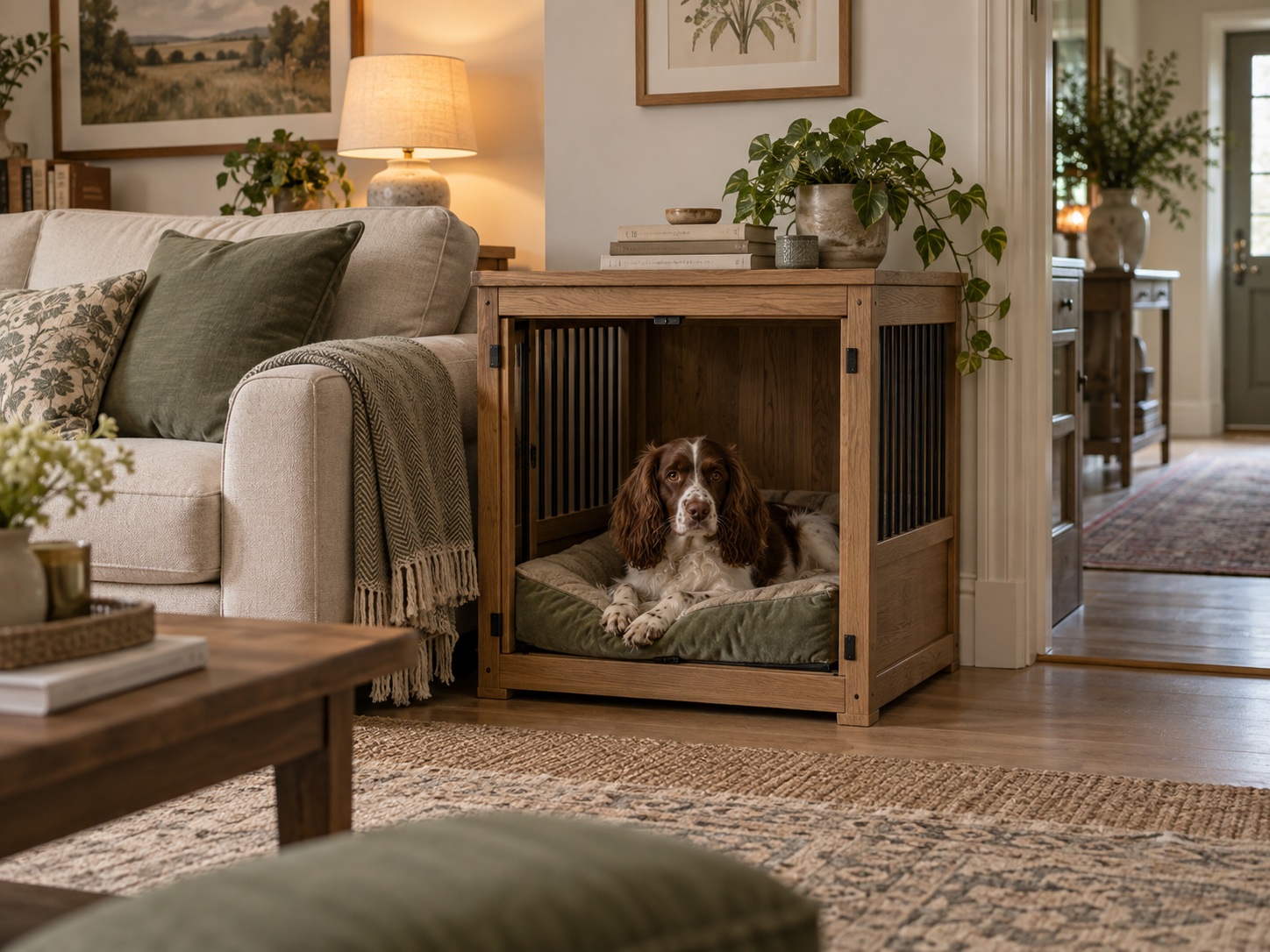
Use floor tape to mark the crate, open door and tray-removal zone.
Keep the dog connected to the room without facing constant movement.
Never reduce usable crate size to make the furniture arrangement work.
Draw the room before moving furniture
Start with a simple plan of the living room. Mark doorways, radiator edges, windows, sockets, television equipment and the paths people take between seats and adjoining rooms. Add the crate at its full external dimensions rather than using a generic inch label.
Then add the space required to open its working door, remove the tray and approach without squeezing past furniture. A crate that fits only when its door blocks the room is not a workable fit.
Choose the calm edge of activity
The centre of a living room can expose the dog to feet, toys and constant movement. An isolated recess may create the opposite problem. Look for a position against a stable wall, with family activity in view but enough distance for uninterrupted sleep.
Avoid placing the opening directly beside a frequently used internal door. Check how television sound and evening lighting affect the position. If visitors tend to crowd the crate, create a household rule that a dog in the resting space is left alone.
Wire crate or furniture crate?
Wire crates are ventilated and can fold away, making them practical when the room must change. Their two-door layouts may solve awkward access, and a partial cover can soften the visual impact if airflow stays open.
Furniture crates look more integrated and can avoid the temporary appearance of a wire frame. They are heavier, harder to relocate and often publish impressive outside dimensions without equally clear internal measurements. Treat the cabinet top as secondary to fit, strength and ventilation.
For a suitable smaller dog, the Hzuaneri 81cm furniture crate offers a compact permanent format. Its barn-style front still needs a completely clear opening zone and the dog must be measured against the usable interior.
Make the top safe
Do not place hot lamps, drinks, candles, trailing chargers or heavy stacks on a crate. Check the manufacturer's load guidance before using a furniture crate as a surface. Even within a rated load, objects should not rattle when the dog moves or fall through ventilation gaps.
Leave the sides and rear clear enough for airflow and inspection. A fitted cover should never sit against a radiator or hide damage to bars, hinges or fixings.
Plan for a large dog honestly
Large-dog crates can dominate a room. That is a layout fact, not a reason to compromise fit. The FirFurd 120cm furniture crate lists a 115 × 53.5 × 79cm interior and uses sliding doors to avoid an outward swing. Those details make it easier to plan, but the individual dog still needs an unforced stand, turn and stretch.
If an appropriate crate consumes too much of the available living room, consider a gate, pen or dog-safe room rather than downsizing the dog. Our large crate guide explains the real footprints involved.
Build a complete rest zone
Use flat, washable bedding that does not reduce headroom or bunch against the door. Keep a stable water container accessible. Store leads, toys and treats nearby only if the dog cannot pull them through bars.
Give the dog another open bed elsewhere in the home. A crate should be one resting option, not the only place where they are expected to settle. When the dog is not in an active training session, PDSA advises keeping the door secured open.
Test the room in real life
Before relying on the setup, live around the taped outline for a day. Open every door, pull curtains, use the sofa and walk the evening route with lights low. Once the crate arrives, check that the assembled dimensions match the listing, then introduce it gradually with the door fixed open.
A successful living-room setup feels ordinary: the dog can rest, people can move naturally and nobody has to shift the crate several times a day.
Common questions
Frequently asked questions
Where should a dog crate go in a living room?
Choose a calm edge of the room where the dog can be near the family without sitting in a walkway. Keep clear of direct sun, radiators, speakers, doors and reachable cables.
Can a dog crate replace a side table?
Only a purpose-designed furniture crate with a suitable load rating should be used that way. Keep liquids, hot lamps and unstable objects off it, preserve ventilation and prioritise the dog's internal space.
How can I make a wire crate look better in a living room?
Choose a proportionate location, tidy cables, use a simple washable mat and consider a breathable partial cover if the dog likes it. Do not add decorative panels that block airflow or create chewable edges.
Should the crate face the sofa?
It can, but the dog's response matters more than the direction. Some dogs settle with a view of the family; others rest better when the opening faces a quieter part of the room.
Sources
- RSPCA — dog crate guidance — location, usable space and safe-haven guidance
- PDSA — crate training your dog — placement, bedding and reward-based use
- Amazon UK product pages linked above