
Dog carrier buying guide
Best dog carriers in the UK
Compare dog carriers by usable size, structure, ventilation, access and journey type, with a practical measuring checklist.
Our recommendations
Dog carriers worth comparing
These options cover everyday soft carriers and a rigid-base basket. The published weight limit is never enough by itself—compare the dog's length, sitting height and preferred resting posture with the selected variant.

Amazon Basics large soft-sided pet carrier
Best for: Short trips with a small dog that fits the published interior envelope
A structured soft carrier with front and top openings, mesh ventilation, shoulder strap and a removable fleece bed. Its luggage strap can help position it, but this does not make it a crash-tested restraint.
What stands out
- Front and top access
- Mesh on four sides
- Removable washable bed
Keep in mind
- Carrier is spot-clean only
- Soft sides suit calm travellers
- Airline fit must be confirmed with the operating airline
- 50.8 × 30.5 × 30.5cm
- Listed maximum 10kg
- Top and front openings
- Seatbelt/luggage strap

Morpilot soft pet carrier, medium
Best for: Vet visits and everyday transport for a measured small dog
A 42.9cm soft carrier with top access, mesh panels, a removable cushion, shoulder strap and folding bowl. It is portable and easy to store between trips.
What stands out
- Top access
- Removable cushion
- Bowl included
Keep in mind
- Weight limit is not a fit guide
- Fabric is not chew-resistant
- Airline acceptance varies by route
- 42.9 × 30 × 33cm
- Listed maximum 7kg
- Top and side mesh
- Shoulder strap and bowl

Pecute large structured soft carrier
Best for: A small dog that benefits from several calm loading options
A structured 44cm carrier with mesh, top and side entrances, locking zip buckles, a luggage sleeve and reversible base pad.
What stands out
- Several entrances
- Locking zip buckles
- Reversible base pad
Keep in mind
- Soft construction needs supervision
- Published weight is only a limit
- Not documented as a vehicle crash restraint
- 44 × 33 × 32.5cm
- Recommended below 7kg
- Multi-entry
- Luggage sleeve

MDC large top-opening pet carrier
Best for: A small dog that needs gentle top loading and an easy-clean base
A rigid-base mesh carrier with a broad top opening, wide handle and wipe-clean tray. The open construction offers visibility but less shelter than a solid-sided carrier.
What stands out
- Wide top opening
- Easy-clean tray
- High visibility
Keep in mind
- Internal dimensions not published
- Open mesh offers less visual shelter
- Not documented as crash tested
- Top opening
- Rigid easy-clean base
- PVC-coated mesh
- Wide carry handle
Scroll horizontally to see all columns →
| Model | Published size | Structure | Access | Best for |
|---|---|---|---|---|
| Amazon Basics large | 50.8 × 30.5 × 30.5cm | Soft structured | Front and top | Simple everyday carrying |
| Morpilot medium | 42.9 × 30 × 33cm | Soft structured | Top and side | Carrier with bowl and cushion |
| Pecute large | 44 × 33 × 32.5cm | Reinforced soft | Top and sides | Multi-entry loading |
| MDC top-opening | Internal size not published | Rigid base and mesh | Top | Easy-clean transport |
Start with the journey, not the product name
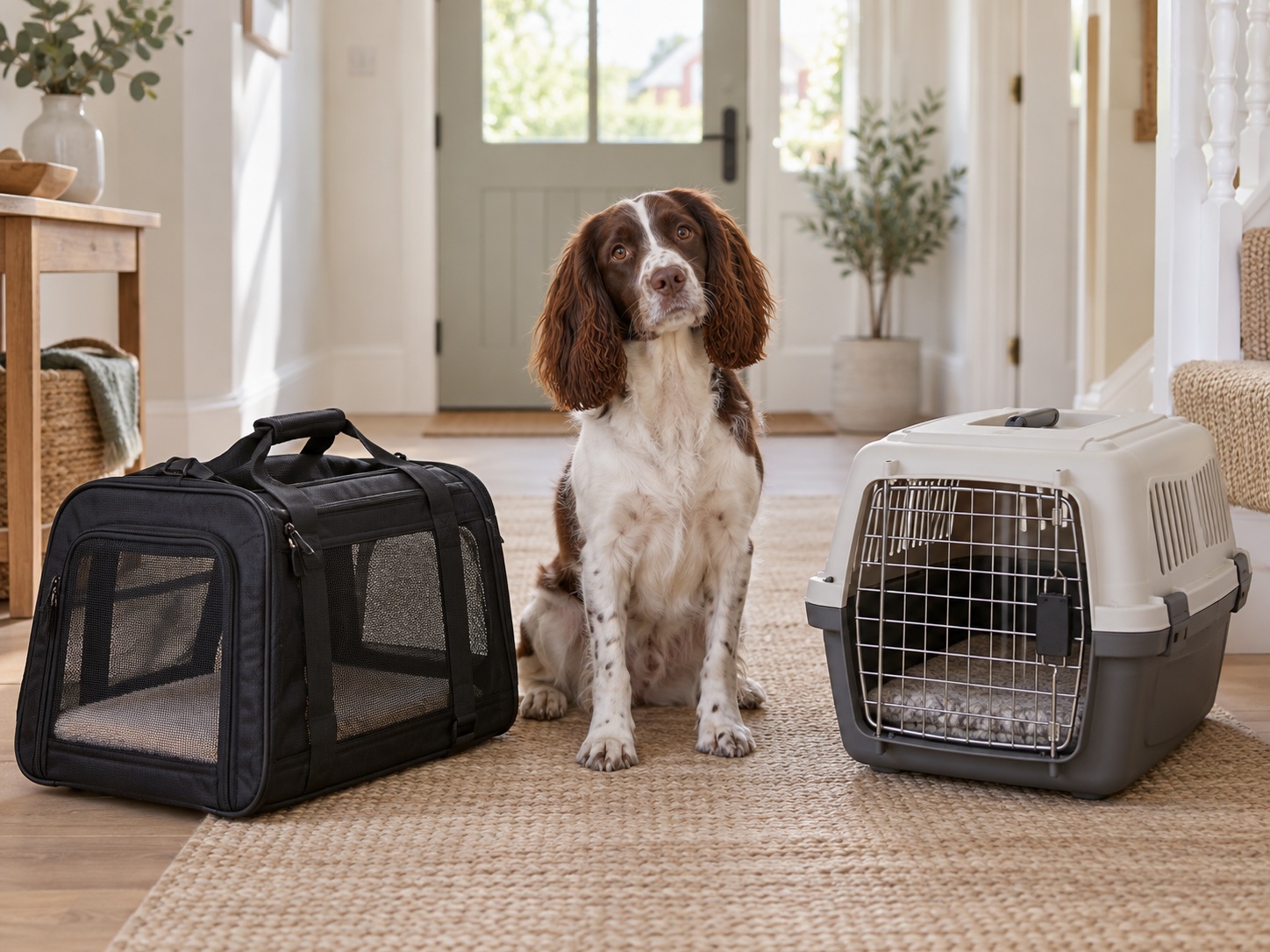
“Dog carrier” covers everything from a fabric shoulder bag to a rigid car-boot container. Before comparing products, write down the actual job: walking to the vet, moving through a railway station, travelling by car or meeting a particular airline's rules. A carrier that is convenient for one can be unsuitable for another.
For an everyday carrier, prioritise usable interior space, a stable base, ventilation, secure closures and a loading method your dog can manage calmly. For car travel, the carrier also needs a manufacturer-approved way to be restrained. For air travel, obtain written requirements from the operating airline for the exact route and aircraft.
Follow our dog carrier measuring guide before choosing a size. If you need a permanent resting area rather than a handheld container, compare a carrier with a home crate.
How we narrowed the options
Usable space comes before kilograms
A dog's weight tells you whether a handle or base may be overloaded; it does not tell you whether the dog's back, head and legs fit. Compare natural nose-to-tail-base length, sitting height and body width with the usable interior. Allow for the base pad without forcing the dog's head into the roof.
Reject a carrier if the dog must remain crouched, cannot turn without twisting or cannot lie in a normal resting posture. A puppy also needs frequent re-measuring as proportions change.
The base must remain level
A soft carrier should have a base insert that stays flat under the dog's weight. Pick it up empty, then test it with a safe equivalent load before introducing the dog. The sides should not collapse into the breathing space when carried, and handles should meet evenly above the centre of gravity.
Openings should support calm loading
Top access can help with a very small or hesitant dog that is comfortable being lowered. A broad end opening lets a dog walk in voluntarily. Multiple openings add flexibility, but every zip needs a secure end position that the dog cannot nose open.
Ventilation must work in real conditions
Mesh area is useful only when it remains uncovered. A carrier held against a coat, luggage or car upholstery can lose effective airflow. Check all sides during use, avoid direct sun and monitor panting, drooling, agitation and unusually quiet behaviour.
The carriers in detail
Amazon Basics large: the simple soft option
The selected large variant publishes 50.8 × 30.5 × 30.5cm dimensions and a 10kg maximum. It has front and top openings, four-sided mesh, a shoulder strap and a removable fleece bed. The carrier itself is spot-clean only.
That 30.5cm listed height rules it out for many dogs well below 10kg, which is why measuring beats buying by weight. The attached strap is described for luggage or seatbelt positioning, but the listing does not provide independent crash-test evidence.
Morpilot medium: useful accessories for routine trips
Morpilot publishes 42.9 × 30 × 33cm and a 7kg maximum. The included cushion and folding bowl are practical for a vet wait or railway journey, while top and side access provide two loading approaches.
The frame is still fabric-based. It suits a dog that settles without chewing, digging or throwing their weight at the mesh. Treat “airline approved” wording as a prompt to check—not as permission from an airline.
Pecute large: the more structured multi-entry option
At 44 × 33 × 32.5cm, the selected Pecute carrier is shorter than the Amazon Basics but slightly wider and taller. Its internal frame, locking zip buckles, reversible pad and several entry points are useful for a dog that dislikes being guided through one narrow door.
The 7kg recommendation is a load guide, not evidence that every 7kg dog fits. Check that the top opening cannot tempt the dog to push through during movement, and connect any internal safety tether to a well-fitted harness rather than a collar.
MDC top-opening carrier: rigid base and open visibility
The MDC uses a wipe-clean rigid tray with PVC-coated mesh and a broad top opening. It can suit a small dog that copes better with gentle top loading and benefits from seeing out.
Amazon does not publish a complete internal size for this listing. That is a material gap: ask for usable length, width and height before ordering. Its open mesh also means little visual shelter, so it may not suit a dog that settles better with reduced stimulation.
Introduce the carrier before travel day
Place the carrier on the floor with its main door secured open. Add familiar bedding that does not reduce the space too far, scatter food near the entrance and let the dog choose whether to investigate. Progress to brief voluntary entries, then short lifts and quiet movement.
Practise the exact loading route you will use, but do not turn the carrier into a trap. If the dog freezes, claws at the openings, pants in a cool room or repeatedly tries to escape, pause and reassess the fit and training plan.
A final pre-trip check
Confirm the correct variant arrived. Inspect stitching, mesh, zip ends, handles, base board and every attachment point. Set the loaded carrier down on a level surface and check that it does not tip. Pack water separately unless the carrier provides a stable, spill-resistant location that does not reduce lying space.
For a hands-free walking option, see our dog backpack carrier guide. Calculate total carrying weight separately from dog weight, and help the dog settle in the chosen carrier before a real journey. For road journeys, start with Highway Code Rule 57 and then compare purpose-built dog car crates.
Common questions
Frequently asked questions
What size dog carrier should I buy?
Measure the dog's natural standing length, sitting height and body width, then check that the usable interior allows an easy turn and comfortable lying position. Published outside dimensions and weight limits do not prove fit.
Is a soft or hard dog carrier better?
Soft carriers are usually lighter and easier to store. Rigid carriers resist sagging and are often easier to wipe clean. The better choice depends on the journey, the dog's behaviour and whether the exact product can be secured as its instructions require.
Can any dog carrier be used on a plane?
No. The operating airline decides the permitted container, dimensions, weight and route conditions. Confirm the exact carrier and selected size with the airline before buying, even if an Amazon title says airline approved.
Can I put a dog carrier on a car seat?
Only if the manufacturer provides a suitable method and you install it exactly as instructed. Highway Code Rule 57 requires suitable restraint, but a luggage strap or ordinary soft carrier does not by itself demonstrate crash protection.
Should a dog be able to stand in a carrier?
For normal land transport, the dog should have enough usable space for natural posture and comfortable repositioning. Airline rules can specify a particular movement test, so check the current carrier and route requirements as well.
Sources
- GOV.UK — Highway Code Rule 57 — suitable restraint in vehicles
- Amazon UK product pages linked from the product cards