
Small-flat room guide
Choosing and positioning a crate in a small flat
Choose and place a correctly sized dog crate in a small flat without blocking circulation, overheating the dog or sacrificing usable interior space.
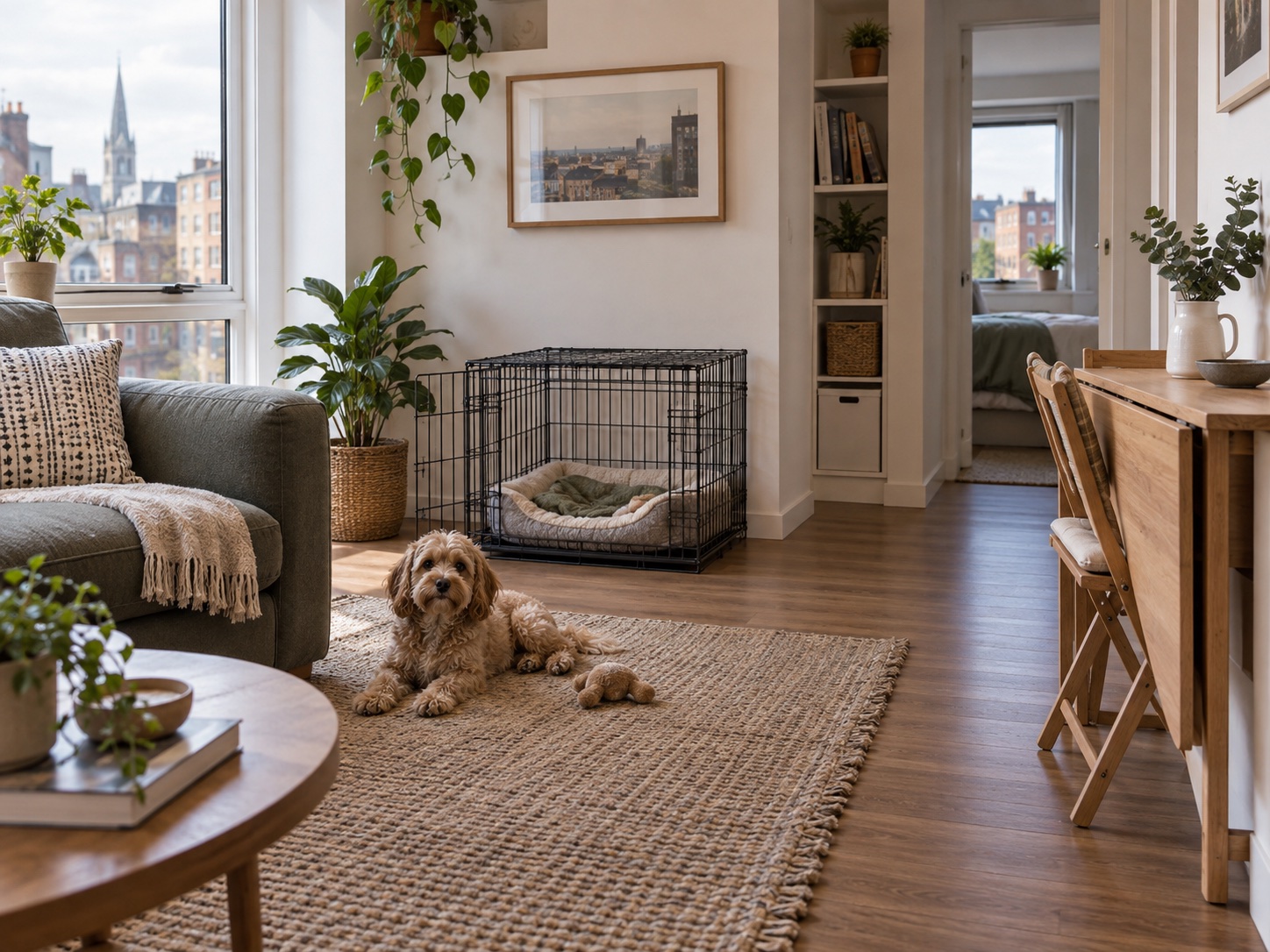
Never choose a smaller crate merely to save floor space.
Keep exits, narrow halls and the route to the outside clear.
Use vertical storage around the room, but not unstable storage on the crate.
First decide whether a crate fits at all
In a small flat, every object competes for floor area. The wrong response is to buy a crate that fits the gap but not the dog. Measure standing length, sitting height, body width and normal sleeping posture, then compare those with usable internal dimensions. See how to measure a dog for a crate.
If the correct crate prevents normal movement through the flat, use a different room-management approach. A gate across a suitable doorway or a puppy-proofed area can provide more usable space without putting the dog in an undersized enclosure.
Map the flat in centimetres
Measure the narrowest part of hallways and the full swing of the front door. Mark radiators, low sockets, balcony doors and windows that create afternoon heat. Use tape to show the crate's external footprint plus the open door and tray-removal area.
Walk every daily route: bed to bathroom, sofa to kitchen, front door to storage and dog to outside toilet area. No one should need to step over the crate or squeeze the dog to pass.
Use doors strategically
A double-door wire crate gives more orientation choices. The side door can face the open room while the front sits near a wall, or vice versa. Secure the unused door and preserve a straight, comfortable approach.
For a very small puppy whose current measurements suit it, the MidWest 18-inch crate has a compact published footprint and divider. It is a short-lived size for many puppies, so re-measure frequently and plan what happens when the dog grows.
Do not rely on “small”, “medium” or breed examples. A compact adult dog may need more length when stretched than a heavier dog that curls, and deep bedding reduces headroom.
Fold-flat is helpful only with a storage plan
A folding crate can free floor space when it is no longer needed, but first identify where it will go. Measure the folded frame, handles and route through cupboards or stairwells. Carrying a large folded crate around furniture every day may be less practical than leaving a stable rest zone in place.
The Amazon Basics 36-inch double-door crate is a common room-planning format at 91.4 × 58.4 × 63.5cm externally. That footprint shows why a “36-inch” label is not enough: the flat must also accommodate access, bedding and water.
Control light, temperature and shared noise
Flats often combine kitchen, dining and living functions. Keep the crate away from oven heat, steam and cooking splashes. Check windows for strong sun and corridors for door buzzers, lifts and neighbour traffic.
A non-slip mat beneath the frame can reduce movement on hard floors. It should be flat, washable and larger than pressure points without becoming a trip edge. Never dismiss persistent vocalising or scraping as a neighbour-noise problem; check the dog's needs and emotional state.
Make storage safe
Use wall shelves and closed cupboards elsewhere in the room rather than loading the crate roof. Keep cleaning products, food, cables and bags out of reach through bars. Avoid fabric skirts or decorative baskets that block airflow or can be pulled inside.
If using a crate cover, keep ventilation open and introduce it gradually. The smaller the room, the more important it is to check heat where the dog actually lies.
Give the dog more than one resting option
Provide an open bed or mat outside the crate so the dog can choose a different temperature, posture or distance from activity. Build calmness through short reward-based sessions rather than using closed-door time to manage the practical pressures of flat living.
For other layouts, compare alternatives to a dog crate and our living-room crate guide.
Common questions
Frequently asked questions
What type of dog crate is best for a small flat?
The best type is one that fits the measured dog and the room safely. Two doors can improve access, a fold-flat wire model can be stored, and sliding doors can reduce clearance needs. None of those features compensates for an undersized interior.
Can I put a crate in a flat hallway?
Only if it leaves a generous clear route and does not interfere with the front door, stairs or emergency exit. Most narrow hallways are too busy and too important for circulation.
Is a folding crate useful in a studio flat?
It can be if you genuinely have a safe storage route and the dog also has an appropriate open resting place. Repeated folding should not replace gradual training or leave the dog without a predictable rest zone.
How do I reduce crate noise for neighbours?
Stabilise the crate on a level non-slip mat, inspect loose parts and build calm positive use gradually. Do not cover signs of distress; barking, scraping or repeated escape attempts require a welfare and training response.
Sources
- RSPCA — dog crate guidance — crate fit, location and positive introduction
- PDSA — crate training your dog — movement, quiet placement and time guidance
- Amazon UK product pages linked above