
Small-flat room guide
Creating a puppy space in a flat
Plan a safe puppy rest and play area in a UK flat without sacrificing movement, ventilation, neighbour-friendly routines or access to the door.
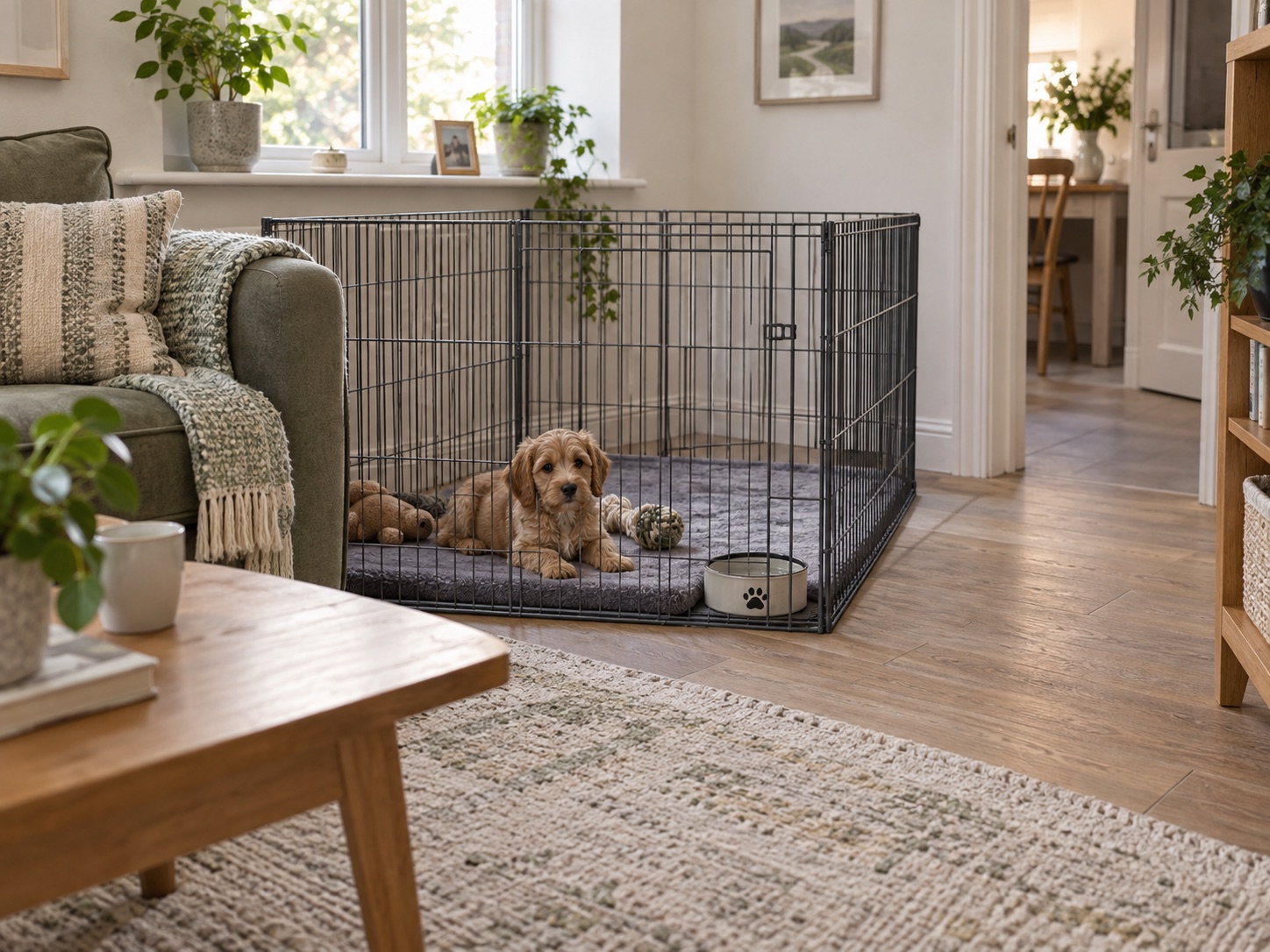
Tape the complete pen or crate footprint and all door swings onto the floor.
Check heat, draughts, noise and ventilation around the chosen corner.
Do not choose a too-small crate simply because it fits beside the sofa.
Start with a floor plan, not a product size
Small UK flats often have one route through a living room to the front door, kitchen or balcony. Put tape on the floor for the full boundary, not only its box size. Open the proposed gate or crate door and leave space for a person to pass without stepping over the puppy or blocking an exit. Check where a tray pulls out and where wet bedding will be carried for cleaning.
The puppy still needs a place to turn, play gently, reach water and rest away from traffic. A pen that fills nearly all the free floor is not automatically the best solution. A puppy-proofed room section with a gate may be more comfortable if the room can be secured appropriately.
Compare compact and full-size equipment honestly
The Yaheetech six-panel pen uses 60 × 60cm panels and can be arranged in different shapes. Its relative compactness is useful in a flat, but it must still provide meaningful clear area after a bed and water go inside. The 60cm height is a separate check as the puppy grows or learns to climb.
An adult-size wire crate such as the MidWest 36-inch iCrate may take more room but better match the dog's future fit. It includes a divider, yet the adult estimate, present usable section and door swing all need measuring. Do not replace a suitable crate with an 18-inch one simply to reclaim floor space.
If a crate cannot fit without blocking a route, consider a secure puppy-proofed room or pen rather than compressing the dog's sleeping space. Our crate alternatives guide compares the choices.
Keep the surface flat and easy to maintain
Laminate and tiles can be slippery; carpet can trap accidents. Choose a floor-compatible protective layer that lies flat beneath every pen foot, then add a separate washable resting mat. Avoid curled edges and loose foam joins that invite chewing. The EMPSIGN 74 × 45cm mat is one low-profile option for a measured resting area, not a waterproof protector for the whole pen.
See puppy pen flooring for the distinctions between traction, waterproofing and cleaning.
Manage flat-specific noise and light
Avoid a pen against a shared wall if ordinary movement rattles it, but do not put the puppy alone in a remote cupboard-like area. Keep the base away from direct sunlight through large windows, heaters, cold draughts and dangling blind cords. Offer an undisturbed rest spot while keeping the puppy within normal household life.
If the puppy vocalises when you leave, assess toilet needs, duration, temperature and whether the training step was too large. Gradual positive alone-time practice is more useful than a denser cover or stronger boundary; read crates and separation anxiety.
Build a repeatable daily route
Plan where shoes, lead and cleaning supplies live, and how you will move quickly to the toilet destination. Introduce one additional prepared room at a time under supervision. A good compact layout is one you can use consistently without constantly moving panels, furniture or the puppy.
Common questions
Frequently asked questions
Can a puppy live happily in a flat?
Yes, if the puppy has a safe resting area, regular toilet trips, age-appropriate exercise, social contact and chances to explore. Floor area alone does not determine welfare.
Is a compact pen enough for a puppy in a flat?
Only if the clear floor still permits normal movement after bed and water are added. A compact pen is a management area, not a substitute for supervised time outside it.
Should I use a small crate because the room is small?
No. The crate must fit the dog's stand, turn and natural lie. If a suitable crate blocks the flat's circulation, rethink the location or use a safe alternative space.
Where should the puppy toilet in a flat?
Plan a predictable route to the agreed outdoor place where possible and offer frequent opportunities. If a temporary indoor surface is necessary, keep it separate from sleep and water and discuss the routine with your vet or trainer if problems persist.
How can I reduce disruption to neighbours?
Focus on meeting the puppy's needs, a calm resting location, gradual alone-time practice and prompt response to distress. Do not leave a barking or panicking puppy confined in the hope it will stop.
Sources
- PDSA — new puppy checklist
- RSPCA — crates and puppy playpens
- Amazon UK example products linked in the guide