
Separation-anxiety welfare guide
Crates and separation anxiety
Understand why a crate does not treat separation anxiety, when confinement can increase risk and how to plan safer professional support.
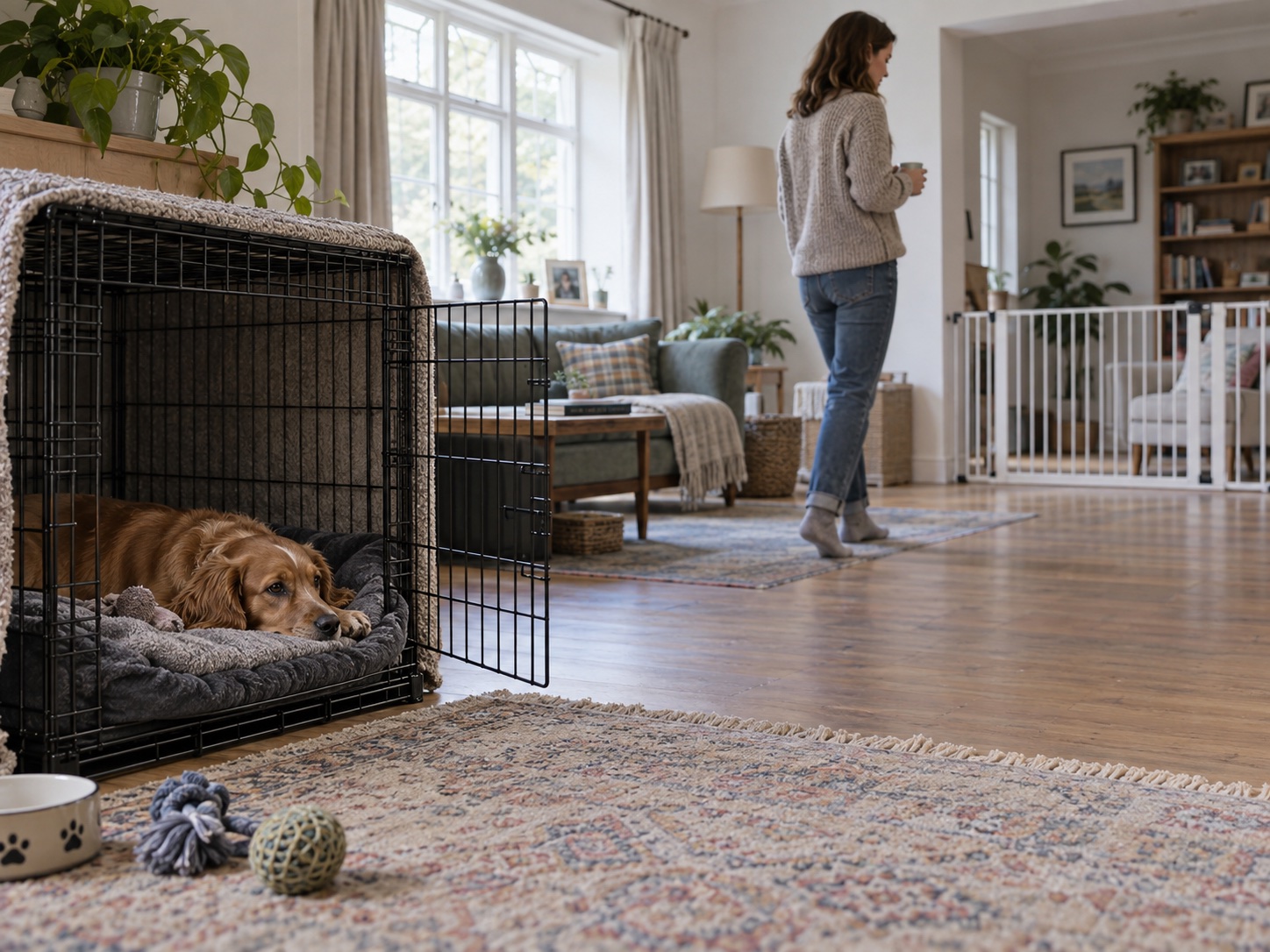
A dog may like an open crate yet panic when the door closes or the owner leaves.
Food refusal when alone, pacing, destruction and escape attempts can indicate anxiety.
Management support from family, sitters or daycare can reduce unavoidable absences while a plan is built.
A crate changes the boundary, not the emotion
Separation anxiety is distress associated with being left or separated from a particular person. Closing a crate door may prevent movement around the room, but it does not teach the dog that absence is safe. Dogs Trust explicitly warns that crate training alone does not address the cause and that a panicking dog may seriously injure themselves trying to escape.
This is different from ordinary puppy protest, boredom or incomplete crate training, although the outward signs can overlap. Diagnosis and treatment need individual professional assessment.
Why silence can mislead
Some dogs bark or damage doors. Others freeze, pace silently, stare at the exit or refuse food. A camera provides evidence from the moment you prepare to leave until you return. Keep any observation brief enough to avoid knowingly provoking a long episode.
Compare behaviour with you present and absent. Dogs Trust notes that a dog who readily eats or plays when you are there but cannot do so alone may be anxious rather than simply uninterested.
When confinement adds risk
A dog who scratches, bites bars, throws their body at the door or tries to squeeze through gaps can damage teeth, nails and skin. Do not respond with a stronger crate, extra clips or a smaller space. Stop repeating the dangerous setup and ask your vet for advice.
The same dog may voluntarily sleep in an open crate at other times. Door position, absence cues and freedom to leave can completely change the emotional experience.
An open crate can remain one choice
If the dog already uses a crate happily, it may remain open within a larger dog-safe room. A furniture crate such as the Hzuaneri 81cm model can function as an optional den for a suitably measured small dog, but its appearance does not make closed-door separation appropriate.
Provide other beds, water and free movement. Remove hazards and use a gate only if the dog is comfortable with that boundary.
Reduce unavoidable absences
Where possible, prevent repeated panic while treatment begins. Coordinate family or friends, a trusted sitter, suitable daycare or flexible schedules. These are management steps, not indulgence; each full episode can make the pattern harder to change.
For necessary absences, choose the least restrictive safe environment the dog can tolerate. Dogs Trust notes that confinement itself may be the problem for some dogs and a different room or larger area may help.
Build a professional plan
Start with a vet because pain, digestive or urinary problems, age-related change and other medical conditions can alter behaviour. A qualified behaviour professional can use the history and video to identify triggers and build tiny, sub-threshold departures.
Medication is a veterinary decision. Dogs Trust notes there is no scientific evidence that over-the-counter products treat separation anxiety. Avoid turning calming products or crate accessories into substitutes for assessment.
Where equipment still matters
Any open resting space must still fit the dog. A conventional crate such as the MidWest 36-inch model needs appropriate internal room, stable bedding and safe placement even if the door remains open.
Product choice is the smallest part of this plan. Read where to put a crate for physical setup and signs of crate distress for behaviour to record.
What gradual practice looks like
Training starts below the point of distress: perhaps touching keys, putting on shoes, stepping behind an internal door for one second or simply moving away from the dog's bed. The relevant step differs by dog. Return before anxiety escalates and use the professional plan to decide progression.
If the dog cannot remain comfortable at the first step, the answer is not to wait them out. Make the step smaller and seek more support. The desired outcome is emotional safety during realistic absences, not tolerance of a particular container.
Common questions
Frequently asked questions
Can crate training cure separation anxiety?
No. Dogs Trust says crate training does not address the underlying cause. Treatment usually requires a gradual individual behaviour plan and may include veterinary support.
Can a crate make separation anxiety worse?
Yes. Some dogs panic more when confined and may injure themselves trying to escape. A larger safe area or different management setup can be more appropriate while professional help is arranged.
Can I leave the crate door open for a dog with separation anxiety?
If the dog already chooses the crate and the wider room is safe, an open door may preserve it as one optional resting place. It should not be the only refuge and does not replace treatment.
How can I tell whether my dog is anxious when alone?
Use a camera during a very brief planned absence. Look for panting, pacing, scanning, vocalising, destruction, toileting, escape behaviour or refusing food the dog would take when you are present.
Who can help with separation anxiety?
Start with your vet to assess health and discuss referral. A qualified behaviour professional can create a gradual plan; severe cases may need veterinary-prescribed medication alongside behaviour work.
Sources
- Dogs Trust — separation anxiety — confinement risk, video observation, management and professional help
- PDSA — crate training your dog — separation-anxiety caution and holistic planning
- Blue Cross — preventing separation anxiety in puppies — gradual alone-time foundations
- Amazon UK product pages linked above