
Practical home-placement guide
Where to put a dog crate in the home
Choose a calm, safe dog-crate location away from heat, draughts and busy walkways while keeping your dog connected to family life.
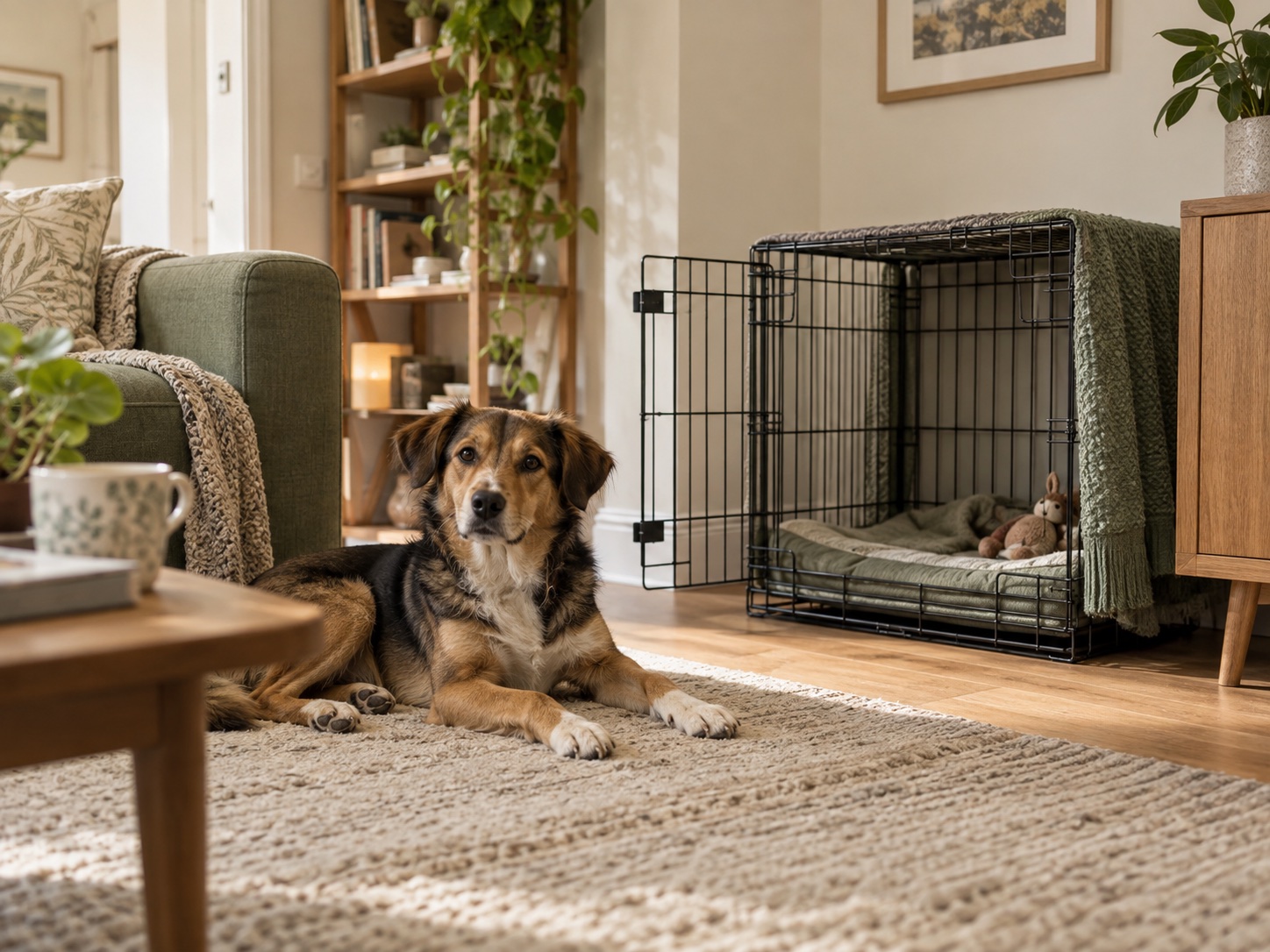
Watch the position at different times of day for sun, noise and foot traffic.
Keep a clear exit route and enough space to open the chosen crate door fully.
Start training with the crate door secured open and let the dog choose to enter.
Start with the dog, not the empty corner
A crate location has to work for the individual dog before it works for the room. Some dogs relax near ordinary household activity; others need more distance from television noise, children or the front door. Spend a day noticing where the dog chooses to lie when nothing is being asked of them. That preferred resting zone is useful evidence.
RSPCA guidance recommends placing a crate where the family spends time during early introduction. PDSA also recommends a quiet, draught-free location away from direct sunlight. Together, those principles point to a calm edge of an occupied room: connected, but not in the centre of traffic.
Check heat, sun and airflow
Do not place a crate against a radiator, beside a wood burner or where cooking heat collects. Direct sun can move across a room and turn a comfortable morning position into a hot afternoon one. Check the proposed location at several times of day before committing.
Look for cold air from external doors, poorly sealed windows and floor-level vents. A partial cover may help some dogs feel less exposed, but it is not a remedy for a draught and must not obstruct ventilation. Keep blind cords, charging cables, trailing plugs and houseplants outside reach through every side of the crate.
Protect rest from household traffic
A dog needs to be able to sleep without people repeatedly stepping close to the crate. Avoid the line between the sofa and kitchen, the swing of an internal door, a child's main play route and the space used for deliveries. Do not narrow a fire exit or create a trip hazard in a hallway.
Sound matters too. Speakers, televisions, washing machines and front-door activity can make a corner less restful than it looks. If the dog repeatedly startles, scans the room or leaves as soon as the door is open, reconsider the position rather than expecting them to adapt.
Measure the full working footprint
Map the product's external dimensions on the floor with low-tack tape. Add the door swing, the direction the tray slides and a clear approach for the dog. If the crate has two doors, decide which one will be used and secure the other. Furniture drawers and cupboard doors must still open safely.
The MidWest 36-inch crate illustrates why this matters: its listed footprint is 92.7 × 59.7cm before you allow for either door, water or circulation. Its side door may solve one layout while creating a pinch point in another.
First confirm the dog's usable interior with our crate measuring guide, then plan the room around that size. Never buy a smaller crate merely because it fits a convenient alcove.
Living room, bedroom or utility room?
The living room often gives an adult dog a balance of company and rest, provided the crate sits outside the main route. A bedroom can be useful for a new puppy because you can notice toilet needs and offer calm reassurance; the crate can be moved gradually later if another long-term location suits the household.
A utility room is only appropriate when it is comfortable, regularly occupied and free from appliance heat, vibration, detergents and dangerous storage. Garages, conservatories and sheds are poor default choices because temperature and isolation are hard to control.
Furniture crates need permanent planning
A furniture-style crate may integrate neatly beside a sofa, but its cabinet surface can disguise the amount of usable dog space. Confirm internal dimensions, airflow and door opening before treating it as a side table. Keep lamps, drinks and objects that could fall away from the top.
The 81cm Hzuaneri model has a compact external format for suitable small dogs, yet the same welfare test applies: the dog must stand, turn, lie naturally and stretch once bedding and water are present.
See our detailed living-room crate plan and small-flat guide for tighter layouts.
Set up before the dog uses it
Place non-slip bedding flat, provide stable water and secure the door open during early exploration. Sit in several positions around the room and look for reachable hazards. Then watch the dog choose whether to enter, leave and rest. A technically tidy position is not successful if the dog cannot settle there.
Recheck after seasonal changes, furniture moves and the arrival of children or other pets. A crate location is part of the dog's environment, not a one-time decorating decision.
Common questions
Frequently asked questions
Should a dog crate be in the living room or bedroom?
Use the room that gives the dog calm company and meets their current needs. A living room often works by day; a new puppy may settle better near you in the bedroom at first. The final position must be quiet, draught-free and away from direct heat.
Can a dog crate go next to a radiator?
No. A radiator can make the enclosed space uncomfortably hot and a cover can trap more heat. Choose a stable-temperature location and keep heating controls, cables and hot pipes out of reach.
Can I put a dog crate under a window?
Only if you have checked direct sun, draughts, condensation, noise and access to curtains or blind cords throughout the day. A solid internal wall is often easier to manage.
Is a hallway a good place for a dog crate?
Usually not if people regularly pass close by or the crate narrows an exit route. A wide, quiet hallway recess may work only when doors, stairs, deliveries and emergency access remain clear.
Should I cover a dog crate?
A partial cover can reduce visual stimulation for some dogs, but it must preserve airflow and temperature control. Introduce it gradually and remove it if the dog appears hotter or less settled.
Sources
- RSPCA — dog crate guidance — location, bedding, water and gradual introduction
- PDSA — crate training your dog — quiet draught-free placement and welfare guidance
- Amazon UK product pages linked above