
Reward-based puppy training guide
How to introduce a puppy to a crate
Introduce a puppy to a crate with short, reward-based steps, an open door and clear signs that tell you when to slow down.
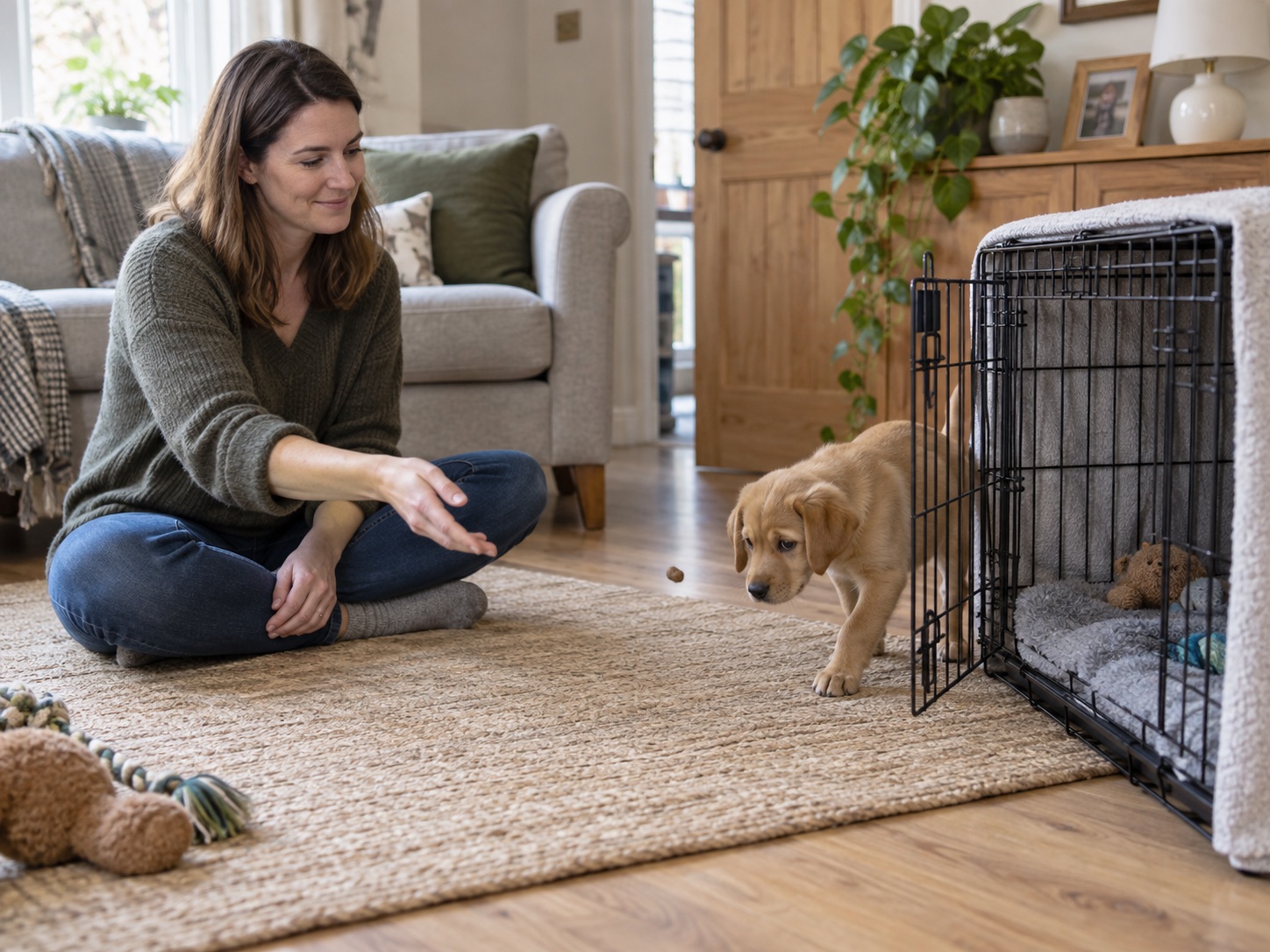
Never push, carry or lure a worried puppy deep into the crate and close the door.
Move to the next step only when the puppy repeatedly returns with loose, calm body language.
Toilet needs, tiredness and the first nights at home require a separate plan from crate training.
Prepare the crate before training
Measure the puppy in natural positions and plan for growth. The usable interior must allow standing, sitting, turning, lying naturally and stretching once bedding and water are added. A divider can adjust a larger crate, but it must never restrict essential movement.
Place the crate in a calm, draught-free part of a room where the family spends time. Add simple washable bedding and stable water. Remove collars or tags that could catch on the frame during unsupervised rest, following advice from your vet or trainer for your individual setup.
Secure the crate door fully open so it cannot swing towards the puppy. Leave it that way whenever you are not actively training in the early stages.
Step 1: Reward looking and approaching
Sit nearby without blocking the entrance. Mark and reward a glance towards the crate, then an approach, a sniff and a paw across the threshold. Drop treats near the entrance rather than using a hand to pull the puppy forward.
Let the puppy leave whenever they want. Choice is part of what makes the crate feel safe. End the session after a few successful repetitions, before curiosity turns to fatigue or frustration.
Step 2: Build comfortable entry
Place a treat just inside, then gradually farther back across several sessions. Reward the puppy for turning around and coming out as well as entering. A dog who rushes in, grabs food and backs out may need more practice before duration is added.
The MidWest 18-inch crate is an example of a compact puppy model with a divider, but it is suitable only while the measured puppy has complete movement room. Fast-growing puppies can outgrow it quickly.
Use part of the puppy's normal food allowance for training rather than adding unlimited extras. If the puppy is not interested in food, do not assume they are relaxed; tiredness, stress or a distracting environment may be the reason.
Step 3: Feed meals in the crate
RSPCA guidance recommends using meals to build a positive association. Put the bowl where the puppy will comfortably eat. For a hesitant puppy that may be at the entrance; over time it can move farther inside.
Keep the door open at first. When the puppy consistently enters, eats and remains loose-bodied, briefly move the door without closing it, reward, and release. The aim is for door movement to become unimportant.
Step 4: Close the door for seconds
Close and immediately reopen the door while the puppy is occupied and you remain beside the crate. Build in very small increments. Quietly reward relaxed behaviour: soft muscles, normal breathing, settling on the bedding and willingness to eat.
If the puppy whines, pants, scratches, freezes or stops taking food, the step was too difficult. Open the door when safe, meet any toilet or comfort need and return to an easier stage next time. Do not use a “cry it out” approach.
Step 5: Add distance before absence
Stand up, sit down, take one step away and return. Vary easy repetitions so duration and distance do not rise together every time. Only move briefly out of sight after the puppy can relax with you moving around the room.
RSPCA guidance describes building gradually towards calm periods with the owner out of sight. This is not permission to leave a puppy for a preset time; toilet capacity, age and emotional comfort still govern the session.
For a puppy expected to need a larger adult crate, the MidWest 36-inch model includes a divider. Check its 92.7 × 59.7 × 62.9cm external footprint against the room and adjust the usable area as the puppy grows.
Separate night-time needs from daytime training
A puppy's first nights involve sudden separation from their dog family, unfamiliar sounds and frequent toilet needs. Keep the puppy near you initially and respond calmly. Read our first-night crate plan rather than treating overnight crying as a training test.
Know when to change course
Repeated escape attempts, heavy panting, drooling, cowering, refusal of food or frantic vocalising are not stubbornness. Stop increasing difficulty. Check the crate's size and position, and speak to a vet or qualified behaviour professional if concern continues.
A pen, gate or dog-safe room may be more suitable. Compare alternatives to a crate and learn the signs of distress.
Common questions
Frequently asked questions
How long does crate training a puppy take?
There is no fixed timetable. PDSA notes that crate training can take weeks. Progress depends on the puppy's history, comfort and response, so repeat easy steps and slow down whenever worry appears.
Should I put a puppy in the crate and shut the door on day one?
No. Begin with the door secured open and reward voluntary investigation. Closing the door comes later, first for a moment while the puppy is calm and you remain nearby.
Can I use meals for crate training?
Yes. RSPCA guidance suggests feeding meals in the crate as part of a gradual introduction. Start near the entrance if needed and move the bowl only as the puppy remains comfortable.
What if my puppy will not enter the crate?
Stop trying to move them inside. Check location, noise, floor stability and previous experiences, then reward attention and approaches from a comfortable distance. A qualified reward-based trainer can help if avoidance persists.
Can I use a crate as a time-out area?
No. Welfare organisations advise that a crate should never be used as punishment. It should predict rest, safety and positive experiences.
Sources
- RSPCA — training your dog to use a crate — open-door introduction, meals and gradual duration
- PDSA — crate training your dog — reward-based steps, distress signals and time guidance
- Amazon UK product pages linked above