
Puppy space transition guide
Moving from a puppy pen to supervised room access
Expand a puppy's space from a pen into a prepared room through short supervised sessions, hazard checks and a reliable return to rest.
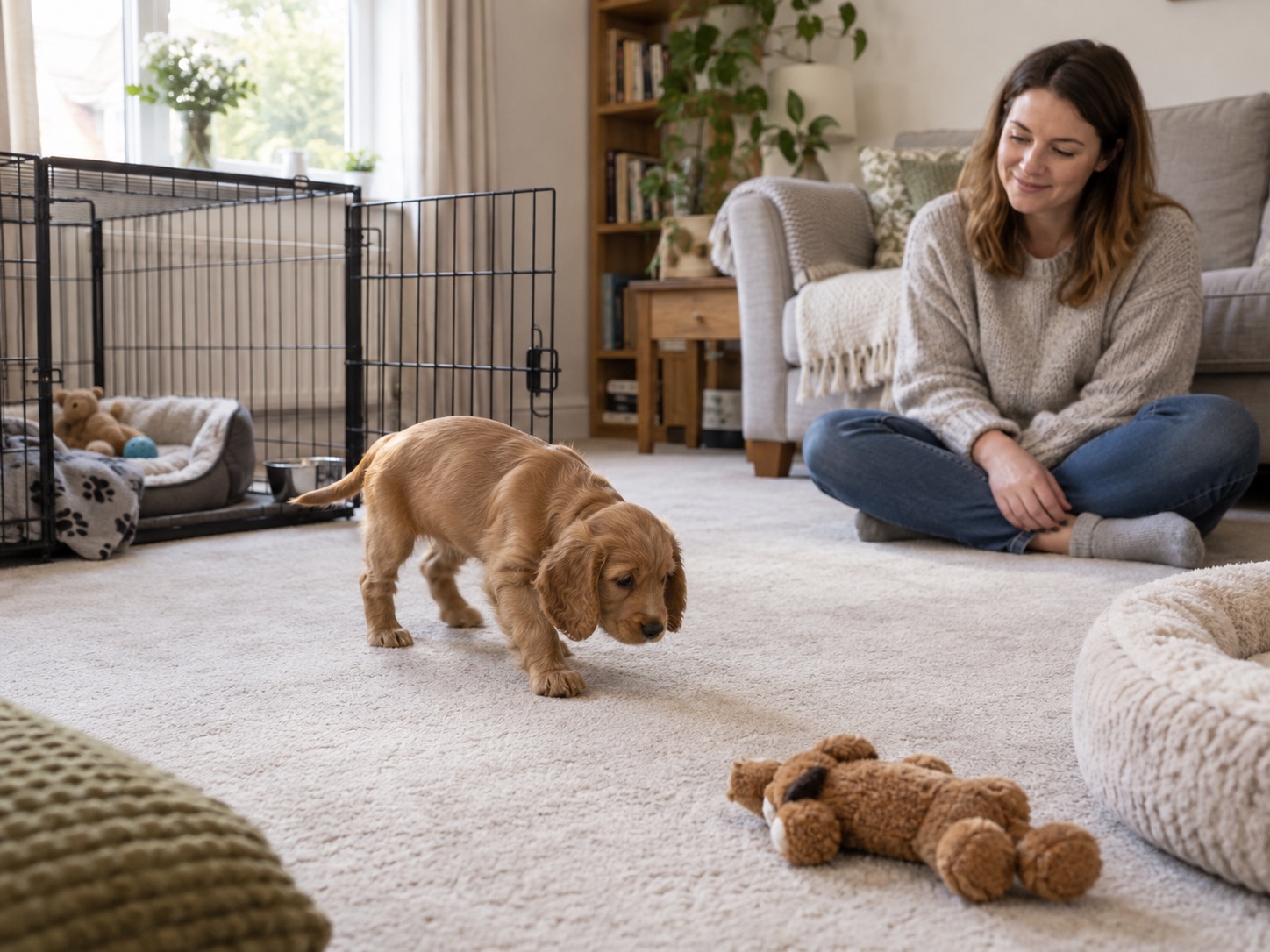
Check cables, plants, bins, cleaning products and gaps at puppy height.
Open the pen door while an adult can watch the whole room.
Return to the base area before the puppy is overtired or starts seeking trouble.
The pen is a starting point, not a deadline
There is no date when a puppy must graduate from a pen. The useful question is whether the next space is safe and whether the puppy can use it calmly with supervision. A puppy may be ready for short living-room visits while still needing a pen during cooking or a delivery. That is a normal staged arrangement.
Scroll horizontally to see all columns →
| Stage | Puppy access | What success looks like |
|---|---|---|
| Base area | Pen and familiar rest spot | Can relax and use water |
| First visits | Short supervised time in one prepared room | Explores and returns calmly |
| Longer visits | More time in that same safe room | Can settle without constant redirection |
| Next room | A second prepared space with supervision | Maintains safe, manageable behaviour |
Prepare the next room before opening the gate
Get down to puppy height. Move cables, plants, medicines, small objects, food waste and cleaning products out of reach. Secure gaps behind furniture and check that blind cords, rugs and door stops cannot be chewed or pulled. Block stairs and rooms you have not prepared. PDSA's puppy checklist makes home proofing a first step, not a reward for good behaviour.
The Yaheetech pen can remain a compact base while the puppy explores a room in short sessions. Keep its door fixed fully open during these sessions so it cannot swing against the puppy. Check that an open panel does not create a trip point for people.
Practise short supervised visits
Choose a time when the puppy has had a toilet opportunity and is neither frantic nor exhausted. Open the boundary, stay present and let the puppy investigate. Reward calm choices, offer a safe chew or toy and return to the base area before the puppy becomes overstimulated. Do not use the pen as punishment after an accident or a chewed item.
Lengthen visits within the same room before adding another room. Observe whether the puppy can pause, take water and rest, rather than pacing from hazard to hazard. If supervision is difficult, shorten the session or reset the boundary.
Use a gate only at a suitable opening
If the room has a real doorway, a fitted gate can keep access predictable while the pen remains a rest choice. The BabyDan No Trip is a wall-mounted example for a specific 72–78.5cm opening; confirm wall fixings, the opening width at three heights and the manufacturer's location guidance. It is not a freestanding room divider.
Preserve the puppy's familiar rest surface. A measured low-profile mat such as the EMPSIGN can move into the prepared room as a predictable settling point, provided it lies flat and is not chewed.
Separate room access from alone-time training
Being calm with you in the room does not mean a puppy can cope there alone. Blue Cross recommends gradual alone-time practice while the dog remains relaxed, including time behind a gate in sight before moving out of sight. If the puppy becomes distressed, reduce the challenge and seek help when needed.
Keep a fallback plan for visitors, deliveries and cooking. Supervised room access should increase the puppy's safe choices, not remove a useful management option too soon. Check the open-plan puppy layout when kitchen and living routes overlap, and keep cables clear of the boundary. If the puppy starts climbing the pen, address that separately rather than opening the whole house abruptly.
Common questions
Frequently asked questions
When can a puppy leave the pen for a whole room?
There is no fixed age. Start when the next room is puppy-proofed, you can supervise and the puppy can return to the base area calmly. Expand duration according to behaviour and safety.
Should I remove the pen once room access begins?
Not necessarily. The pen can remain a familiar rest and management option while supervised access expands. Avoid using it only when everyone leaves the room.
What if the puppy chews furniture in the new room?
Interrupt calmly, provide a safe alternative and reduce access while you remove hazards. Review supervision, rest and enrichment rather than treating the chewing as defiance.
Can a gate replace the pen?
A gate can define a properly prepared room if it fits the opening and is installed as intended. It will not make an unsafe room puppy-proof on its own.
Is supervised room access the same as being left alone there?
No. First build safe movement and settling with a person present. Alone-time is a separate gradual skill and requires a space and duration the puppy can cope with.
Sources
- PDSA — crate training and alternative resting places
- PDSA — new puppy checklist
- Blue Cross — home alone training
- Amazon UK example products linked in the guide