
Training guide
Helping a dog settle in a carrier
Introduce a dog to a soft or rigid carrier through voluntary entry, short closures and gradual movement without forcing a fearful dog.
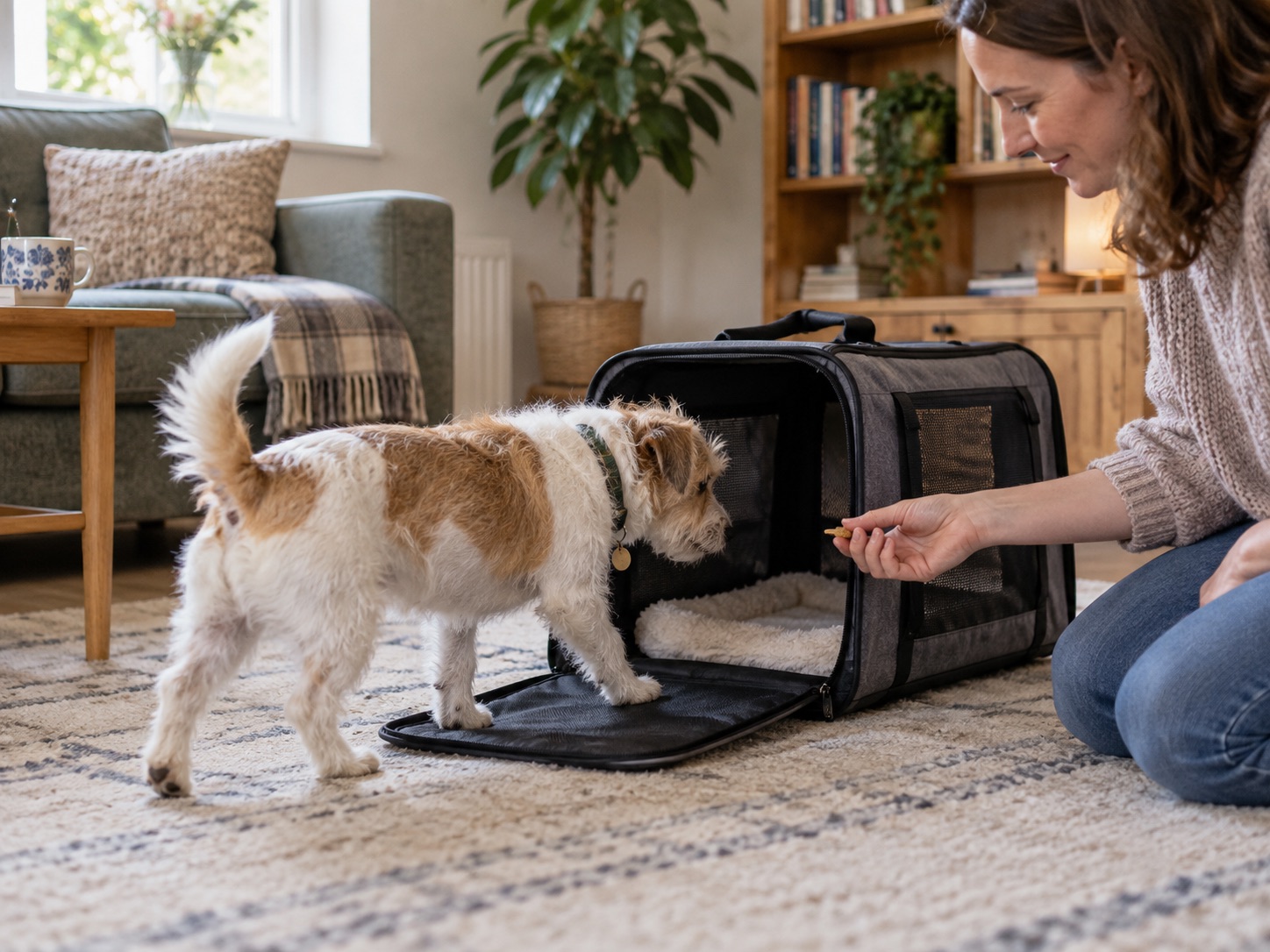
Let the dog approach and leave the carrier freely at first.
Practise closure and movement as separate, short steps.
Pause and seek qualified help if distress escalates.
Before training, fix the physical fit
A dog will not learn to relax in a space that presses on its head, rocks under its feet or becomes stuffy. Check standing and turning room, a stable base, secure fasteners and exposed ventilation. The carrier should suit the intended journey. Our measurement guide and ventilation checklist address those basics.
A calm progression
1. Make the open carrier ordinary
Place it in a quiet room with its door safely fixed open so it cannot swing against the dog. Add a familiar, washable pad only if it leaves enough height. Toss a treat near the entrance, then just inside; let the dog retreat freely. Feed part of a meal at the opening if that helps. Do not lure so deeply that the dog feels trapped by your body.
The Amazon Basics soft carrier is a useful example of a light, accessible bag for a dog who already fits its interior. Secure the zips and loose straps out of the way during practice; a flexible wall should not sag onto the dog.
2. Add closure for seconds
When the dog enters readily and remains relaxed, touch the zip or door, reward, and reopen. Build up to a fully closed door for a few seconds while you remain beside it. Watch for stiff posture, frantic scratching, repeated attempts to escape or escalating vocalisation. Those signal that the step is too hard. Back up to the last easy stage rather than waiting for a dog to “cry it out”.
3. Add handling, then movement
Lift the empty carrier first so the dog hears the movement. With a calm dog inside, raise it only slightly and set it down; later carry it across a room. For a rigid Ferplast Atlas 30, check handles and shell fasteners before any loaded lift. For a trolley, introduce rolling sound and tilt separately. End sessions before the dog becomes exhausted or distressed.
Practise in the real setting only after the home stages are easy, starting with a short quiet outing. A journey cannot be a training session if the dog is already panicking. If confinement or separation triggers severe distress, speak with your vet or a qualified, reward-based behaviour professional. For air travel, begin well before booking and review the route's carrier rules.
Common questions
Frequently asked questions
How long does carrier training take?
It varies by dog and history. Some accept short steps quickly; a frightened dog may need many sessions. Progress by relaxed behaviour, not a deadline.
Should I push a reluctant dog inside?
No. Forcing entry can make the carrier more frightening. Make access easy, reward voluntary investigation and ask a qualified behaviour professional if fear persists.
Should the door be closed on the first day?
Only if the dog is already relaxed with entry and a very brief closure. Keep early sessions easy and reopen before distress builds.
Can I feed meals in the carrier?
Often, if the dog chooses to enter and the carrier is an appropriate size. Keep the door open initially and do not withhold food to compel entry.
What if the dog panics when the carrier moves?
Return to a stationary stage, reduce the movement to a tiny lift or roll, and watch posture and temperature. Persistent panic warrants veterinary or qualified behaviour advice.
Sources
- RSPCA — introducing a dog to a crate
- IATA — traveller pet guidance and acclimation
- Amazon UK product pages linked from the product cards