
Car harness fit guide
Measuring a dog for a car harness
Measure chest girth and follow a dog car harness size chart, then check shoulder movement, belt route and fit in sitting and lying positions.
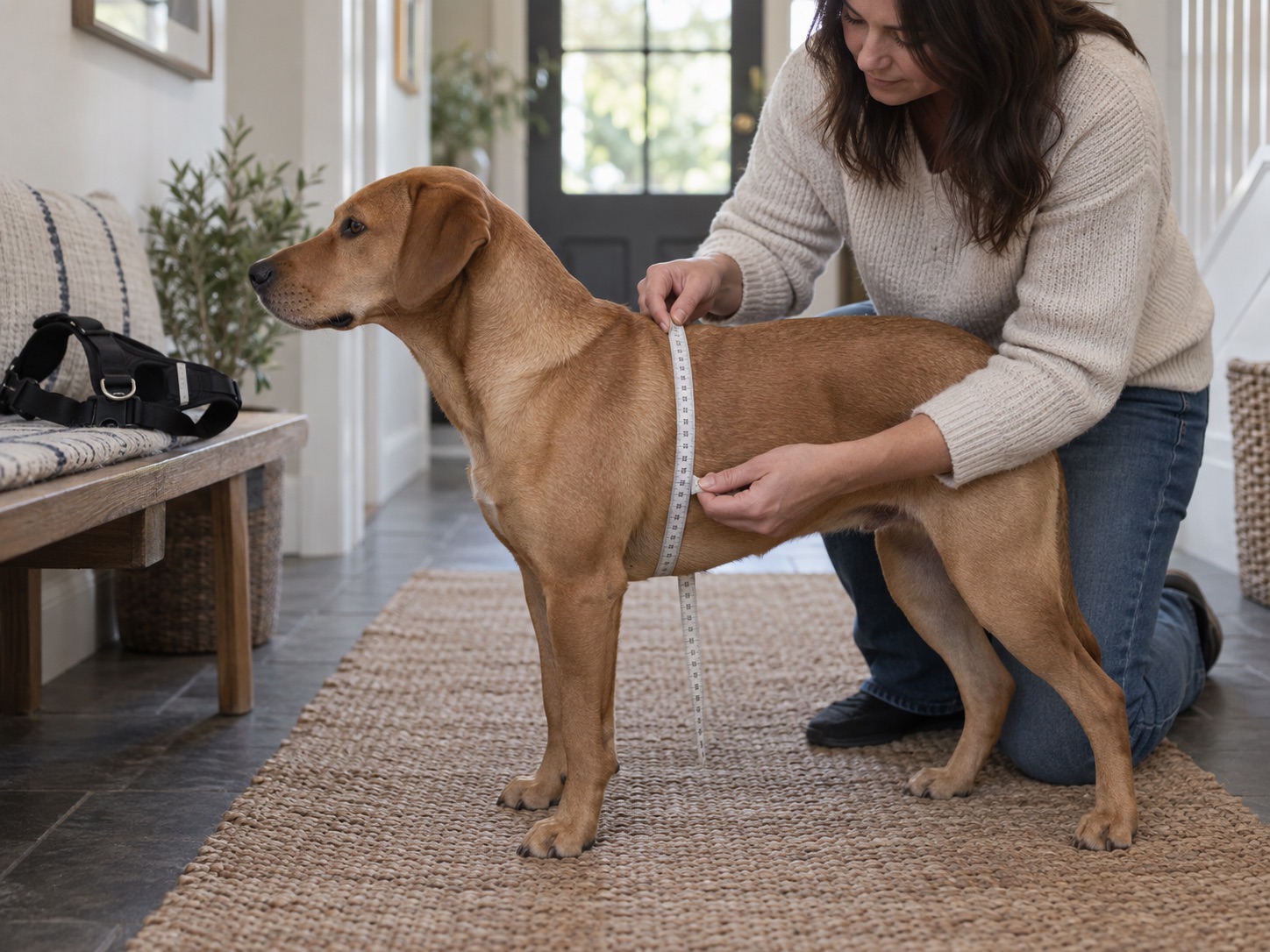
Use a flexible tape against the coat without compressing the chest.
Follow the exact product's chart; small, medium and large are not standardised.
Check that the approved vehicle-belt route stays clear and cannot twist.
Gather the right measurements
Use a soft tailor's tape and note the figures in centimetres. Let the dog stand squarely on a non-slip floor. Measure chest girth around the fullest part of the ribcage immediately behind the front legs, keeping the tape level. Do not pull into the coat. Repeat the measurement to catch a twisted tape or a dog leaning away.
Check the manufacturer's current chart for any neck girth, chest length or weight requirement. Weight can be an additional limit, but it cannot show whether a padded plate lies correctly across an unusually deep or narrow chest. A walking-harness size label is not transferable to a vehicle harness.
Compare the exact harness chart
Kurgo's Enhanced Strength Tru-Fit uses several adjustment points and has size-specific test information. Match the actual size and version you intend to buy to both the fit chart and the evidence. Do not choose medium solely because another Kurgo harness in medium fits. The tested-size and load comparison explains why a chart's upper weight is not automatically the crash-test load.
EzyDog's Drive lists a broad small-girth range on its UK chart. The padded chest plate and belt handles need to sit where its instructions show; the fact that the circumference falls within the range is not enough if the plate is too long or the shoulder straps rub.
Perform a three-position fit check
First, adjust the harness with the dog standing. The chest plate should not press on the throat, and shoulder movement should remain normal. Check under the front legs for chafing and verify that the dog cannot back out. Follow the maker's own guidance for tightness rather than a universal finger rule.
Next ask the dog to sit and lie down. The harness must not rotate, ride into the neck or dig into the armpits. If it does, adjust and retest. If a secure fit is impossible across positions, try another design instead of adding a homemade strap.
Only after the body fit works should you test the vehicle connection in a stationary car. Route the belt or supplied tether exactly as specified, without twists or extra length. Practise calm entry, short rests and brief journeys. The restraint must keep the dog from the driver without forcing an unnatural posture. Our car harness buying guide compares evidence and belt routes.
Recheck over time
Growing puppies, weight change, coat clipping and ageing can alter fit. Inspect webbing, buckles and stitching before use and replace damaged components according to the maker's directions. If a medical issue makes chest loading questionable, ask a vet before relying on a harness; a vehicle crate may be an alternative when it fits the dog and car.
Common questions
Frequently asked questions
Where do I measure dog chest girth?
Measure around the widest ribcage just behind the front legs while the dog stands naturally. Keep the tape level and do not pull it tight enough to compress the coat or chest.
What if my dog is between car harness sizes?
Follow the maker's overlap advice and verify the adjustment range on the actual dog. If neither size sits securely without pressure or escape gaps, choose a different design.
Can breed or weight replace measuring?
No. Dogs of the same breed or weight can have very different chest and neck shapes. Use the current exact-product size chart and a hands-on fit check.
Should I fit the harness while the dog is lying down?
Start with the dog standing so you can place the chest plate and straps accurately, then check sitting and lying positions for rubbing, throat pressure or movement.
How often should I remeasure?
Remeasure after growth, weight change, grooming changes or a long break from use, and check adjustment before each journey.
Sources
- Kurgo — Enhanced Strength Tru-Fit product information
- EzyDog UK — Drive sizing and fitting
- GOV.UK — Highway Code Rule 57
- Amazon UK product pages linked from the product cards