
Dog crate comparison guide
Metal vs plastic vs fabric dog crates
Compare metal wire, plastic and fabric dog crates for airflow, cleaning, storage, durability and household use, then match the material to your dog.
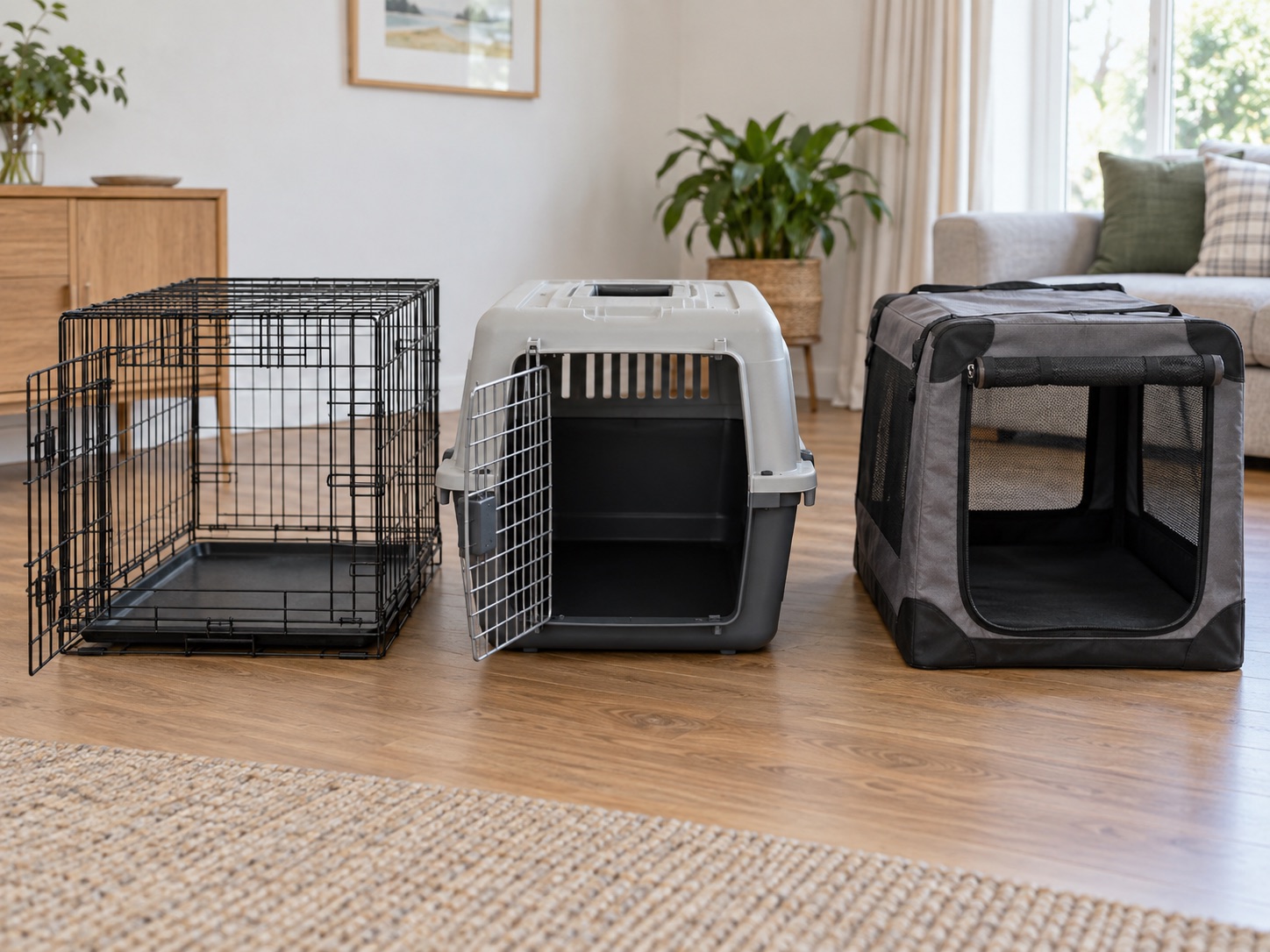
Choose the dog's required internal space before comparing material or appearance.
Wire offers visibility; plastic offers more enclosure; fabric depends on calm behaviour.
Portable, carrier or travel wording does not by itself establish crash protection.
Quick comparison
Scroll horizontally to see all columns →
| Material | Strongest advantages | Main limitations | Usually suits |
|---|---|---|---|
| Metal wire | Airflow, visibility, fold-flat storage, removable tray | Exposed feel, rattling, many joints to inspect | Adaptable household setup |
| Plastic | More visual enclosure, solid wipe-clean shell | Bulkier storage, less airflow, often sloped inside | Calm enclosed rest or purpose-designed carrier use |
| Fabric | Light, portable, easy to fold | Least durable, harder to clean, not for chewers or puppies | Settled dog at a destination |
This table compares typical designs, not every product. Construction quality, dimensions and purpose vary. A correctly sized, well-made crate in one material is better than a poorly fitting model in another.
Metal wire crates
Wire is the most adaptable household format. It provides generous ventilation and lets a dog see the room. Many models have two doors, a removable tray and a frame that folds flat. Dividers are widely available for puppy growth.
The openness can be a drawback for dogs that settle better with reduced visual stimulation. A partial breathable cover may help some dogs, but it must not restrict airflow, trap heat or hang where it can be chewed through the bars. Wire can also rattle on hard floors, and every latch, weld and tray edge needs inspection.
Choose wire when you want a long-term household crate, value fold-flat storage and have a dog that is comfortable with the visible environment. Compare current formats in our best wire dog crates guide.
Plastic crates and carriers
Plastic creates solid lower walls and more visual enclosure. Smooth shells can be easier to wipe than fabric, and some products are purpose-designed as transport carriers. Ventilation comes through grilles or slots rather than open panels, so their size and placement matter.
Many plastic designs slope inward. External length and height can overstate shoulder and head space, making internal measurements especially important. Bulky shells rarely store as efficiently as folding wire, and doors and clips must be checked for secure alignment.
Choose plastic when the dog prefers a more enclosed space, easy wiping matters or a specific carrier format fits the intended non-vehicle or documented transport purpose. Do not assume any plastic carrier is approved for air or car travel; verify the exact product against the operator or restraint requirement.
Fabric crates
Fabric is the lightest and most portable option. Mesh panels provide ventilation and the frame usually folds compactly. For a calm dog already comfortable in a crate, a soft model can create a recognisable resting place at a holiday property or family visit.
Durability is the decisive limit. PDSA says fabric crates are less durable, harder to clean and unsuitable for puppies or dogs that chew. Zips, mesh and seams can fail under scratching or biting. Deep cleaning takes longer because the whole shell must dry, and retained moisture can make the space unpleasant.
Choose fabric only for a settled, supervised dog that does not test boundaries. Our soft crate guide compares current layouts and explains variant checks.
Which material handles cleaning best?
Plastic shells and rigid trays generally wipe clean most easily. Wire crates have accessible interiors but hair and residue collect around joints. Fabric requires vacuuming, spot cleaning or washing according to the label, followed by complete drying.
For puppies, older dogs or any situation where accidents are likely, prioritise a removable waterproof tray and access to the floor beneath. Whatever the material, inspect after cleaning for rust, cracks, sharp edges, loose threads and damaged fasteners.
Which material stores best?
Soft crates normally make the lightest package. Folding wire becomes thin but stays as long and tall as its panels; a 122cm frame is still awkward. Plastic is usually the bulkiest unless the shell separates, and repeated dismantling may not be intended.
Measure the entire storage route. Include handles, trays, loose dividers and covers. Never move a folding crate with the dog inside.
Material does not solve distress
A more enclosed plastic shell or stronger wire cannot treat fear, separation distress or panic. Introduce every crate gradually with the door open, voluntary exploration and rewards. Stop if the dog pants, cowers, drools, scratches frantically, bites the structure or injures themselves.
Speak to a vet when behaviour or safety is a concern and seek an appropriately qualified behaviour professional where recommended. A gated dog-proofed room or pen may provide a better management space.
Make the final decision in this order
First measure the dog. Second, define the job: permanent rest space, short destination use or a purpose-designed transport system. Third, check behaviour around the material. Fourth, measure the room, doors, tray route and storage place. Only then compare appearance, accessories and price.
Common questions
Frequently asked questions
Are metal dog crates better than plastic?
Metal wire is usually more ventilated and often folds flat, while plastic provides more visual enclosure and solid wipe-clean sides. The better option depends on the dog's comfort, the room and the intended use.
Are fabric crates safe for dogs that chew?
No. PDSA says fabric crates are unsuitable for puppies and dogs that chew. Damaged mesh, zips or seams can create escape and injury risks.
Which dog crate material is easiest to clean?
Plastic shells and removable rigid trays are usually simplest to wipe. Wire gives good access but has more joints. Fabric traps hair and moisture around seams and must dry fully.
Which crate material is best for anxious dogs?
No material treats anxiety. Some dogs prefer less visual exposure, but distress needs gradual training and potentially veterinary or qualified behaviour support. Never answer panic with stronger containment alone.
Is a plastic or fabric carrier safe in a car?
Material and travel marketing do not prove crash performance. Choose equipment specifically documented for vehicle restraint, compatible with the dog and vehicle, and install it exactly as instructed.
Sources
- PDSA — crate training your dog — wire, fabric and plastic characteristics; sizing and safe use
- RSPCA — dog crate guidance — safe-haven use, location and positive introduction
- The Highway Code, Rule 57 — vehicle restraint guidance
- Amazon UK example product pages linked above