
Puppy space safety guide
Keeping cables clear of a puppy pen
Check the inside and outside of a puppy pen for electrical leads, chargers and cords, with safer routing and emergency steps for a suspected shock.
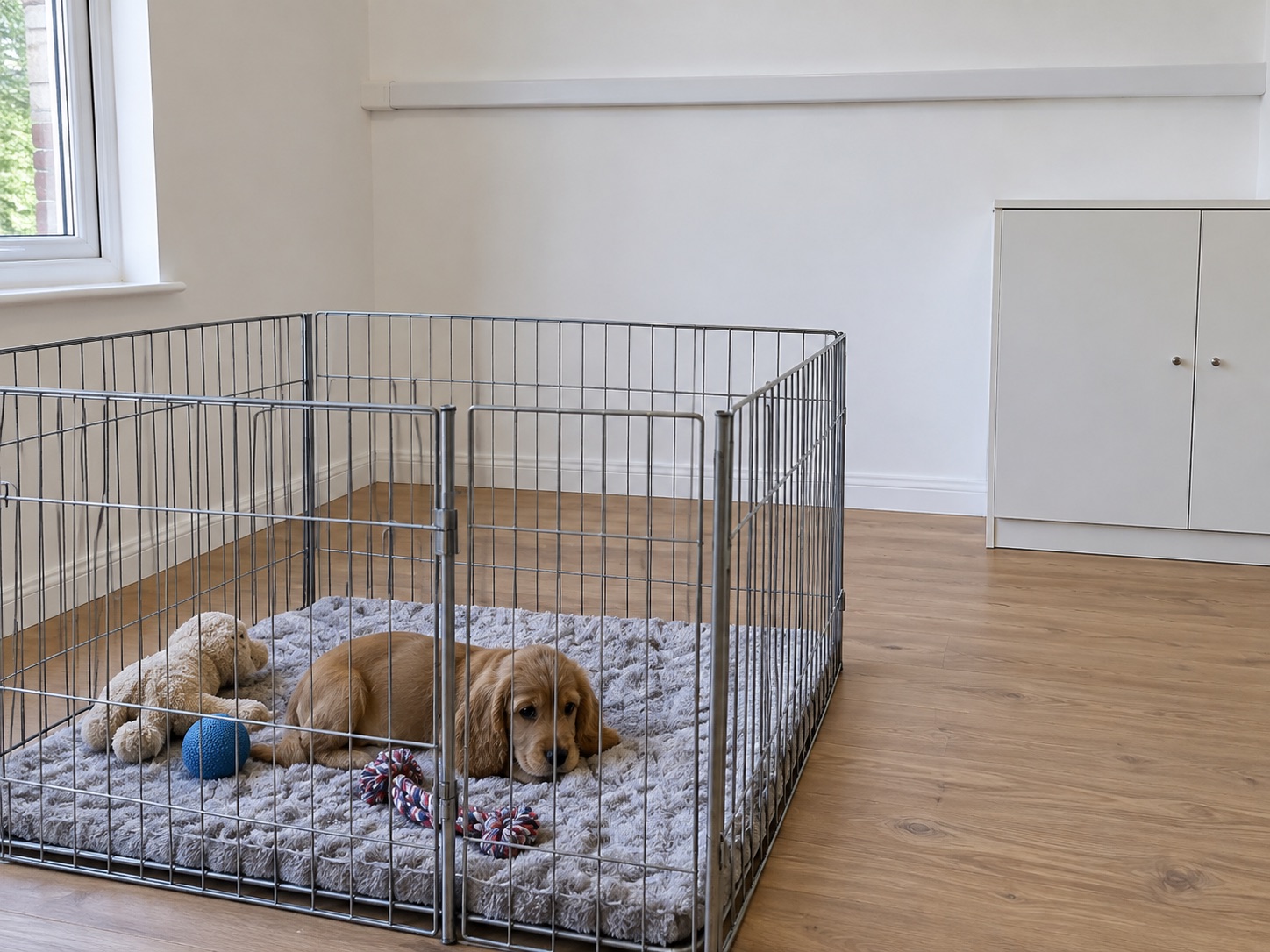
Inspect all four sides and the floor, including reachable gaps behind furniture.
Keep plugs, chargers, trailing leads and extension blocks outside the pen boundary.
After suspected electrical contact, switch off power before touching the puppy and seek urgent veterinary advice.
Treat the pen as a reach zone, not a line on the floor
A puppy can put a muzzle through bars, pull a hanging lead into the pen, nose beneath a lifted panel or climb high enough to reach a shelf. Check every side from puppy height. Include lamp cords, laptop chargers, television leads, extension blocks, battery chargers and the cable attached to a fan or heater.
PDSA recommends putting cables beyond a puppy's reach before arrival. Electrical Safety First advises against trailing cables and suggests suitably covering or hiding them out of the way. These measures reduce risk only if the puppy cannot access the finished route.
Remove or relocate equipment first
Unplug appliances not in use and move portable devices out of the puppy zone. If a socket or cable route sits directly behind the intended pen, move the pen rather than threading wires through its bars. Leave enough gap from furniture to prevent a puppy reaching around a panel, and do not position water next to electrical equipment.
The Yaheetech six-panel pen is a movable example: its final shape determines which wall and floor edges are reachable. Draw the cable route before joining panels, then inspect all newly exposed sides after any rearrangement.
Do not use the pen as a support for a cable clip, charger or light. A puppy may shake the panel, and maintenance becomes difficult without moving the whole boundary.
When a separate room boundary is safer
If an open-plan room has many unavoidable electrical devices, a properly installed gate at a real doorway may keep the puppy in a simpler, puppy-proofed area. The BabyDan FlexiFit is a wall-mounted example for measured openings, not a way to span an arbitrary gap beside a desk. Check the fixings and the actual puppy's ability to pass or climb.
If you cannot relocate equipment or secure the cable route, choose a different room for the puppy's base. An attractive pen position is not worth the electrical risk.
Inspect protection and connections regularly
Where wiring must remain, use a suitable fixed route or enclosed trunking installed according to its maker's instructions and the appliance guidance. Keep joints, plugs and the cable's exposed ends inaccessible. Adhesive covers can loosen; check them, the cable insulation and all connection points after cleaning, moving furniture or changing the pen footprint. Do not use damaged electrical items.
Do not rely on a bitter spray or training command to protect a live lead. Training can support household manners, but physical separation is the immediate control.
If electrical contact is suspected
If the puppy may still be touching a live cable, do not approach or touch them until the power source is switched off safely. PDSA warns that electrical injuries can have delayed effects and says every affected pet should be checked by a vet. Call your vet urgently after the power is off; do not wait for obvious burns or breathing trouble. Replace or professionally assess the damaged electrical item before the area is used again.
Finish the wider hazard check with our first-week puppy layout and indoor pen setup guides.
Common questions
Frequently asked questions
Is a plastic cable sleeve enough to protect a puppy?
Do not rely on a sleeve alone. The safest plan is to make the lead inaccessible; any protective routing must suit the cable and be installed as the product maker directs.
Can cables run behind a puppy pen?
Only if the puppy cannot reach them through bars, under panels or by climbing. Check the full reach from inside, not just the apparent distance from above.
Should I use an extension lead beside the pen?
Avoid accessible plugs and trailing leads. If power must be used in the room, keep equipment and connection points outside the puppy's reach and follow electrical-safety guidance on loading and cable condition.
What if my puppy chews a plugged-in cable?
Do not touch the puppy or cable until the power is switched off. Seek immediate veterinary care even if the puppy appears normal, because injuries may be delayed or internal.
Will a taller pen solve cable chewing?
No. A taller boundary does not protect against leads passing through bars or under a panel. Remove or relocate the electrical hazard and inspect the entire surrounding area.
Sources
- Electrical Safety First — pet owners
- PDSA — first aid for electric shock in pets
- PDSA — new puppy checklist
- Amazon UK example products linked in the guide