
Carrier and crate comparison
Dog carrier vs crate
Understand the difference between a portable dog carrier, a home crate and a car crate, with practical guidance for choosing the right equipment for each job.
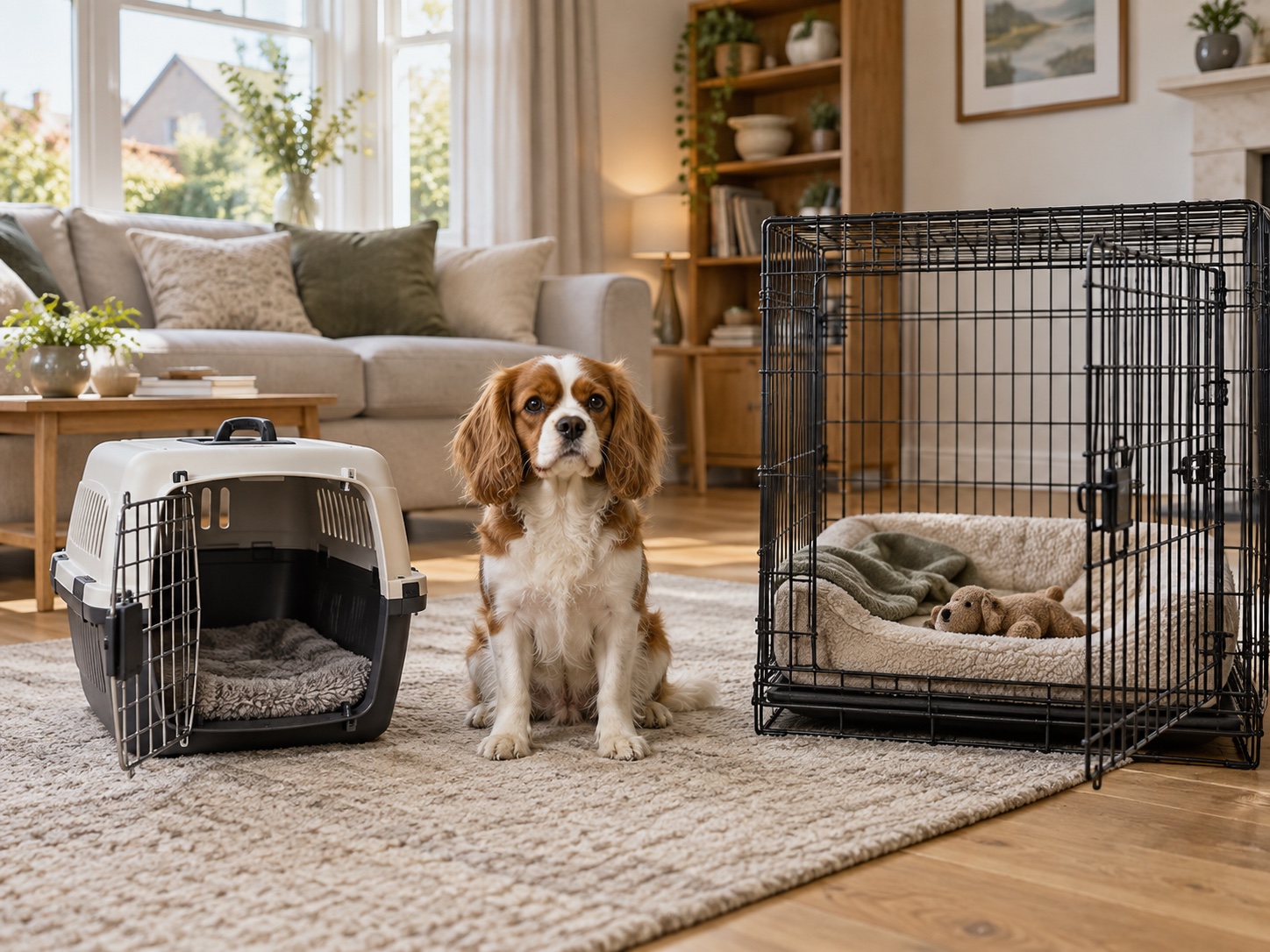
Carriers prioritise portability; home crates prioritise comfortable resting space.
Vehicle crates need car fit, secure installation and credible evidence for any crash claim.
The dog must be introduced positively to each setup before it is needed.
The difference in one sentence
A carrier moves a dog between places; a home crate provides a defined resting space; a car crate is vehicle equipment. Product titles blur those categories, but the design priorities are different enough that you should begin with the job rather than the name.
Portable dog carrier
A carrier is usually compact, handled and designed for short periods of transport. Soft versions favour low weight and storage. Rigid versions favour shape retention and easier cleaning. Both need secure closures, ventilation and a base that supports the full body.
The Amazon Basics soft carrier shows the usual trade-off: front and top access, mesh and a shoulder strap in a relatively light package, but limited sitting height and no documented crash-performance claim.
Choose a carrier when the main task is walking to a vet, passing through a station or making another controlled transfer with a small dog. Follow our carrier measurement guide rather than choosing by kilograms.
Home dog crate
A home crate should let the dog stand, sit, turn, lie naturally and stretch with bedding and water in place. It is normally too large to carry with the dog inside and is positioned as a stable, calm resting area.
Wire crates offer airflow and fold-flat storage. Furniture crates are fixed room pieces. Soft destination crates suit only settled dogs that will not chew or force an exit. See our metal, plastic and fabric crate comparison for the material trade-offs.
The home crate should never be used to mask separation distress or avoid exercise. Introduce it with voluntary entry and gradual, positive training.
Rigid top-opening carrier
The MDC demonstrates a middle ground: a rigid easy-clean base with mesh walls and a carry handle. It is portable and more resistant to sagging than a fabric bag, but still lacks the floor area of a home crate and is not documented as a crash-tested vehicle container.
This type can be useful for a small dog on a short trip if the internal measurements work. The open mesh provides visibility but may expose a noise-sensitive dog to more stimulation.
Vehicle dog crate
A vehicle crate must fit through the narrowest boot opening, sit on the available floor without rocking and attach at the points specified by its manufacturer. Sloped sides can improve boot fit, while an emergency exit can matter if the tailgate is blocked after an incident.
Crash testing is a separate evidence question. A strong-looking aluminium box is not necessarily tested. Credible documentation should identify the exact range, test direction and method, certification where claimed and required installation.
Thule's Allax is an example with published front, rear and simulated roll-over testing plus TÜV SÜD certification information. That evidence does not transfer to other aluminium crates.
Can one product do two jobs?
Sometimes, within limits. A carrier can remain open as a familiar den during a short stay, but it should not replace a larger resting area. A soft destination crate can fold into a car boot for transport when empty, but it is not thereby a crash restraint.
A purpose-built car crate can provide containment at a destination if the dog has enough room and is comfortable, though its weight may make removal impractical. Keep the manufacturer's intended use central.
How to choose the right format
- Define the job: carrying, home rest, destination rest or vehicle restraint.
- Measure the dog in natural positions.
- Measure the room, route or vehicle opening.
- Check material, access, ventilation and cleaning.
- Verify any airline or crash-performance claim with the airline, manufacturer or certification body.
- Introduce the equipment at home before the first necessary journey.
If the next job is a road trip, continue with our best dog car crates and harness versus crate comparison.
Helpful products
A purpose-built vehicle alternative
For car travel, compare ordinary carriers with a model designed, fitted and documented for vehicle use rather than assuming the home setup will transfer safely.

Thule Allax car dog crate, small
Best for: A compatible car and dog where model-specific test documentation matters
An adjustable-depth aluminium car crate with a crumple zone, locking door and rear escape hatch. Thule describes front, rear and simulated roll-over testing for the Allax range.
What stands out
- TÜV SÜD reference published by Thule
- Adjustable depth
- Rear escape hatch
Keep in mind
- Premium price
- Heavy rigid installation
- Vehicle compatibility must be checked
- Small variant
- Adjustable depth
- Crumple zone
- Built-in lock
Common questions
Frequently asked questions
Is a dog carrier the same as a crate?
No. A carrier is primarily portable transport equipment, while a home crate is a larger resting and management space. A car crate is a third category designed to fit and attach within a vehicle.
Can a soft carrier be used as a dog bed?
A calm dog may rest in an open carrier at home, but the usable space is usually too limited for it to replace a properly sized bed or home crate for extended rest.
Can I use a wire crate in the car?
A household wire crate is not automatically suitable for vehicle restraint or crash protection. Use equipment designed for the car, follow its installation instructions and do not make safety claims without exact-model evidence.
Which is better for a puppy, a carrier or a crate?
They solve different needs. A carrier helps with safe transport to the vet or socialisation locations; a correctly sized crate can support short, positive home training and rest. Many puppies need both.
Does travel crate mean crash tested?
No. Travel may only mean foldable or portable. Look for the exact model's test method, result, tested size or load and installation conditions before treating a crash claim as meaningful.
Sources
- GOV.UK — Highway Code Rule 57 — suitable restraint in vehicles
- Thule — Allax product and test information — vehicle fit, installation and documented testing example
- Amazon UK example products linked above