
Crate sizing guide
When your dog falls between crate sizes
Decide between standard dog crate sizes by checking the usable interior, natural posture, bedding, door access and space in your home.
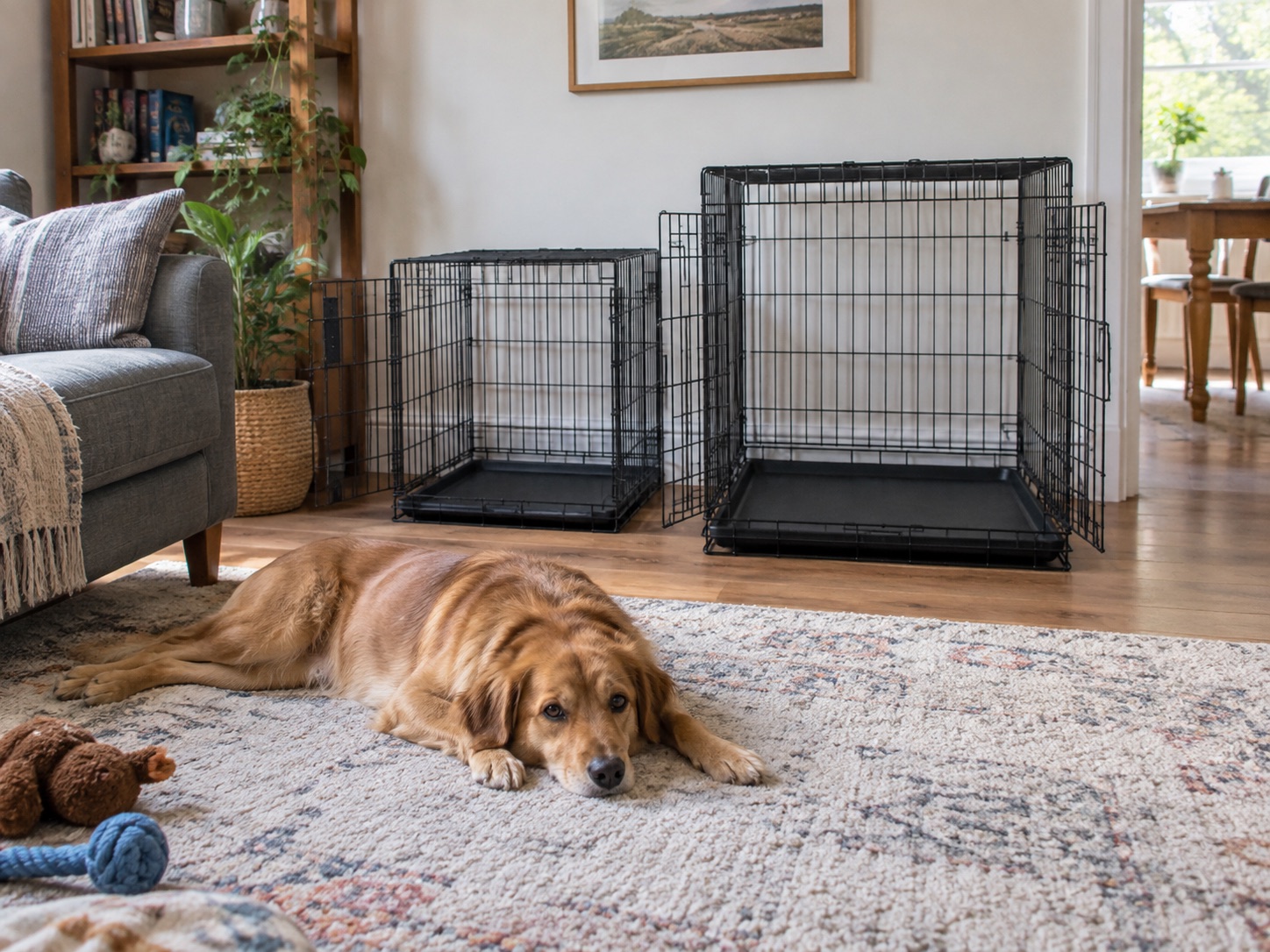
Measure the longest relaxed resting posture and natural sit, not only body length.
Subtract the effect of trays, bedding and inward-projecting hardware.
Test the next size's full door swing and placement before ordering.
Why standard crate sizes do not settle the fit
An 18-, 24- or 30-inch label usually refers to a nominal length class. It does not tell you the clear floor length, internal height, door gap or where the dog will touch the roof when sitting. Two models with the same headline length can differ in proportions and tray design.
Measure the dog first, including natural sitting height and longest relaxed lie. Our measuring guide provides a repeatable method. Then compare those observations with the exact crate interior—not a generic breed table.
Scroll horizontally to see all columns →
| Finding | Smaller option | Larger option | Next action |
|---|---|---|---|
| Dog touches roof when sitting | Fails posture check | Assess headroom | Do not choose smaller |
| Dog lies only curled | Fails rest check | Assess full-length lie | Do not choose smaller |
| Both fit naturally | May save room space | May allow more choice | Compare door and placement |
| Growing puppy | Likely short-lived | May need a divider | Recheck during growth |
Eliminate the size that fails a posture check
Can the dog stand and sit without ears or head touching the roof? Can it turn without pressing into the walls? Can it lie naturally rather than being forced to curl? If the smaller crate fails one of these, it is not an acceptable compromise to save floor space.
The Amazon Basics 24-inch and Feandrea 77cm wire crates illustrate how a modest-looking change in a product list can make a substantial difference to home footprint. The former has a 61cm listed outside length; the latter 77cm. Neither outside number reveals the exact usable floor inside.
If both fit, choose on access and room use
The smaller of two genuinely suitable crates may fit a quiet room position better. The larger may allow more choice of sleeping posture or a flatter bed. Place tape on the floor for each outer footprint, include the door swing and make sure you can reach the dog and clean the tray without moving furniture every day.
Look at the opening separately. A crate can be longer yet have a less useful doorway. How to check door opening size explains what to measure.
Add the real bedding before committing
A 6–10cm padded bed consumes the same amount of vertical space. A bolster may reduce the horizontal floor substantially. Put the intended bedding inside before making the final call; do not assume the naked crate's measurements will remain usable. A clipped water bowl should be reachable without forcing a dog to lie against it. See our bedding and bowl allowance guide.
Growing puppies need a different plan
An adult-size crate with a properly installed divider can reduce unnecessary replacement purchases. It must still fit the puppy's current stand, turn and rest, and the divider needs moving as growth changes. A crate that is too short today is not rescued by an optimistic prediction about breed size. Read puppy crate sizing before choosing between models.
Common questions
Frequently asked questions
Should I always size up if my dog is between crate sizes?
If the smaller crate limits standing, turning or a natural full-length rest, choose a roomier suitable option. If both pass, compare access and room placement. Avoid treating a nominal size jump as proof of fit.
Can a dog crate be too large?
A comfortably larger crate is generally preferable to one that restricts movement, but a huge unstable or poorly placed crate can be impractical. For a toilet-training puppy, a correctly positioned divider may help manage the space while retaining adult-size potential.
Does a thick bed change which size I need?
Yes. A deep bed reduces headroom and can narrow the usable floor. Check the fit with the actual bed or mat installed.
Should I follow the manufacturer's breed chart?
Use it only as a starting point. Dogs within one breed vary in length, height, body condition and preferred resting posture, and brands measure crates differently.
Can I use external crate dimensions to decide?
External dimensions help with room planning, not final dog fit. Ask for internal measurements and the clear door opening for the exact variant.
Sources
- PDSA — crate training and fit
- RSPCA — dog crates and puppy playpens
- Amazon UK example products linked in the guide